

Moving plant causes bud drop more reliably than almost anything else a well-meaning owner does, including a plant already carrying buds moved to what looks like a better spot. The reason is not that the plant is fragile or ungrateful. A move changes light, temperature, and airflow all at once, and a plant reads that combined change as a reason to reconsider whether it can afford the buds it is currently building. The safest window to move a fragrant plant is before it sets buds or after it finishes flowering, not while buds are on the way.
Two different costs, and most articles only mention one
The signal cost. Buds are released through abscission, a controlled process the plant runs deliberately rather than a failure. A move changes the light and temperature cues the plant is reading, and when those cues shift for the worse, or simply shift unpredictably, the hormonal balance that holds a bud in place can tip toward releasing it. This is the same mechanism covered in detail in flower buds falling off before opening, and it applies to a move exactly as it applies to any other sudden change.
The acclimation cost, which is the part most bud-drop advice skips. A leaf is not tuned to “bright light” in general. It is physically and chemically adjusted to the specific light level it has been growing in, with a particular density of chlorophyll and a particular structure suited to that intensity. Plant physiology research on photosynthetic acclimation describes this adjustment as a real process that unfolds over time, not instantly: leaves that experience a change in light level take several days, and in some cases more than a week, to fully readjust their photosynthetic machinery to the new conditions. During that adjustment window, a plant is temporarily operating below its normal efficiency at the very moment it is also trying to decide whether it can afford to keep its buds. A move to a brighter spot, which sounds like a pure improvement, can therefore produce a short-term dip in the plant’s usable energy exactly when the buds need consistent support the most.
Put together: a move does not just startle the plant for a moment. It changes the signal the plant is reading and temporarily reduces the plant’s working capacity while it catches up, and buds are the first thing sacrificed under either kind of pressure.
What extension sources say about specific species
Named authorities have documented this pattern directly for the plants this site covers.
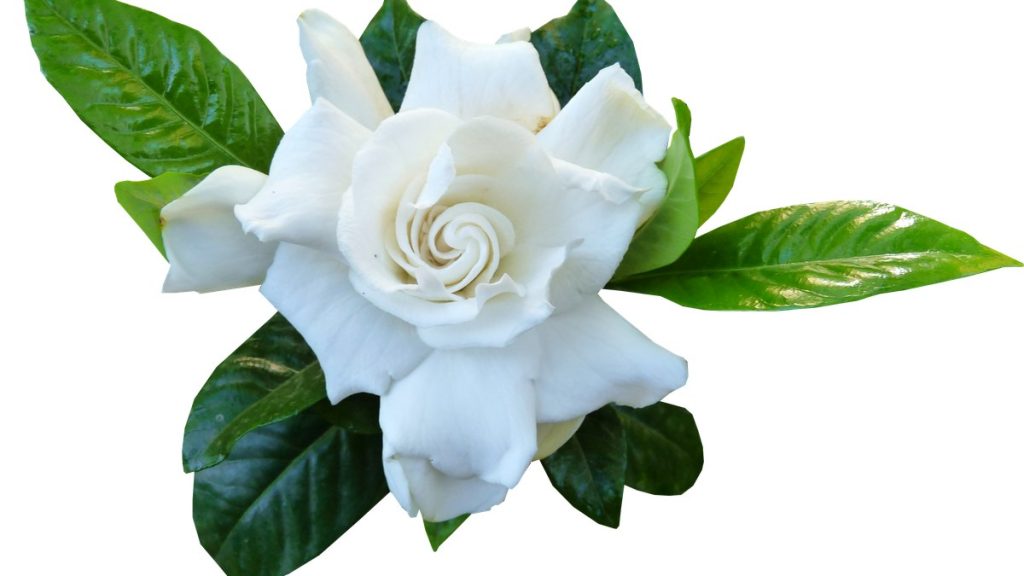
The Cooperative Extension System’s Ask Extension service, answering a Maricopa County, Arizona question in 2016, is unambiguous about gardenias: “Gardenias do not like to be disturbed. They are extremely sensitive to being moved or even touched,” and the recommendation given is to “keep the plant in the same location, always.”
The American Orchid Society’s guidance on bud blast, while written for orchids rather than the genera this site covers, documents the same category of trigger and is useful as a general illustration of how temperature transitions specifically cause bud failure: it names the temperature swing involved in “taking a plant in from the car or outside during hot or cold weather” and “bringing plants back into a heated house” as recognized causes of bud loss. The common thread across both sources is not the species. It is the transition itself, regardless of which direction it goes.
The move you did not think of as a move
Relocation does not only mean carrying a plant from one room to another. Several situations count as the same event from the plant’s perspective, because they all change the light, temperature, or airflow the plant has been reading:
- Bringing a plant indoors after a season outdoors, or the reverse.
- Buying a plant and bringing it home, which is a move even though it feels like the beginning of ownership rather than a disruption.
- Moving a plant a few feet within the same room, closer to or further from a window, heat vent, or draft.
- Turning a heating or cooling system on or off in a way that changes the temperature at the plant’s specific location, even without physically touching the pot.
Any of these can trigger the same response as carrying the plant across the house.
If you have to move it
Sometimes a move is unavoidable, a repositioned piece of furniture, a change of home, or a genuinely better spot that is worth the disruption. A few things reduce the cost without eliminating it entirely.
Time it around the bud cycle, not around your schedule. The lowest-risk window is before flower buds have formed, or after the current bloom cycle is finished. Moving a plant that is not currently carrying buds costs it an acclimation period but not a flush of flowers.
Match the new spot to the old one as closely as you can. The bigger the gap between the old light level and the new one, the longer and more disruptive the acclimation period. A move between two similarly bright spots is a smaller event than a move from a dim corner to a strong south-facing window, even though the second move sounds like an improvement.
Do not combine a move with anything else. Repotting, pruning, or a feeding change at the same time as a relocation stacks multiple stresses on top of each other and makes it impossible to know afterward which change caused what. Move first, wait, then consider other changes separately.
Expect a settling period and do not panic during it. Some adjustment, including the loss of any buds that were already forming, is a realistic outcome of a necessary move. That does not mean the plant is failing. It means it is doing exactly what the mechanism above describes, and the next bud cycle in a stable position is the one to judge the new spot by, not the buds that were already in progress when it moved.
If your plant lost buds and you did not move it
Movement is only one trigger among several the plant may be reacting to. Watering swings, dry air, and temperature drafts can all produce the same outcome without the pot ever changing position. The full sort of causes is in flower buds falling off before opening, and if your plant has never made a bud at all rather than losing one, start instead at why a fragrant houseplant refuses to flower indoors.
Frequently asked questions
I moved my plant to a much brighter window and it dropped its buds. Did I do something wrong? No, and this is one of the most common and most misunderstood outcomes. A move to better light is still a move, and the plant reads the change itself as a reason to reconsider its buds, independent of whether the new spot is objectively an improvement. The better light will benefit the next flowering cycle. It does not protect the buds already in progress at the moment of the move.
How long should I leave a newly bought plant alone before moving it again? There is no single verified figure for this across the genera this site covers, so the safer approach is behavioral rather than numeric: let the plant finish its current bud or bloom cycle in the spot you first put it, then make any further adjustments once it is between cycles rather than mid-cycle.
Does turning the plant in place count as moving it? That is a related but distinct question, covered separately in should I rotate my flowering houseplant, because rotating in place changes the plant’s orientation to its light source without changing its actual environment the way a relocation does.
Will the plant recover and flower again after a forced move? In most cases, yes, once it has had time to acclimate to the new position and reaches its next bud cycle. The buds lost during the move itself are not recoverable, but the plant’s ongoing capacity to flower is not permanently damaged by a single relocation.
Is there a way to move a plant with zero risk to its buds? Not if it is actively carrying buds at the time. The mechanism described above is a normal, healthy response, not a flaw you can engineer around. The only reliable way to avoid the cost is to avoid moving the plant while it is in bud in the first place.