

Should I rotate my flowering houseplant? Yes, when it is not carrying buds, and no, or only carefully, once it is. Rotation does not change how much light or how warm a room is. It changes the direction the light is coming from relative to the plant, and a plant that has already oriented itself and its developing buds toward one direction can respond to that change by dropping what it is carrying. Rotate freely between bud cycles. Stop, or rotate only in small increments, once buds are visible.
Why plants care about the direction of light, not just the amount
Plants grow toward a light source through phototropism, a response driven by the hormone auxin. When light hits a stem or a leaf from one side, auxin accumulates on the shaded side, causing cells there to elongate faster than cells on the lit side. The stem bends toward the light as a result. This is why a plant left in one position for a long time develops a lean, with denser growth on the side that has been facing the window and sparser growth on the side that has been facing the room.
Rotating a plant regularly is the standard fix for that lean, and for a plant that is only growing leaves, it is a reasonably low-stakes adjustment. The plant reorients its growth pattern gradually over the following days as it responds to the new light direction, and no flower is at stake while that happens.
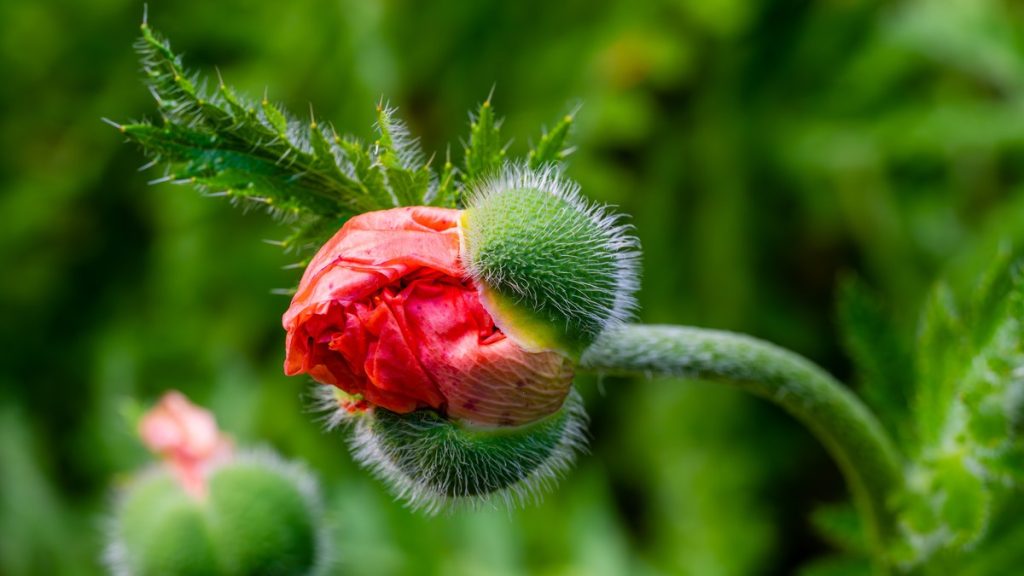
What changes once buds are involved
A developing flower bud is not a passive passenger on the stem. It is being actively supported by the same hormonal signaling that governs the rest of the plant’s growth decisions, and it is, as covered in flower buds falling off before opening, one of the most expensive uncommitted structures the plant is carrying at any given time. When a plant that has committed to a set of buds is suddenly turned to face a new direction, the reorientation response does not stop at the leaves. The plant is being asked to redistribute growth signals at the same moment it is deciding whether current conditions still justify the buds it has invested in, and a rotation is exactly the kind of unexpected environmental change that can tip that decision toward releasing them.
The American Orchid Society’s guidance on bud blast, while written for a different genus, documents the same category of event and is useful here as a general illustration: it lists “moving the plant from one location to another before the buds open” among the recognized causes of bud loss. A rotation is a milder version of the same category of disturbance: the plant’s position relative to its light source changes, even though the room itself has not.
Rotation is not the same event as a move, and that matters for what you decide to do
It is worth being precise about the difference, because the two get lumped together in most advice and the practical response to each is not identical.
A move changes the light intensity, the temperature, or both, and often the airflow as well. The plant is adjusting to a genuinely different environment. See why moving the pot costs you the flowers for that mechanism.
A rotation leaves the plant in the same spot with the same light level and the same temperature, but changes which side of the plant is facing the light. The environment has not changed. The plant’s orientation to it has.
Because a rotation is a smaller disturbance than a full relocation, it is also a more manageable risk. You do not need to avoid your plant’s corner entirely while it is in bud. You need to stop turning it.
What to actually do
No buds present. Rotate as needed for even growth. A quarter turn whenever you happen to notice the plant leaning, or whenever you water it, is a reasonable habit and there is nothing about a budless plant that makes rotation risky.
Buds are visible but not yet open. Stop rotating, or if the plant’s lean has become severe enough that you feel you must correct it, make a single small adjustment rather than a full turn, and expect that any adjustment carries some risk to the buds currently developing. The safest choice during this window is to leave the plant exactly as it is until flowering finishes.
Flowers are open. Once the plant is actively flowering, the buds that mattered have already succeeded, and rotation is lower stakes again, though a plant in full bloom may still shed spent flowers faster if disturbed. Normal handling resumes once the bloom cycle is essentially finished.
The plant has a permanent lean from a long no-rotation period. This is a legitimate cost of protecting buds through a full flowering cycle, and it corrects itself over the following weeks once you resume rotating during the plant’s next budless period. It is not a sign that anything went wrong.
If the plant already dropped its buds after you rotated it
Do not read this as a mistake that ruins the plant’s ability to flower going forward. A single rotation-triggered bud loss is recoverable, and the plant’s capacity to set buds again is not diminished. The more useful step is simply noting the timing so you recognize the pattern next time, and leaving the plant undisturbed once the next round of buds appears. For the full picture of what else can trigger the same outcome, see flower buds falling off before opening.
Frequently asked questions
How often should I rotate my plant when it is not in bud? No named horticultural authority publishes a fixed schedule for the genera this site covers, so the more reliable approach is to watch the plant rather than the calendar. Rotate when you notice new growth leaning or clustering on one side, which is a direct sign the plant is responding to a one-sided light source.
Will a small quarter turn really cause bud drop, or only a full spin? Any change in the direction the plant faces its light source is a signal the plant can respond to, not just a dramatic one. A small turn carries less risk than a full reversal, but the safest option during active bud development is no rotation at all rather than a smaller one.
My plant already leans badly and has buds right now. Should I fix the lean or protect the buds? Protect the buds. A lean is cosmetic and temporary, correctable over the following weeks once the plant is between bud cycles. Lost buds from a mid-development rotation are not recoverable this cycle.
Does this apply the same way to all four genera this site covers? The underlying mechanism, phototropic reorientation and bud sensitivity to disturbance, is general across flowering plants, and there is no published evidence that gardenia, jasmine, hoya, or citrus differ from each other in how they respond to rotation specifically. Treat the same caution as applying to whichever one you own.
Is it the rotation itself or the disturbance of touching the pot that causes the problem? Both can matter, and they are hard to fully separate in practice. What is well documented is that a change in the plant’s relationship to its light source, however it happens, is one of the recognized categories of disturbance that can trigger bud loss. Minimizing handling of any kind during active bud development is the safer general habit.