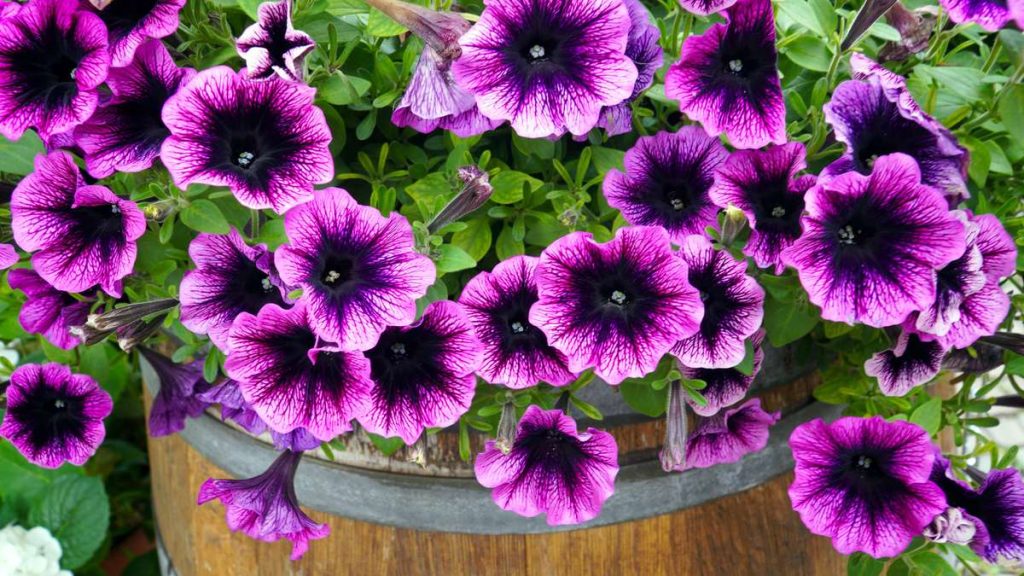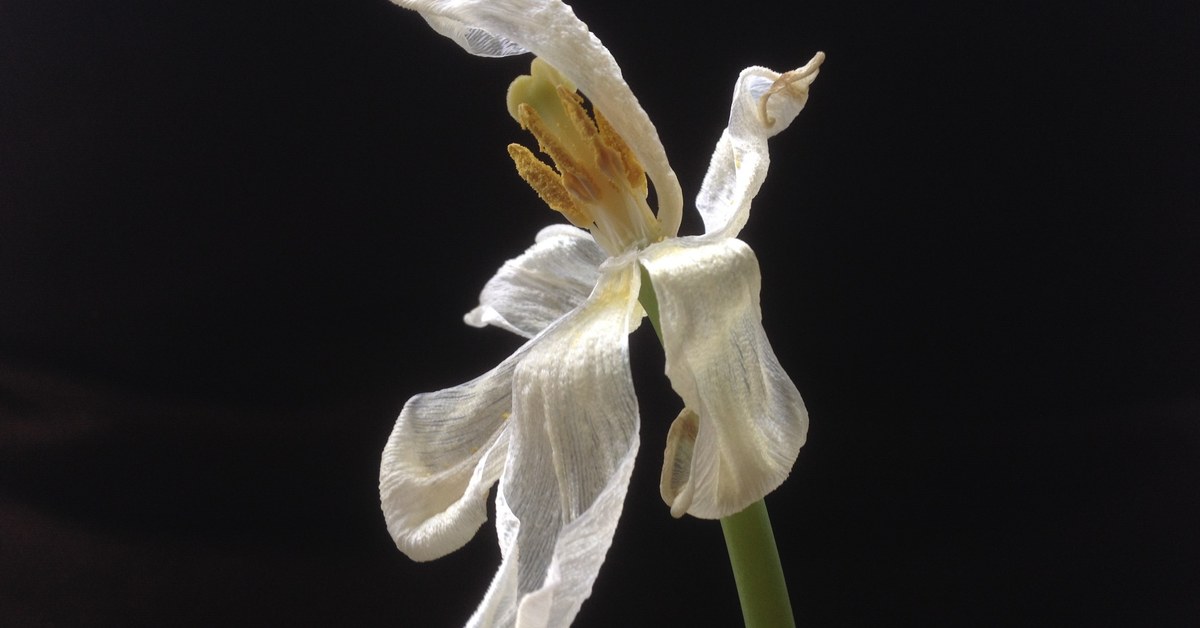
Yes. In the flowers that have been measured, scent emission starts low when the flower opens, climbs to a peak over the next few days, and then falls as the flower ages. In snapdragon, the main scent compound peaked between days 5 and 8 after opening and declined after that. Pollination makes the fall steeper and faster. So a flower that was overwhelming on its best day and faint three days later is doing what flowers do. It is not a sign that something has gone wrong with the plant.
Before reading on, check which of three problems you actually have. If one flower has faded while newer ones still smell, this page is yours. If the whole plant went quiet after you brought it home, that is usually about the change of conditions. If other people notice the scent and you do not, that is your nose adapting. People confuse the three constantly, and each has a different explanation.
The scent curve has a rising side as well as a falling one
Most people only notice the decline, but the start of the curve matters as much. A flower does not open at full volume.
The clearest measurements come from a study of snapdragon led by Natalia Dudareva, “Developmental Regulation of Methyl Benzoate Biosynthesis and Emission in Snapdragon Flowers,” published in The Plant Cell in 2000 (volume 12, pages 949 to 961) and read September 11, 2026. Methyl benzoate is the most abundant scent compound in that flower. The authors report that its emission “began at anthesis but at a very low level,” reached a peak between days 5 and 8, and declined thereafter. The enzyme that makes the compound followed a similar course, rising over the first five days after the flower opened and falling after that.
Two points follow from that. The first day a flower is open is not its best day. And the decline is not just the scent evaporating away. The flower’s own machinery for making the compound is switched down as the flower ages. In the authors’ words, emission and the enzyme that makes it are “developmentally and differentially regulated” across the flower’s life span.
Different compounds peak at different times
A flower’s scent is a blend, and the parts of the blend do not rise and fall together. That is why an aging flower can smell different, not just weaker.
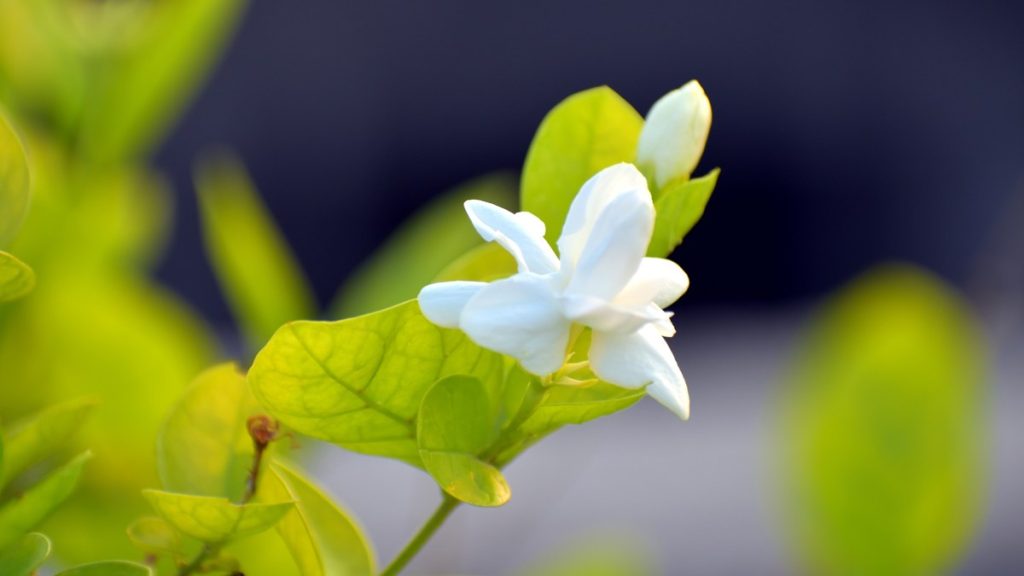
Yu and colleagues tracked this in Arabian jasmine, Jasminum sambac, in “Volatiles Emitted at Different Flowering Stages of Jasminum sambac and Expression of Genes Related to α-Farnesene Biosynthesis,” published in Molecules in 2017 and read September 11, 2026. They followed the flower through five stages from bud to senescence. The predominant compound, α-farnesene, was minimal in the bud, rose sharply, and peaked at the opening stage, then declined through full opening to senescence. Linalool, another major component, peaked earlier, at the second stage, and had roughly halved by the third and fourth.
Put simply: the jasmine flower you smell on its first evening and the one you smell two days later are not giving off the same mixture. The loudest note in the blend changes. If an older flower strikes you as flatter or greener as well as fainter, that fits what was measured. More on the species itself is in the jasmine guide.
Gardenia points the same way. Ghosh, Bapat and Mitra, in “Understanding the physiology of floral maturation in Gardenia jasminoides through metabolomic, histochemical and ultrastructural analyses,” published in Annals of Botany in 2026 and read September 11, 2026, found that the flowers emitted the most scent at anthesis, the stage when the flower is fully open, and that this was the most metabolically active stage. As the flowers senesced, they turned slightly yellow and gave off a lighter aroma. Anyone who has watched a gardenia flower go from white to cream has seen that curve happen.
Why flowers lose their scent as they age
Two separate things bring the scent down, and only one of them is likely to be happening on a windowsill.
Pollination: a switch the plant throws on purpose
Florence Negre and colleagues, in “Regulation of Methylbenzoate Emission after Pollination in Snapdragon and Petunia Flowers,” published in The Plant Cell in 2003 (volume 15, pages 2992 to 3006) and read September 11, 2026, measured what happens to scent after a flower is pollinated. In both species the emission of methyl benzoate dropped by 70 to 75 percent. The drop did not begin at the moment of pollination. It began only after the pollen tubes had reached the ovary, which the authors put at 35 to 40 hours in snapdragon and about 32 hours in petunia. In petunia, the gene that makes the compound is suppressed by ethylene, the plant hormone involved in ripening and aging.
The logic from the plant’s side is simple. A pollinated flower has no further use for advertising, and scent is costly to make. Once the job is done, it stops.
Aging: the decline that happens anyway
The snapdragon curve above describes a flower getting older. It is the developmental decline, programmed into the flower’s life, and it will happen whether or not any pollinator ever arrives.
This is where houseplants differ from the flowers in most studies. A jasmine or gardenia in a living room is rarely visited by the moths or bees it evolved to attract. So the pollination switch, the steep and sudden drop, is mostly not what you are seeing indoors. The fade you notice on a houseplant is far more likely to be the slower developmental one. No study found for this article measured an unpollinated houseplant flower through its whole life indoors, so this is a reasoned reading of the evidence rather than a measured result, and it is presented as that.
The bloom-day curve at a glance
| Stage of the flower | What the studies measured | What you are likely to notice |
|---|---|---|
| Bud and just opening | Emission low; in snapdragon it “began at anthesis but at a very low level” | Less scent than you expected from a new flower |
| Opening to fully open | Emission rising; jasmine’s main compound peaked at the opening stage | The scent builds over a day or more |
| Peak | Snapdragon peaked between days 5 and 8; gardenia peaked at anthesis | The flower’s best period |
| Aging | Emission and the enzymes behind it decline; the blend shifts | Fainter, and sometimes a different character |
| After pollination | A 70 to 75 percent drop in snapdragon and petunia, beginning after pollen reaches the ovary | Rarely applies indoors |
Treat the table as a description of the species that have been measured. The day counts belong to snapdragon, not to your plant.
A plant’s scent is many flower curves added together
This is the part that most answers to this question leave out, and it explains a lot of disappointment.
You rarely smell one flower. You smell a plant, and the plant’s scent is the sum of every open flower on it, each at its own point on its own curve. That has two practical consequences.
A plant that opens all its flowers within a day or two behaves like one big flower. Its scent rises together, peaks together and falls together, and the fall can feel sudden, as though the plant switched off. A plant that opens flowers one after another, a few at a time, keeps new flowers climbing while old ones fade. Its scent is steadier and lasts longer, even though no single flower lasts any longer at all.
So when a plant goes quiet, it is worth counting what is actually open and how old each flower is before concluding anything. A plant with five spent flowers and no new buds has simply come to the end of its run. A plant with fresh flowers that still smell of nothing has a different problem, and it is one of the other two explanations at the top of this page. How long a flowering display lasts, and what affects it, is covered in making blooms last longer.
Things that look like aging but are not
Three other effects can make a flower seem to have faded when it has not.
The time of day. Scent emission follows a daily rhythm in many species. In the Dudareva snapdragon study, emission was “rhythmic,” with its maximum during the day, matching the activity of the bumblebees that pollinate it. Night-scented plants run the other way. Smelling a flower at the wrong hour can make a flower at its peak seem spent. The rhythm itself is explained in what makes a flower smell.
Temperature. A cooler room reduces how much scent a flower gives off. The flower has not aged; it is simply releasing less at that moment.
Your own nose. If you have been living with the scent for days, your sense of smell turns it down. Visitors notice it; you do not. That is a separate mechanism with its own answer.
What no one can promise
There is no treatment that restores an aged flower’s scent. The decline is built into the flower’s development, and the studies above show the flower reducing its own production, not running short of something you could add. Anything sold as reviving the scent of an old flower is making a claim no source found for this article supports.
The day counts in this article also come from a small number of well-studied species. Snapdragon and petunia are laboratory favorites precisely because their scent is easy to measure. For hoya and citrus, the sources checked for this article turned up no published emission curve across the life of a single flower. The general shape, low at opening, a peak, then a decline, is consistent across every species that has been measured. The timing is not, and anyone quoting you a day count for your particular plant should be able to name the study.
Frequently asked questions
Do flowers lose their scent as they age? Yes. In the species that have been studied, emission starts low at opening, peaks, and then declines as the flower ages. In snapdragon, the main scent compound peaked between days 5 and 8 after opening, according to a 2000 study in The Plant Cell.
Is a flower most fragrant on the day it opens? Usually not. In snapdragon, emission began at a very low level when the flower opened and took several days to peak. In Arabian jasmine, the main compound peaked at the opening stage, so the best period can be early, but it is rarely the first hour.
Why does an old flower smell different, not just weaker? Because the compounds in a scent blend peak at different times. In Jasminum sambac, linalool peaked at an earlier stage than α-farnesene, so the mixture changes as the flower ages.
Does pollination make a flower stop smelling? In snapdragon and petunia it cuts emission of methyl benzoate by 70 to 75 percent, beginning after the pollen tubes reach the ovary. Indoor flowers are rarely pollinated, so the fade on a houseplant is more likely to be ordinary aging.
Sources
- Dudareva, N., Murfitt, L.M., Mann, C.J., Gorenstein, N., Kolosova, N., Kish, C.M., Bonham, C., Wood, K. “Developmental Regulation of Methyl Benzoate Biosynthesis and Emission in Snapdragon Flowers.” The Plant Cell, volume 12, pages 949-961, 2000. Read September 11, 2026.
- Negre, F., Kish, C.M., Boatright, J., Underwood, B., Shibuya, K., Wagner, C., Clark, D.G., Dudareva, N. “Regulation of Methylbenzoate Emission after Pollination in Snapdragon and Petunia Flowers.” The Plant Cell, volume 15, pages 2992-3006, 2003. Read September 11, 2026.
- Yu and colleagues. “Volatiles Emitted at Different Flowering Stages of Jasminum sambac and Expression of Genes Related to α-Farnesene Biosynthesis.” Molecules, 2017. Read September 11, 2026.
- Ghosh, R., Bapat, S.A., Mitra, A. “Understanding the physiology of floral maturation in Gardenia jasminoides through metabolomic, histochemical and ultrastructural analyses.” Annals of Botany, 2026. Read September 11, 2026.