A cool room turns a flower’s scent down rather than preserving it. Across the species that have been measured, scent emission rises with temperature, and the effect is on how much the flower releases, not just on how fast it evaporates. Cooling also changes the character of the scent: narcissus flowers held at a constant 5 degrees Celsius emitted six compounds where the same flowers under a natural cool-warm cycle emitted thirteen. But warmer is not simply better, because high temperatures suppress the plant’s production of scent compounds even while release goes up.
Temperature acts on two separate things
A flower has to make the compound and then get it out into the air. Those are different processes, and temperature does not do the same thing to both. Most articles treat scent as one quantity, which is why their advice contradicts itself.
The clearest single demonstration is a controlled temperature series. Masanori Sagae, Naomi Oyama-Okubo, Toshio Ando, Eduardo Marchesi and Masayoshi Nakayama, in “Effect of Temperature on the Floral Scent Emission and Endogenous Volatile Profile of Petunia axillaris,” published in Bioscience, Biotechnology, and Biochemistry in 2008 and read 7 September 2026, grew plants at a range of constant ambient temperatures. The total amount of scent compounds held inside the flower tissue fell as temperature rose. The amount actually emitted peaked in the middle of the range rather than at the top of it.
Read as one sentence: heat helps the scent get out and hurts the plant’s ability to keep making it. Everything below is a consequence of that split.
What a cool room does
Emission goes down. Cassie J. Majetic, Robert A. Raguso and Tia-Lynn Ashman, reviewing the abiotic evidence in Plant Signaling and Behavior in 2009 and read 7 September 2026, report a positive correlation between temperature and emission rate across the species that had been studied, including Ribes nigrum, Trifolium repens and Hesperis matronalis.
The underlying clover work is Henrik Byrial Jakobsen and Carl Erik Olsen’s “Influence of climatic factors on emission of flower volatiles in situ,” in Planta in 1994. Their finding matters for how you think about this: the temperature difference was attributed to an effect on the secretion of the volatiles rather than to the rate at which they evaporated. Cool air does not merely slow the delivery of a scent that is still being made in full. It reduces what the flower puts out.
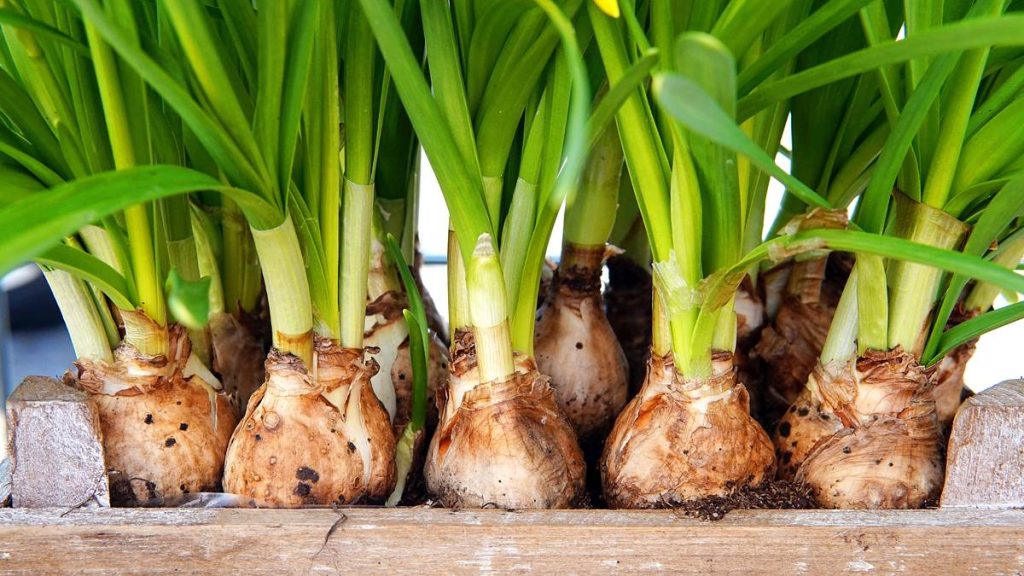
Cooling does something less obvious as well. Marta I. Terry, Victoria Ruiz-Hernández, Diego J. Águila, Julia Weiss and Marcos Egea-Cortines, in “The Effect of Post-harvest Conditions in Narcissus sp. Cut Flowers Scent Profile,” published in Frontiers in Plant Science in 2021 and read 7 September 2026, compared flowers under a 15 to 5 degree Celsius day-night cycle against flowers held at constant temperatures. Under the cycling regime the flowers emitted thirteen compounds. At a constant 5 degrees the number fell to six, and the authors describe “a decrease of scent complexity that was more dramatic at 5°C.”
Six compounds instead of thirteen is not a quieter version of the same smell. It is a simpler one. That is a better description of what people mean when they say a plant in a cold hallway smells thin.
What a warm room does, which is not the opposite
If cooling mutes, the tempting conclusion is to warm the room. The evidence does not support that as a strategy.
Alon Cna’ani and colleagues published “Petunia × hybrida floral scent production is negatively affected by high-temperature growth conditions” in Plant, Cell and Environment in 2015, read 7 September 2026. The title is the finding: plants grown warm produced less scent, with the phenylpropanoid-derived compounds that carry much of petunia’s fragrance reduced under elevated temperature. The Sagae work above points the same way from a different angle, with the internal reserve of scent compounds declining as ambient temperature climbed.
Warmth also moves the timing. In the narcissus study, raising the regime from 15 to 5 degrees up to 20 to 10 degrees caused the loss of one compound, the appearance of another, and a shift in the daily maximum: in the authors’ words, “the peak shifted toward night.” A warmer room can relocate a plant’s best hour rather than improving it.
| Direction | Effect on release | Effect on production | Net for the person in the room |
|---|---|---|---|
| Cooler | Falls | Reserve holds or builds | Muted, and simpler in character |
| Moderate | Highest measured emission in the petunia series | Adequate | Usually the best of both |
| Warmer | Rises initially | Suppressed | Can smell strong briefly and thin over time |
That table describes the species that have been measured. It is not a setting for your plant, and the next section explains why nobody can give you one.
The trade-off nobody states
Here is the conflict a fragrant-plant owner actually faces, and it does not appear on any of the pages competing for this question.
Some of these plants need to be cool in order to make flowers at all. Marjan Kluepfel and Robert F. Polomski, in Clemson Cooperative Extension’s gardenia factsheet, last updated 9 August 2024 and read 7 September 2026, state that “night temperatures between 50 and 55 °F are necessary for the formation of flower buds.” Necessary is their word. Cool nights are a requirement in that species, not a preference, and the same logic applies to other plants that need a chill before they will flower, which is covered separately in the cool rest.
Now set that beside the emission evidence. The conditions that let a plant set buds are not necessarily the conditions under which those flowers, once open, release the most scent. A cold room can be exactly right in autumn and exactly wrong on the evening the flowers open.
This site is not going to resolve that for you with a number, because for gardenia, jasmine, hoya and citrus no published scent-versus-temperature curve turned up in the sources checked for this article. What can be said honestly is that the two requirements are separate, they act at different times of year, and treating one temperature as correct all year is the mistake underneath a lot of disappointment. Where your species sits in the indoor flowering year decides which of the two you should currently be optimizing for.
What not to do about it
Do not move the plant to a warmer room to get more scent out of it. Relocating a plant that has buds on it is one of the better documented ways to lose those buds, and a temperature change at bud stage is its own failure with its own causes, set out in temperature swings, drafts and heat vents at bud stage. That page is about buds coming off. This one is about how loud an open flower is. Confusing them costs the flowers.
Do not chase a number. No source found for this article gives an optimal scent temperature for any houseplant genus, and the species that have been measured disagree with one another about where the emission peak sits.
Do not assume the plant has stopped. A muted plant in a cold week is usually a plant emitting less, not a plant that has lost its fragrance. The distinction, and what is actually being released, is covered in what makes a flower smell.
The useful thing you can do instead
Go to the plant at the warmest part of its day rather than warming the room.
In most homes the air near a plant is warmest in the afternoon, and if the species is a day emitter that is also when its clock is running highest. Two effects line up at the same hour, at no cost and with no risk to the buds. In a cool room, that is the difference between deciding the plant has failed and finding out it has not.
Then check it a second time at another hour before you conclude anything, because a single reading in a cold hallway at eight in the morning is the least informative measurement available.
Frequently asked questions
Does temperature affect flower fragrance? Yes, in both directions. A 2009 review in Plant Signaling and Behavior reports emission rate correlating positively with temperature across the species studied, while a 2015 study in Plant, Cell and Environment found that high growth temperatures reduced scent production in Petunia hybrida. Temperature affects release and production separately.
Why does my fragrant plant smell of nothing in a cool room? Because emission falls with temperature, and because cooling reduces the number of compounds released. Narcissus flowers held at a constant 5 degrees Celsius emitted six compounds where flowers under a cycling 15 to 5 degree regime emitted thirteen, so a cold room delivers a thinner scent as well as a quieter one.
Will heating the room make my plant smell stronger? Briefly, perhaps, and not sustainably. Emission in the Petunia axillaris series peaked at a mid-range temperature rather than the highest one, and the plant’s internal reserve of scent compounds fell as temperature rose. Growing plants warm has been shown to reduce scent production.
My gardenia needs cool nights. Does that mean I am stuck with less scent? Not stuck, but you are managing two different requirements at two different times. Clemson Cooperative Extension states that night temperatures between 50 and 55 degrees Fahrenheit are necessary for gardenia flower bud formation. That requirement applies while the plant is setting buds. How warm the room is when the flowers are open is a separate question, and no published curve exists for this species.
Should I move the plant somewhere warmer when it flowers? Not while it is in bud. Moving a plant and changing its temperature at bud stage is a documented cause of bud loss. Visiting the plant at the warmest hour of its day achieves the same thing for your nose without putting the flowers at risk.
Sources
- Sagae, M., Oyama-Okubo, N., Ando, T., Marchesi, E., Nakayama, M. “Effect of Temperature on the Floral Scent Emission and Endogenous Volatile Profile of Petunia axillaris.” Bioscience, Biotechnology, and Biochemistry, volume 72, issue 1, pages 110-115, 2008. Read 7 September 2026.
- Majetic, C.J., Raguso, R.A., Ashman, T.-L. “Sources of floral scent variation: can environment define floral scent phenotype?” Plant Signaling and Behavior, volume 4, 2009. Read 7 September 2026.
- Jakobsen, H.B., Olsen, C.E. “Influence of climatic factors on emission of flower volatiles in situ.” Planta, volume 192, issue 3, 1994. Read 7 September 2026.
- Terry, M.I., Ruiz-Hernández, V., Águila, D.J., Weiss, J., Egea-Cortines, M. “The Effect of Post-harvest Conditions in Narcissus sp. Cut Flowers Scent Profile.” Frontiers in Plant Science, volume 11, 2021. Read 7 September 2026.
- Cna’ani, A., Mühlemann, J.K., Ravid, J., Masci, T., Klempien, A., Nguyen, T.T.H., Dudareva, N., Pichersky, E., Vainstein, A. “Petunia × hybrida floral scent production is negatively affected by high-temperature growth conditions.” Plant, Cell and Environment, volume 38, issue 7, pages 1333-1346, 2015. Read 7 September 2026.
- Kluepfel, M., Polomski, R.F. Gardenia factsheet, Clemson Cooperative Extension Home and Garden Information Center, updated 9 August 2024. Read 7 September 2026.