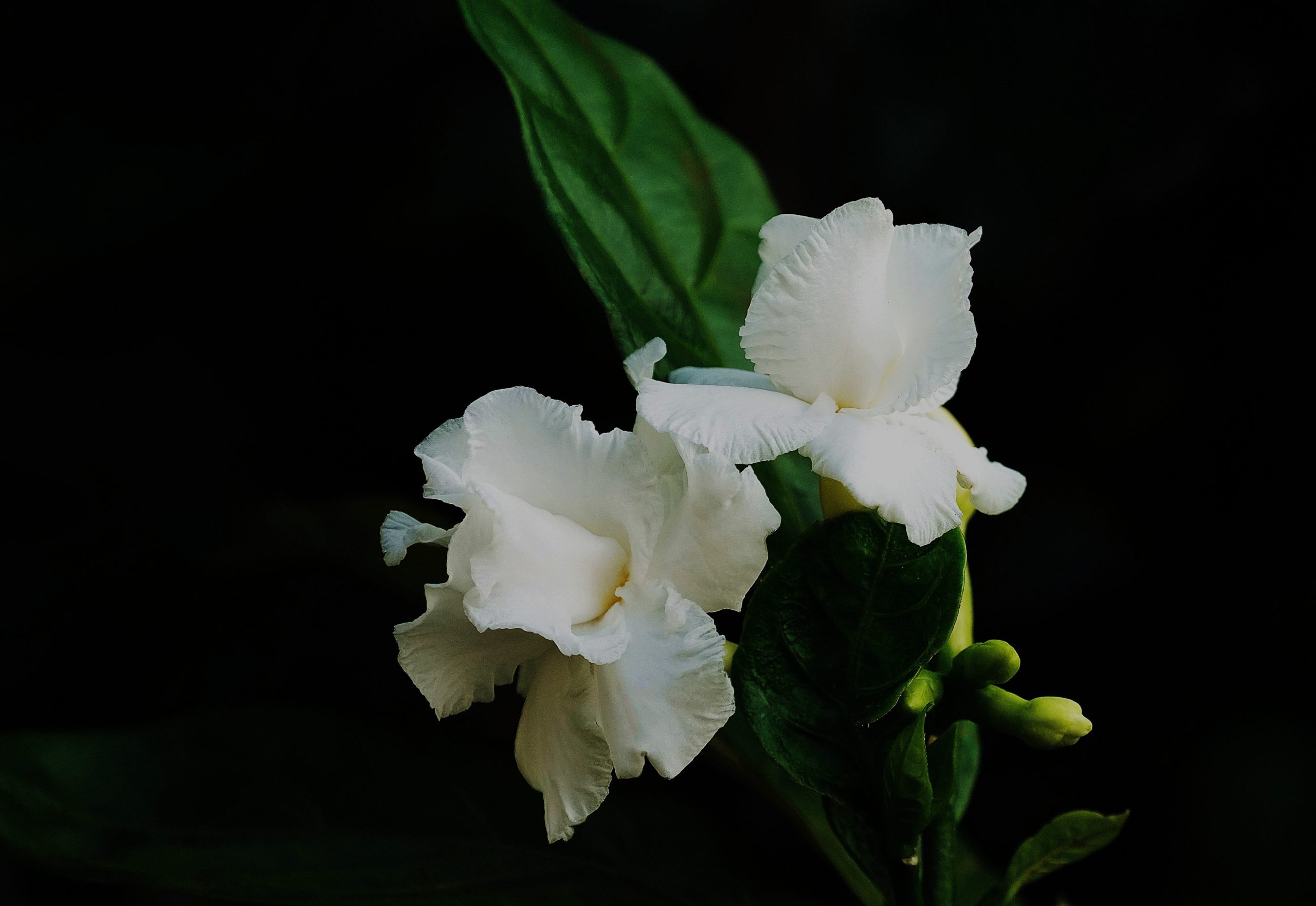
There is no single answer to how much light do plants need to flower, but there is a reliable rule: a plant needs considerably more light to build a flower than to stay alive, and the gap between the two is wider than most rooms suggest. University of Minnesota Extension states it plainly in its indoor lighting guidance: “While a plant may tolerate lower light growing conditions, more light may be required to promote dense foliage and flowering.” So a plant can sit in a spot that is perfectly adequate for survival, look healthy for years, and never accumulate the surplus a flower costs.
Why a healthy plant can still be light-starved
Light is not a comfort. It is income. Everything a plant does is paid for out of what its leaves capture, and the plant spends that income in a strict order: keep existing tissue alive first, grow new leaves second, and only then, if there is anything left over, build flowers.
That order is why the objection almost everyone raises here is the wrong test. “It looks completely fine in this spot” is evidence about the survival budget, and nothing at all about the surplus. A plant can hold its leaves, hold its color and slowly add growth for years while sitting permanently below the level at which flowering becomes affordable.
Bodie Pennisi of University of Georgia Extension puts light at the top of the list of everything that governs indoor plants: “Of all of the factors affecting plant growth in interiors, adequate light is by far the most important.” Robert Pavlis, writing independently at Garden Myths, reaches the same conclusion for the flowering question specifically: “The most common reason for poor flowering is a lack of light intensity.”
“Bright indirect light” describes survival, not flowering
The phrase on the care label was never designed to answer this question. It is a tolerance statement, telling you the range in which the plant will not decline. The same three words are printed for a foliage plant that is expected to do nothing but persist and for a flowering plant you bought for its blooms, which is why following the label perfectly can still produce a flowerless plant.
There is also a scale problem the vocabulary hides. Outdoor light on an open day is far more intense than anything inside a window, and Garden Myths illustrates the gap with a plant most people consider easy: Phalaenopsis orchids “bloom fairly well in the house provided you give them a bright window. Take them outside for the summer and you will see a dramatic change in flowering.” The same source is blunt about the wider category: “almost no plant thrives in low light.”
Read a care label as a floor, not as a target. Nothing on it is a promise about flowers.
How to read a spot without buying anything
An honest caveat first, from University of Florida IFAS Gardening Solutions: “our eyes are very adaptable,” which makes us “poor judges of light intensity,” and it recommends a meter. That is true, and it is exactly why this section is a sorting method rather than a measurement. Used carefully, the following will separate a plausible flowering position from a hopeless one, which is the decision you actually face.
- Which way does the window face? In the northern hemisphere, an unshaded south-facing window offers the strongest light available in an average home. East and west offer part of the day. An unobstructed north window is a survival position for most fragrant plants, not a flowering one. Reverse the compass in the southern hemisphere.
- What is outside it? A neighboring wall, a balcony above, a tree in leaf or a permanent net curtain can remove more light than moving the plant one room over would. Judge the sky the plant can see, not the window.
- How much of the day can the plant see sky? Stand where the plant stands, look out and estimate the hours during which the sky is directly visible, not merely bright. This matters more than the room’s overall brightness.
- How sharp is the shadow? Hold your hand a few inches above the leaves in the middle of a clear day. A crisp shadow with defined edges indicates strong light. A soft outline indicates moderate light. No discernible shadow indicates a position where flowering is unlikely for most fragrant plants.
- How far is it from the glass? Light falls off steeply with distance from a window, so a plant a few steps into the room can be in a fundamentally different position from one on the sill, even though the room looks equally bright to you.
None of this is precise. It is designed to tell you whether you are in the running.
How much varies enormously by plant, and no single number covers them all
Any page that gives you one figure for “flowering houseplants” is guessing, because the requirement is species-specific. Where a named horticultural source publishes a figure for a named plant, it is worth having:
- Gardenia. Purdue Consumer Horticulture advises to “make sure you give the plant plenty of bright light, preferably direct sunshine for at least half a day.”
- Dwarf citrus. University of Maryland Extension advises placing the plant “where it will receive at least 6 hours of direct sunlight,” and describes 8 to 12 hours as ideal.
Those are direct sun figures, published by extension services, for two of the most common fragrant houseplants. Compare them against the shadow and sky observations above, and the reason so many of these plants never flower indoors becomes obvious. For plant-by-plant expectations, see gardenia and citrus.
Day length matters too, and it is a separate thing
Intensity is not the only variable. The New York Botanical Garden notes that “most flowering houseplants are long-day plants that bloom when the sunlit hours outnumber the hours of darkness,” with winter-flowering exceptions that respond to the opposite pattern. This is why a plant can hold a bright position and still flower only at one point in the year, and why lengthening the day artificially does not have a uniform effect across species.
What about a grow light?
That is a hardware question, and this site does not cover lamp selection, placement, spectrum or run time. Worth naming out loud: several of the pages that rank highest for this search are published by companies that sell grow lights, which does not make them wrong but does mean the conclusion was reached by an interested party. For lighting guidance from a public institution, University of Minnesota Extension’s page on lighting for indoor plants is a reasonable starting point.
If light is not the problem
If your plant sits in a genuinely strong position and still refuses, work through the other causes rather than adding more light.
- Some plants will not initiate buds without a cool season. See cold period for plants to bloom.
- Feeding is rarely the constraint, and the popular fix does not work. See does phosphorus make plants bloom.
- If buds formed and then failed, this is the wrong article entirely. See flower buds falling off before opening.
- For the full sort of every cause, start at why a fragrant houseplant refuses to flower indoors.
Frequently asked questions
Will moving my plant to a brighter window make it flower this year?
Usually not this year. Most fragrant plants set flower buds during a particular phase of their annual cycle, so improved light generally shows up in the next cycle rather than the current one. There is also a cost to moving: a plant already carrying buds can drop them in response to the change. Move it when it is not in bud, then leave it alone.
My plant grows fine but never flowers. Can light really be the issue?
Yes, and it is the most common explanation. Growth proves the plant is covering its running costs. Flowering requires a surplus above those costs, and light intensity is what generates the surplus. Steady, unremarkable growth in a modest spot is entirely consistent with never having enough left over to fund a bloom.
Do I need a light meter or a phone app?
No, not for this decision. A meter gives you a number, but the choice in front of you is usually between two or three positions in your own home, and the shadow test plus an honest look at what the window faces will rank them. Instruments become useful when you are comparing subtle differences, which is not the situation most flowerless plants are in.
Is a bright room the same as a bright position?
No, and the difference decides a lot of cases. Rooms look uniformly bright to the human eye because our vision adapts, but light drops off sharply with distance from the glass and with anything blocking the sky. A plant several steps back from a window can be in a much weaker position than a plant on the sill in the same room.
Leave a Reply