
Tag: flowering physiology

  • Buds Turning Brown Before Opening: What Bud Blast Is

    Buds Turning Brown Before Opening: What Bud Blast Is

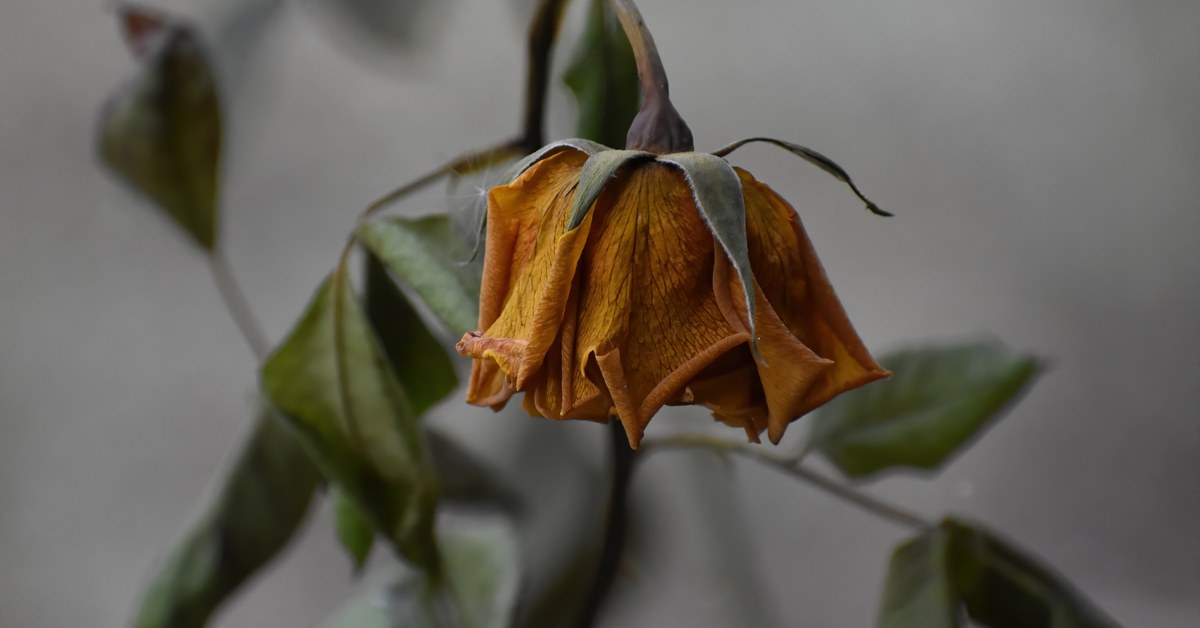
    There are two ways a bud can fail, and the difference is visible from across the room. In one, the bud lets go: it yellows at the base and falls, often overnight, often several at once, leaving a bare stem. In the other, the bud never leaves. It stops swelling, browns from the tip or the edge inward, dries, and stays attached, sometimes for weeks, like a small brown knuckle where a flower was going to be.

    The second one is what people mean by bud blast. It is worth having a separate page for, because it is a different search, a different sight, and it prompts a different worry.

    It is also worth saying immediately what the published record does and does not separate, because this is the part no competing page mentions.

    The finding: the sources do not make the distinction the reader is making

    We went looking for extension guidance that treats browning-in-place as a separate condition from dropping. It is largely not there.

    Clemson Cooperative Extension's Home and Garden Information Center gardenia factsheet, read 26 August 2026, describes the failure as one event: "Flower buds may abort and drop off just before they open." It then lists the causes it attributes to that failure: "low humidity, overwatering, under-watering, insufficient light and high temperatures."

    That is a list of causes for bud failure. It is not a list of causes for dropping, with a second list for browning.

    So the honest position is this. The distinction between a bud that falls and a bud that dries in place is real to look at, and the published horticultural guidance we could find treats both as the same underlying event: the plant stopped supporting the bud. What we can describe with a source is why a bud gets abandoned. What we cannot cite is a published rule saying which of the two appearances a given cause produces. Anywhere you read a confident mapping of brown buds to one specific cause and dropped buds to another, ask where that came from.

    That absence is not a dead end. It changes what a useful article can offer, from "brown means X" to something you can actually act on.

    What a bud actually is, and why abandoning one is cheap

    A flower bud is the most expensive thing a plant is carrying and the least necessary. Leaves feed it. Roots supply it. A flower does neither. It is an investment against a future the plant is betting on.

    So a bud is the first thing shed when the balance goes wrong, and it is shed before there is any visible sign in the foliage. This is the single most useful idea on the subject and it explains the complaint that brings almost everyone here: the plant looks perfectly healthy and the buds still failed. The plant looks healthy because it protected itself by sacrificing the buds. The leaves are fine because the buds went first.

    Whether the abandoned bud then falls or dries in place is, as far as the published sources go, a matter of how the tissue happens to give up. It is not a diagnostic code.

    The causes, from a named source

    Clemson's list for gardenia, read 26 August 2026, is the practical starting point, and it applies to the reader's situation rather than to a greenhouse:

    • Low humidity. Bud tissue is thin, exposed and actively expanding. It loses water faster than a mature leaf and shows the loss sooner.
    • Overwatering. Roots that are not functioning cannot deliver water, whatever is in the pot. The bud experiences drought while the soil is wet, which is why this cause is so often misread.
    • Under-watering. The straightforward version of the same shortfall.
    • Insufficient light. The plant does not have the surplus to finish what it started.
    • High temperatures. Demand rises, and the bud is the part of the plant with no reserves of its own.

    Notice what those five have in common. Every one of them is a supply-versus-demand problem at the bud, and four of the five can be present in a room that feels entirely comfortable to a person.

    There is a sixth condition that belongs beside them for at least two of the plants this site covers, and it is a requirement rather than a stress. Clemson's gardenia factsheet states that "night temperatures between 50 and 55 °F are necessary for the formation of flower buds", and its jasmine factsheet, read the same day, gives indoor true jasmines "Day temperatures should be 68 to 72 °F and night temperatures 50 to 55 °F."

    That is a published figure, from a named source, on a dated read, and it is the figure most likely to explain a heated winter room where nothing opens.

    What to look at, given that the appearance will not tell you

    Since the color of the failure does not identify the cause, the useful evidence is elsewhere. Four questions, in the order that gets you the most information soonest.

    1. When did it start, relative to something you changed? Buds respond to a condition they sat in, not to the moment you noticed. A move, a heating season starting, a window opened on a cold night, a change in watering, a repot: the bud failure often follows the change by days.

    2. Are the failures all at once, or a few at a time over weeks? All at once points at a single event. A slow trickle points at a condition the plant is living in continuously.

    3. What is the room doing at night? Not what it feels like at eight in the evening while you are in it. What it does at three in the morning with the heating on and the curtains closed. For gardenia and true jasmine, Clemson publishes the night figure explicitly, and an average heated room is very often nowhere near it.

    4. Are the leaves genuinely unaffected? Usually yes, and that is expected rather than reassuring. If the leaves are also struggling, you are looking at a plant-wide problem, and the buds are the symptom rather than the subject.

    What this page will not tell you

    Stated plainly, because on this subject the confident answer is usually the invented one.

    • It will not tell you that brown means one thing and dropped means another. The extension source we read describes a single failure, and we are not going to publish a distinction it does not make.
    • It publishes no humidity percentage for these plants and no comparison of ways to raise humidity. The Clemson source names low humidity as a cause and does not attach a target figure to it.
    • It publishes no watering schedule. Overwatering and under-watering both appear on the same list, which is exactly why a schedule is the wrong tool.
    • It names no product of any kind.

    Where this sits

    Bud blast is one entry in a family of failures that all end with no flowers and all look different at the moment they happen: buds that drop, buds that dry in place, buds that never form at all. The last of those is a different question with different answers, and it is the one to start from if nothing ever reached bud stage: why a fragrant houseplant refuses to flower indoors maps every cause in order.

    And one last thing worth holding on to. A plant that made buds and lost them has already told you something good. It was mature enough, and it had enough light and enough resources to start. That is further along than most of the failures on this site. What went wrong happened after the decision to flower, which is a narrower problem than never having been able to make one.
  • Photoperiod and Houseplant Flowering: Which Plants Respond

    Photoperiod and Houseplant Flowering: Which Plants Respond

    Day length genuinely controls flowering in many plants, but it does not control all of them, and lumping the four fragrant genera this site covers into one answer would be wrong. Of gardenia, jasmine, hoya and citrus, only gardenia has documented research showing a clear response to shorter days. Citrus flowering is driven mainly by cold and drought stress, and published research states plainly that day length has little effect on it. Jasmine and hoya do not have well-documented photoperiod research behind them at all in what is publicly available, so the honest answer for those two is that the evidence is thin, not that the answer is no.

    What photoperiod actually means, and what it does not

    Photoperiodism is the plant’s response to day length, but the mechanism is more specific than “amount of light.” Oregon State University Extension Service states it directly: “the amount of uninterrupted darkness is what determines the formation of flowers on most types of plants.” Plants sense the length of an unbroken dark period, not simply how much daylight they got. That distinction matters practically, and comes back later in this article.

    OSU Extension defines the three response categories that come up whenever this subject is discussed:

    • Short-day plants (more accurately, long-night plants) “form flowers only when day length is less than about 12 hours.” Chrysanthemums, poinsettias and Christmas cactus are commonly cited examples.
    • Long-day plants “require more than 12 hours of light to bloom.”
    • Day-neutral plants “form flowers regardless of day length.”

    These categories describe a genuine, well-studied area of plant physiology. The mistake is assuming every flowering plant fits neatly into one of them, or that owning a fragrant houseplant tells you which category it falls into.

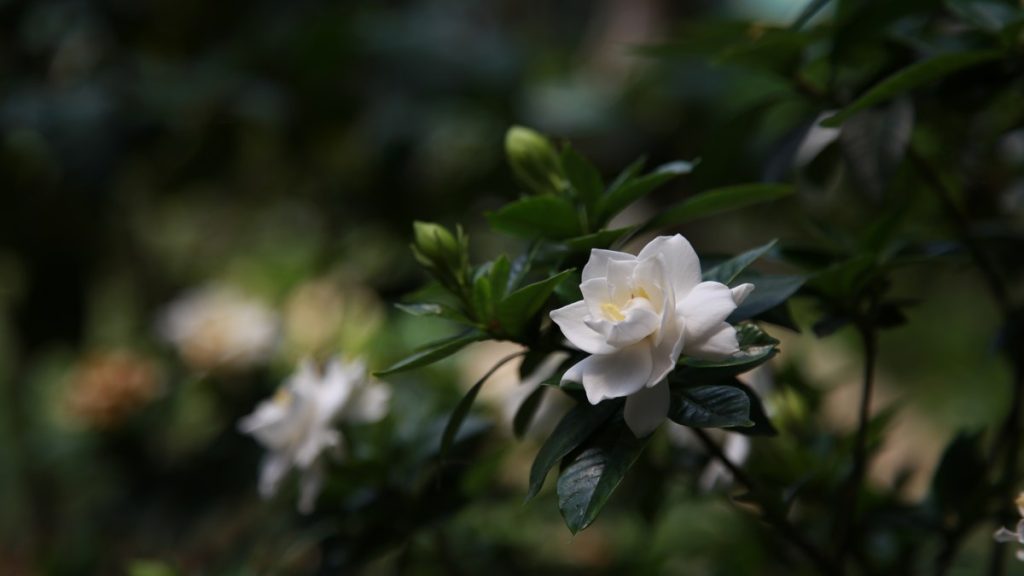
    Gardenia flower — research shows shorter days paired with cool nights promote its flower bud initiation
    Of the four genera this site covers, only gardenia has controlled research confirming a short-day flowering response.

    Gardenia: the one genus here with real evidence behind it

    Gardenia is the exception in this cluster, and it has controlled research to back the claim. A study on flower initiation and development in gardenia, published through the International Society for Horticultural Science, tested plants under 8-hour, 12-hour and 16-hour photoperiods in growth chambers. Plants held under the 8-hour or 12-hour treatments for the first four weeks showed a markedly higher percentage of visible flower buds than plants kept at 16 hours, which the study’s authors take as evidence that short photoperiods promote flower bud initiation in gardenia. The same research found that night temperature interacts with this response, which lines up with Clemson Cooperative Extension’s separately reported figure that gardenia needs night temperatures between 50 and 55°F to form flower buds at all.

    Put together, gardenia genuinely behaves like a short-day plant in the research sense: shorter days, paired with cool nights, promote the initiation of flower buds. A gardenia held under long artificial daylength and warm, constant temperatures indoors is working against both signals at once, not just one.

    Citrus: day length is documented as a minor factor, not the driver

    Citrus is the clearest counter-example in this cluster, and the research is unusually direct about it. A peer-reviewed review of citrus flowering physiology states that floral induction in citrus is triggered primarily by low temperature and water-deficit stress, and addresses photoperiod specifically: the gene most associated with photoperiod-driven flowering response in plants “is a flowering promoter in response to photoperiod; since the length of the day has little effect on the flowering of citrus, its role has been little studied in these species.” That is about as unambiguous as a citation gets. If a citrus tree is not flowering, adjusting how many hours of light it receives per day is very unlikely to be the fix. Cold exposure and, in warmer climates, a period of water stress followed by rehydration are the documented triggers, and those are covered separately from daylength in the cool rest: which fragrant plants need a cold spell before they flower.

    Jasmine and hoya: the evidence gap, stated honestly

    This is the section where this site’s own editorial rule matters most: when a figure or a claim cannot be verified, print no figure rather than guess. For both jasmine and hoya, controlled research specifically testing photoperiod’s effect on flowering, of the kind that exists for gardenia and has been explicitly ruled out for citrus, was not found in the sources checked for this article. That gap does not mean these plants definitely ignore day length. It means the question has not been answered publicly with the same rigor as the other two genera, and stating a photoperiod classification for either one here would be presenting a guess as settled science.

    What is better documented for these two genera is temperature and light intensity rather than day length specifically. Arabian jasmine, the species most often sold as an indoor fragrant plant, tends to flower on new growth through the warm months rather than holding to a single dark-triggered flush, which behaves more like a warmth-and-maturity response than a strict short-day or long-day pattern. Hoya flowering is more consistently linked in available guidance to plant maturity, light intensity over the course of a day and, once flowering starts, the permanent flowering spurs covered in when to prune a flowering houseplant, than to a documented daylength threshold. Neither of those substitutes for photoperiod research. They are simply what the evidence currently supports for these two plants, and the honest position is that the photoperiod question for jasmine and hoya is not settled either way.

    Why an indoor lamp or a hallway light can matter, even without a full grow light

    The uninterrupted-darkness principle from OSU Extension above has a practical consequence worth stating plainly for gardenia, the genus here with a confirmed short-day response. A dark period that gets broken partway through, even briefly, by a room light, a hallway fixture, or a lamp left on nearby, does not register to a photoperiod-sensitive plant the same way as one long uninterrupted dark period. This is a well-established effect in short-day flowering crops generally, which is why greenhouse growers use brief night lighting specifically to prevent unwanted flowering in short-day plants on a schedule. For a gardenia positioned somewhere that reliably gets a burst of light overnight, such as near a porch light, a hallway, or a room used late at night, that interruption is worth ruling out as a reason flower buds are not initiating, separately from the light intensity the plant gets during the day.

    This principle has not been established with the same specificity for jasmine, hoya or citrus in the sources checked here, and it is not stated for them for that reason.

    Where to go next

    Frequently asked questions

    Do all fragrant houseplants respond to day length? No. Gardenia has documented research showing a short-day response. Citrus flowering is driven mainly by cold and water stress, with day length explicitly reported as having little effect. Jasmine and hoya do not have well-documented photoperiod research behind them either way, so no classification is stated for those two here.

    Could a hallway light or a lamp really stop my gardenia from setting buds? It is a real possibility worth ruling out. Photoperiod-sensitive plants respond to an unbroken period of darkness, and a light interrupting that period, even briefly, can behave differently than a long uninterrupted dark stretch. This mechanism is well established in short-day plants generally and is worth checking for a gardenia positioned somewhere that gets late-night light.

    My citrus tree isn’t flowering. Should I try shortening its daylight hours? That is unlikely to help. Published research on citrus flowering physiology states that day length has little effect on it, with cold exposure and, in some climates, water stress and rehydration being the documented triggers instead.

    Is jasmine a short-day or long-day plant? That is not established with confidence in the available research. Rather than assign a category, this article states what is better documented: Arabian jasmine tends to flower on new growth through warm months, which points more toward temperature and maturity than a specific daylength threshold.

    Does a grow light left on too many hours a day stop houseplants from flowering? For a genuinely short-day-responsive plant such as gardenia, extending light and shortening the dark period works against the signal it is reported to need. For citrus, day length is reported as a minor factor, so this concern applies less. This article covers only whether daylength itself matters; hardware and lighting setup are outside what it covers.