
Day length genuinely controls flowering in many plants, but it does not control all of them, and lumping the four fragrant genera this site covers into one answer would be wrong. Of gardenia, jasmine, hoya and citrus, only gardenia has documented research showing a clear response to shorter days. Citrus flowering is driven mainly by cold and drought stress, and published research states plainly that day length has little effect on it. Jasmine and hoya do not have well-documented photoperiod research behind them at all in what is publicly available, so the honest answer for those two is that the evidence is thin, not that the answer is no.
What photoperiod actually means, and what it does not
Photoperiodism is the plant’s response to day length, but the mechanism is more specific than “amount of light.” Oregon State University Extension Service states it directly: “the amount of uninterrupted darkness is what determines the formation of flowers on most types of plants.” Plants sense the length of an unbroken dark period, not simply how much daylight they got. That distinction matters practically, and comes back later in this article.
OSU Extension defines the three response categories that come up whenever this subject is discussed:
- Short-day plants (more accurately, long-night plants) “form flowers only when day length is less than about 12 hours.” Chrysanthemums, poinsettias and Christmas cactus are commonly cited examples.
- Long-day plants “require more than 12 hours of light to bloom.”
- Day-neutral plants “form flowers regardless of day length.”
These categories describe a genuine, well-studied area of plant physiology. The mistake is assuming every flowering plant fits neatly into one of them, or that owning a fragrant houseplant tells you which category it falls into.
Gardenia: the one genus here with real evidence behind it
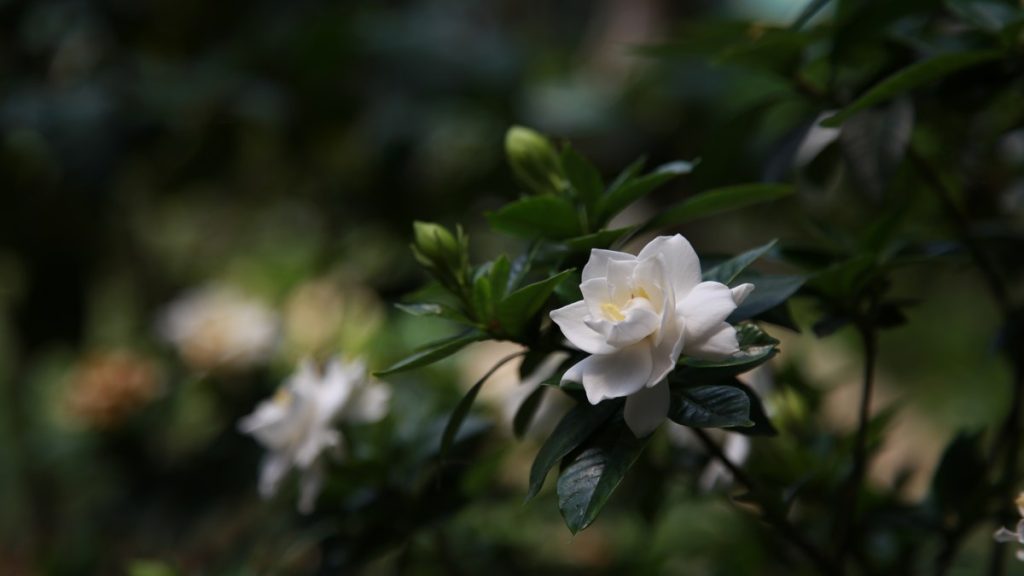
Gardenia is the exception in this cluster, and it has controlled research to back the claim. A study on flower initiation and development in gardenia, published through the International Society for Horticultural Science, tested plants under 8-hour, 12-hour and 16-hour photoperiods in growth chambers. Plants held under the 8-hour or 12-hour treatments for the first four weeks showed a markedly higher percentage of visible flower buds than plants kept at 16 hours, which the study’s authors take as evidence that short photoperiods promote flower bud initiation in gardenia. The same research found that night temperature interacts with this response, which lines up with Clemson Cooperative Extension’s separately reported figure that gardenia needs night temperatures between 50 and 55°F to form flower buds at all.
Put together, gardenia genuinely behaves like a short-day plant in the research sense: shorter days, paired with cool nights, promote the initiation of flower buds. A gardenia held under long artificial daylength and warm, constant temperatures indoors is working against both signals at once, not just one.
Citrus: day length is documented as a minor factor, not the driver
Citrus is the clearest counter-example in this cluster, and the research is unusually direct about it. A peer-reviewed review of citrus flowering physiology states that floral induction in citrus is triggered primarily by low temperature and water-deficit stress, and addresses photoperiod specifically: the gene most associated with photoperiod-driven flowering response in plants “is a flowering promoter in response to photoperiod; since the length of the day has little effect on the flowering of citrus, its role has been little studied in these species.” That is about as unambiguous as a citation gets. If a citrus tree is not flowering, adjusting how many hours of light it receives per day is very unlikely to be the fix. Cold exposure and, in warmer climates, a period of water stress followed by rehydration are the documented triggers, and those are covered separately from daylength in the cool rest: which fragrant plants need a cold spell before they flower.
Jasmine and hoya: the evidence gap, stated honestly
This is the section where this site’s own editorial rule matters most: when a figure or a claim cannot be verified, print no figure rather than guess. For both jasmine and hoya, controlled research specifically testing photoperiod’s effect on flowering, of the kind that exists for gardenia and has been explicitly ruled out for citrus, was not found in the sources checked for this article. That gap does not mean these plants definitely ignore day length. It means the question has not been answered publicly with the same rigor as the other two genera, and stating a photoperiod classification for either one here would be presenting a guess as settled science.
What is better documented for these two genera is temperature and light intensity rather than day length specifically. Arabian jasmine, the species most often sold as an indoor fragrant plant, tends to flower on new growth through the warm months rather than holding to a single dark-triggered flush, which behaves more like a warmth-and-maturity response than a strict short-day or long-day pattern. Hoya flowering is more consistently linked in available guidance to plant maturity, light intensity over the course of a day and, once flowering starts, the permanent flowering spurs covered in when to prune a flowering houseplant, than to a documented daylength threshold. Neither of those substitutes for photoperiod research. They are simply what the evidence currently supports for these two plants, and the honest position is that the photoperiod question for jasmine and hoya is not settled either way.
Why an indoor lamp or a hallway light can matter, even without a full grow light
The uninterrupted-darkness principle from OSU Extension above has a practical consequence worth stating plainly for gardenia, the genus here with a confirmed short-day response. A dark period that gets broken partway through, even briefly, by a room light, a hallway fixture, or a lamp left on nearby, does not register to a photoperiod-sensitive plant the same way as one long uninterrupted dark period. This is a well-established effect in short-day flowering crops generally, which is why greenhouse growers use brief night lighting specifically to prevent unwanted flowering in short-day plants on a schedule. For a gardenia positioned somewhere that reliably gets a burst of light overnight, such as near a porch light, a hallway, or a room used late at night, that interruption is worth ruling out as a reason flower buds are not initiating, separately from the light intensity the plant gets during the day.
This principle has not been established with the same specificity for jasmine, hoya or citrus in the sources checked here, and it is not stated for them for that reason.
Where to go next
- The cool rest: which fragrant plants need a cold spell before they flower: the related, better-documented cool-temperature requirement.
- Why a fragrant houseplant refuses to flower indoors: the full diagnostic map if buds have not formed at all.
- When to prune a flowering houseplant: includes hoya’s flowering-spur behavior referenced above.
- Plant-specific pages: gardenia, citrus, jasmine, hoya.
Frequently asked questions
Do all fragrant houseplants respond to day length? No. Gardenia has documented research showing a short-day response. Citrus flowering is driven mainly by cold and water stress, with day length explicitly reported as having little effect. Jasmine and hoya do not have well-documented photoperiod research behind them either way, so no classification is stated for those two here.
Could a hallway light or a lamp really stop my gardenia from setting buds? It is a real possibility worth ruling out. Photoperiod-sensitive plants respond to an unbroken period of darkness, and a light interrupting that period, even briefly, can behave differently than a long uninterrupted dark stretch. This mechanism is well established in short-day plants generally and is worth checking for a gardenia positioned somewhere that gets late-night light.
My citrus tree isn’t flowering. Should I try shortening its daylight hours? That is unlikely to help. Published research on citrus flowering physiology states that day length has little effect on it, with cold exposure and, in some climates, water stress and rehydration being the documented triggers instead.
Is jasmine a short-day or long-day plant? That is not established with confidence in the available research. Rather than assign a category, this article states what is better documented: Arabian jasmine tends to flower on new growth through warm months, which points more toward temperature and maturity than a specific daylength threshold.
Does a grow light left on too many hours a day stop houseplants from flowering? For a genuinely short-day-responsive plant such as gardenia, extending light and shortening the dark period works against the signal it is reported to need. For citrus, day length is reported as a minor factor, so this concern applies less. This article covers only whether daylength itself matters; hardware and lighting setup are outside what it covers.
Leave a Reply