Tag: fragrant houseplants

  • Will a Grow Light Make Plants Flower? The Honest Answer

    Will a Grow Light Make Plants Flower? The Honest Answer

    Will a grow light make plants flower? Yes, but only if light was actually the limiting factor in the first place. A grow light adds usable energy, and if your plant has been sitting below the light level flowering requires, more light can close that gap and let it bloom. What a grow light cannot do is fix a plant that is overfed on nitrogen, too young to flower, or waiting on a cool spell it has never received. Buying a lamp before you know which of those applies is how people end up with a brightly lit plant that still will not flower.

    What a grow light actually changes

    A grow light is not a special category of light. It is a way of adding photosynthetically active radiation, the wavelengths a plant can actually use, at a time or in an amount your window cannot supply on its own. University of Minnesota Extension states the underlying point plainly in its guidance on lighting for indoor plants: “While a plant may tolerate lower light growing conditions, more light may be required to promote dense foliage and flowering.” A lamp is one way to supply that extra light. Nothing about it changes what light is doing for the plant, which is funding growth after survival costs are covered, and flowering only once there is a surplus.

    That means the honest test for whether a grow light will help is the same test that decides whether your window will help: is light genuinely the thing standing between your plant and a flower, or is something else? If your plant has never made a single flower bud despite years in a bright, unobstructed south-facing window, adding a lamp on top of light it is already receiving plenty of is unlikely to change the outcome, because light was never the constraint.

    When a lamp is genuinely the answer

    A grow light earns its keep in a specific situation: a plant that is healthy, growing steadily, has no other obvious limitation, and sits in a position where daylight is honestly weak, a north-facing room, a deep interior spot, or a short winter day length at a northern latitude. In that situation the plant may be spending everything it earns just staying alive, with nothing left over for a bud. Supplying additional light directly increases the surplus available for flowering, and this is the one clean case where a lamp is solving the actual problem rather than papering over a different one.

    Day length is part of this too, and it is a separate variable from intensity. As reported by University of Missouri Extension’s guide to indoor lighting, houseplants sort into three broad groups by how they respond to day length: short-day plants that need long nights to set buds, long-day plants that flower once daylight hours exceed darkness, and day-neutral plants that are largely insensitive to day length and flower on other cues instead. A lamp run on a timer can extend day length for a long-day plant or, less obviously, disrupt the dark period a short-day plant needs. Before assuming more hours of light is automatically better, it helps to know which category your plant falls into, and for most of the genera this site covers that is not firmly established for houseplant-scale growing, which is a fair reason to treat day length as a secondary lever rather than the first thing to change.

    What a grow light will not fix

    This is the part the retail tier of this search result rarely says out loud, and it is the more useful half of the answer for most readers.

    A plant that is already in a bright spot. If your plant sits in strong, unobstructed light and still will not flower, adding a lamp is adding light to a budget that light was never limiting. See how much light do plants need to flower for how to judge whether your current position is genuinely weak or whether the plant simply looks dim to your eyes, which adapt to a room far more than a camera or a meter would.

    A plant that needs a cool period. Some fragrant houseplants will not initiate flower buds without a sustained cool spell or a nightly temperature drop, regardless of how much light they get. A brightly lit plant kept at one warm, comfortable temperature all year can still make no buds at all. See the cool rest for which plants need which kind of chill.

    A plant that is overfed on nitrogen. A well-fed plant with plenty of light has every reason to keep making leaves and no signal to stop. More light on top of that pattern usually produces more leaf, not more flower. See too much nitrogen and no flowers.

    A plant that is simply too young. Many woody and climbing fragrant plants pass through a juvenile phase during which no amount of light, feeding, or chilling will produce a flower, because the plant has not yet reached the developmental stage that makes flowering possible at all. See how long before a plant flowers.

    A plant that already set buds and lost them. A grow light changes the ongoing light budget. It does nothing for buds that have already been sacrificed to a recent stress. That is a different problem, covered in flower buds falling off before opening.
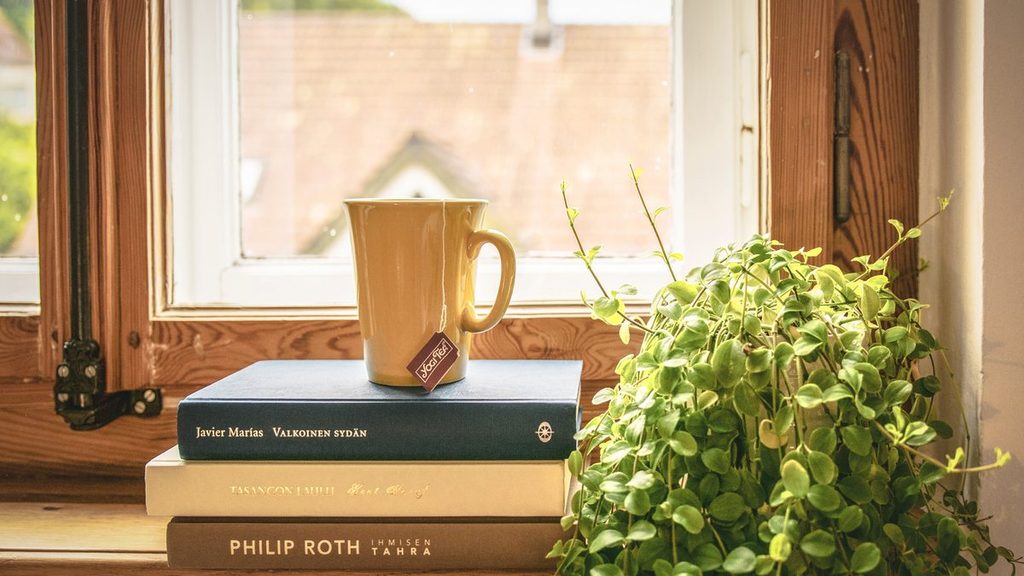
    A houseplant thriving on a sunny windowsill, where adding a grow light would add nothing

    The hardware question, and where this site stops

    Which lamp, how far to hang it, what spectrum, and how many hours a day are all real questions, and they are equipment questions rather than flowering questions. This site is built around the flower and the scent, not around grow-light hardware, so it stops at the honesty of whether a lamp is the right tool at all rather than which lamp to buy. For guidance on setting up supplemental lighting itself, Iowa State University Extension’s guide to supplemental lights for indoor plants is a reasonable place to start, since it is written by a public institution with nothing to sell.

    The practical order to work through this in

    1. Judge your current light honestly first, using the position test in how much light do plants need to flower, before assuming a lamp is missing from the picture.
    2. Rule out a cool-period requirement and check the plant’s age, since neither responds to more light at all.
    3. Check recent feeding. A plant loaded with nitrogen will not flower faster under a lamp.
    4. Only then, if your plant is genuinely light-starved and none of the above explains it, is a grow light the correct next step.

    Frequently asked questions

    Will a grow light make my plant flower faster than a bright window would? Not inherently. A grow light and a bright window are both supplying photosynthetically active radiation, and what matters is the total amount and consistency the plant receives, not the source. A lamp is useful because it can supply light where a window cannot, such as a dim corner or during a short winter day, not because artificial light is somehow more effective per unit than daylight.

    My plant is already in a south-facing window. Should I add a grow light anyway? Generally no, unless you have reason to think the window is weaker than it looks, such as a nearby building, tree, or heavy curtain cutting the light your plant actually receives. Adding light on top of an already strong position is unlikely to change a flowering outcome that has some other cause.

    Can a grow light on a timer replace the cool period some plants need? No. A grow light changes light. It does not change temperature, and the cool-period requirement some fragrant plants carry is a temperature signal, not a light signal. The two triggers are independent, and satisfying one does nothing for the other.

    Will running a grow light longer hours make my plant flower sooner? Not necessarily, and for a short-day plant it can actively prevent flowering, since those plants need an uninterrupted dark period to set buds. More hours of light is not a universal improvement. It only helps where intensity or total daily light, not darkness, was the missing piece.

    Is it worth buying a cheap grow light just to test whether light is the problem? It can be a reasonable diagnostic if your plant genuinely sits in weak natural light and nothing else explains the lack of flowers. But test one variable at a time. If you add a lamp while also changing feeding, moving the plant, or repotting it, you will not be able to tell which change, if any, produced a bud.
  • Cold Period for Plants to Bloom: Who Actually Needs One

    Cold Period for Plants to Bloom: Who Actually Needs One

    A cold period for plants to bloom is a real requirement for some species and irrelevant for others, and the difference decides whether your warm home is the reason you have no flowers. Plants that evolved with a distinct cool season use that cool spell as the signal to start flower buds. A room held at one comfortable temperature all year removes the signal. Two separate requirements get confused here, and they are not interchangeable: a seasonal chill lasting weeks, and a nightly temperature drop lasting hours.

    Why a comfortable room is the problem

    A plant has no calendar. It infers where it is in the year from what it can measure, mainly light and temperature, and for many species the passing of a cool season is the trigger that switches development from making leaves to making flowers. Remove that trigger and the plant does not fail. It simply keeps doing what it was doing, which is growing.

    This is worth being precise about, because it sounds like folklore. It is not. Commercial growers treat the requirement as an engineering problem with a known workaround: Virginia Cooperative Extension’s guidance on plant growth regulators for floriculture crops notes that gibberellic acid products “can be used to substitute for all or part of the chilling requirement of some woody and herbaceous ornamentals typically forced in the greenhouse.” An industry does not develop a chemical substitute for a requirement that does not exist.

    Framed that way, the fairness question answers itself. You have not neglected the plant. You have given it a permanent summer, and it is waiting for one to end.

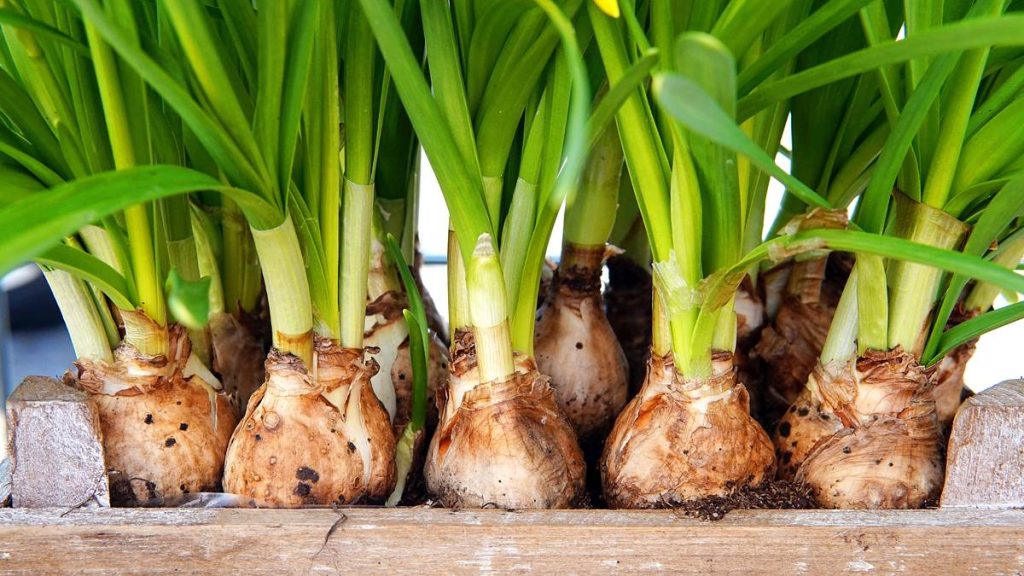
    Potted spring bulbs, which require weeks of cold storage before they will flower
    Spring bulbs are the clearest example of a true seasonal chilling requirement — weeks of cold before any bloom.

    Two different requirements, constantly confused

    Almost every article on this subject collapses these into “keep it cooler.” They are different mechanisms with different plants attached.

    The seasonal chill. A sustained cool period, measured in weeks, that the plant experiences before it initiates flower buds. The clearest documented version is bulb forcing. Iowa State University Extension instructs that potted bulbs need “40 to 45°F for 12 to 15 weeks,” during which “critical root growth and flower development occur,” and states that “the bulbs will not bloom properly without the cold period.” That is a bulb-specific protocol, not a rule for fragrant houseplants, but it is the cleanest published illustration of the principle.

    The nightly drop. A daily difference between day and night temperature, measured in hours, which some plants require while buds are forming. A home with the heating on at a steady setting can flatten that difference completely. The gardenia is the best-documented case in this niche.

    If you are not sure which your plant needs, the sorting table below is the fastest way to find out. Applying the wrong one is common, and a gardenia given a six-week cold spell it never asked for is a different mistake from a gardenia that never gets a cooler night.

    Which plants need which

    Every figure below is quoted from the source named beside it. Rows for which no citable horticultural source could be found are recorded as such rather than filled in.

    Plant Requirement What the source says Source
    Gardenia Nightly drop “Night temperatures between 50 and 55 °F are necessary for the formation of flower buds” Clemson Cooperative Extension
    Gardenia Nightly drop “Cooler room temperatures are best for the gardenia, around 55 F at night and about 10 degrees warmer by day” Purdue Consumer Horticulture
    Gardenia Nightly drop A “consistent 10-15-degree temperature drop in the evening,” with a minimum around 60°F New York Botanical Garden plant information service
    Citrus Cool season, mild “In Florida, floral initiation is highly dependent on cold temperatures ranging from 59°F to 68°F in the fall and winter” University of Florida IFAS, EDIS HS1399
    Citrus Cool season, mild Nights of 55 to 65°F, and “cooler temperatures initiate flower development” University of Maryland Extension
    Jasmine (Jasminum polyanthum) Seasonal chill Cool nights for roughly six weeks before buds are set, with quoted ranges spanning about 40 to 60°F Consumer and retail horticulture sources only. See the section below
    Hoya Not established No extension service or botanic garden source stating a chilling requirement was found in the checks made for this article None found
    Spring bulbs, for comparison True chilling “40 to 45°F for 12 to 15 weeks” Iowa State University Extension

    Notice that the three institutional sources for the gardenia do not agree with each other. Clemson’s figure sits below the minimum the New York Botanical Garden recommends. That disagreement is real, and it is useful: it tells you the target is a pattern, not a set point.

    What “cool” actually means, and why the numbers you see disagree

    For the jasmine most often sold as an indoor plant, the widely repeated advice is a cool rest of roughly six weeks before flowering. Checked at the time of writing, that guidance appears mainly on retail and consumer gardening sites, the temperature ranges they give differ substantially from one another, and no primary horticultural publication carrying the figure could be traced. Anyone quoting a single confident number for jasmine is repeating a number whose origin is not visible.

    So use the qualitative version, which is what the disagreeing sources do agree on:

    • Noticeably cooler than the rest of your home, not merely “not hot.”
    • For a substantial stretch of the cool part of the year, measured in weeks rather than days.
    • Without freezing, and without wild swings from one day to the next.
    • With light maintained. A cool rest is not a dark rest. The plant still needs the brightest position you can give it, which is covered in how much light do plants need to flower.

    How to do this in an apartment with no garage

    Nearly every article on this subject tells you to move the plant to an unheated garage or a porch. If you do not have one, that advice is useless. The genuinely available options in an apartment are:

    • An unheated spare room, or a room where the radiator can be turned off and the door kept shut.
    • A hallway, stairwell or landing, which is often several degrees cooler than living space.
    • A north-facing window position in the northern hemisphere, or a south-facing one in the southern hemisphere, which stays cooler while still receiving daylight.
    • An enclosed balcony or sunroom, but only where the climate reliably stays above freezing.
    • A bedroom kept cooler at night, which will not deliver a seasonal chill but can supply the nightly drop that gardenias want.

    Then the honest part. Some homes cannot do this. A small, well-insulated apartment with central heating and no unheated space may not have a location cool enough for long enough, and for a plant with a strict seasonal requirement that means it will not flower there, no matter how carefully everything else is managed. That is a legitimate outcome, and knowing it is better than repeating the attempt for another year.

    What not to do

    Do not put the plant somewhere it can freeze. A cool rest and a frost are different events, and one of them ends the plant.

    Do not treat a cool rest as a license to stop caring for the plant. It still needs light, and it still needs water, though a cool plant uses less than a warm one. Watering routines are outside what this site covers. A university extension service or your local extension office is the right place to ask.

    Do not move a plant that is already carrying buds. Relocating during bud development is one of the most reliable ways to lose the flowers you were waiting for, as explained in flower buds falling off before opening.

    Do not assume a requirement applies to your plant just because it applies to the plant in the article you read. The name on the label is frequently wrong. Several unrelated plants are sold as “jasmine,” and they do not share one set of requirements. See jasmine for which plant you may actually have.

    If your plant does not need a cool period

    Then something else is limiting it, and the cool rest is a distraction. Work through why a fragrant houseplant refuses to flower indoors, which sorts the causes, and check the plant-specific pages for gardenia and citrus if you own one of those.

    One last thing worth saying plainly: a cool period removes an obstacle. It is not a lever you pull to produce flowers. If light is inadequate, a perfectly executed cool rest changes nothing.

    Frequently asked questions

    How cold does a cool period need to be?
    It depends on the species, and the published figures disagree. For gardenias, Clemson Cooperative Extension cites night temperatures between 50 and 55°F for flower bud formation, while the New York Botanical Garden recommends a consistent 10 to 15 degree evening drop with a minimum around 60°F. Aim for a clear, sustained contrast with the rest of your home rather than a specific number.

    How long does the cool period have to last?
    For plants that need a seasonal chill, sources describe weeks rather than days. Iowa State University Extension’s bulb-forcing protocol, the best documented case, calls for 12 to 15 weeks at 40 to 45°F. Guidance for fragrant houseplants is far less well sourced, with jasmine advice clustering around six weeks but coming almost entirely from commercial sources.

    Will a cold period damage my plant?
    Cool is not the same as cold. A temperature within the range a species tolerates is not damaging, but freezing is, and so are abrupt swings. The risk is concentrated in unheated spaces during severe weather and on balconies. If you cannot be confident the space stays above freezing, do not use it.

    Does a gardenia need a cool season or just cool nights?
    Cool nights. Every institutional source found for the gardenia describes a day-to-night temperature difference during bud formation, not a seasonal chill lasting weeks. That is why a gardenia can fail in a home that is warm at night while a jasmine fails in a home that is warm all year: they are failing for different reasons.

    My plant is in a cool room and still will not flower. Now what?
    Check light first, since inadequate light is the most common limit indoors and a cool rest cannot compensate for it. After that, consider the plant’s age, because many woody and climbing plants cannot flower until they mature, and confirm the plant’s identity, since care advice attached to the wrong species explains a surprising number of these cases.

  • How Much Light Do Plants Need to Flower Indoors?

    How Much Light Do Plants Need to Flower Indoors?

    There is no single answer to how much light do plants need to flower, but there is a reliable rule: a plant needs considerably more light to build a flower than to stay alive, and the gap between the two is wider than most rooms suggest. University of Minnesota Extension states it plainly in its indoor lighting guidance: “While a plant may tolerate lower light growing conditions, more light may be required to promote dense foliage and flowering.” So a plant can sit in a spot that is perfectly adequate for survival, look healthy for years, and never accumulate the surplus a flower costs.

    Why a healthy plant can still be light-starved

    Light is not a comfort. It is income. Everything a plant does is paid for out of what its leaves capture, and the plant spends that income in a strict order: keep existing tissue alive first, grow new leaves second, and only then, if there is anything left over, build flowers.

    That order is why the objection almost everyone raises here is the wrong test. “It looks completely fine in this spot” is evidence about the survival budget, and nothing at all about the surplus. A plant can hold its leaves, hold its color and slowly add growth for years while sitting permanently below the level at which flowering becomes affordable.

    Bodie Pennisi of University of Georgia Extension puts light at the top of the list of everything that governs indoor plants: “Of all of the factors affecting plant growth in interiors, adequate light is by far the most important.” Robert Pavlis, writing independently at Garden Myths, reaches the same conclusion for the flowering question specifically: “The most common reason for poor flowering is a lack of light intensity.”

    Gardenia in bloom, a plant that needs at least half a day of direct sunlight to flower
    Gardenias need direct sunlight for a significant part of the day to produce their fragrant blooms.

    “Bright indirect light” describes survival, not flowering

    The phrase on the care label was never designed to answer this question. It is a tolerance statement, telling you the range in which the plant will not decline. The same three words are printed for a foliage plant that is expected to do nothing but persist and for a flowering plant you bought for its blooms, which is why following the label perfectly can still produce a flowerless plant.

    There is also a scale problem the vocabulary hides. Outdoor light on an open day is far more intense than anything inside a window, and Garden Myths illustrates the gap with a plant most people consider easy: Phalaenopsis orchids “bloom fairly well in the house provided you give them a bright window. Take them outside for the summer and you will see a dramatic change in flowering.” The same source is blunt about the wider category: “almost no plant thrives in low light.”

    Read a care label as a floor, not as a target. Nothing on it is a promise about flowers.

    How to read a spot without buying anything

    An honest caveat first, from University of Florida IFAS Gardening Solutions: “our eyes are very adaptable,” which makes us “poor judges of light intensity,” and it recommends a meter. That is true, and it is exactly why this section is a sorting method rather than a measurement. Used carefully, the following will separate a plausible flowering position from a hopeless one, which is the decision you actually face.

    • Which way does the window face? In the northern hemisphere, an unshaded south-facing window offers the strongest light available in an average home. East and west offer part of the day. An unobstructed north window is a survival position for most fragrant plants, not a flowering one. Reverse the compass in the southern hemisphere.
    • What is outside it? A neighboring wall, a balcony above, a tree in leaf or a permanent net curtain can remove more light than moving the plant one room over would. Judge the sky the plant can see, not the window.
    • How much of the day can the plant see sky? Stand where the plant stands, look out and estimate the hours during which the sky is directly visible, not merely bright. This matters more than the room’s overall brightness.
    • How sharp is the shadow? Hold your hand a few inches above the leaves in the middle of a clear day. A crisp shadow with defined edges indicates strong light. A soft outline indicates moderate light. No discernible shadow indicates a position where flowering is unlikely for most fragrant plants.
    • How far is it from the glass? Light falls off steeply with distance from a window, so a plant a few steps into the room can be in a fundamentally different position from one on the sill, even though the room looks equally bright to you.

    None of this is precise. It is designed to tell you whether you are in the running.

    How much varies enormously by plant, and no single number covers them all

    Any page that gives you one figure for “flowering houseplants” is guessing, because the requirement is species-specific. Where a named horticultural source publishes a figure for a named plant, it is worth having:

    • Gardenia. Purdue Consumer Horticulture advises to “make sure you give the plant plenty of bright light, preferably direct sunshine for at least half a day.”
    • Dwarf citrus. University of Maryland Extension advises placing the plant “where it will receive at least 6 hours of direct sunlight,” and describes 8 to 12 hours as ideal.

    Those are direct sun figures, published by extension services, for two of the most common fragrant houseplants. Compare them against the shadow and sky observations above, and the reason so many of these plants never flower indoors becomes obvious. For plant-by-plant expectations, see gardenia and citrus.

    Day length matters too, and it is a separate thing

    Intensity is not the only variable. The New York Botanical Garden notes that “most flowering houseplants are long-day plants that bloom when the sunlit hours outnumber the hours of darkness,” with winter-flowering exceptions that respond to the opposite pattern. This is why a plant can hold a bright position and still flower only at one point in the year, and why lengthening the day artificially does not have a uniform effect across species.

    What about a grow light?

    That is a hardware question, and this site does not cover lamp selection, placement, spectrum or run time. Worth naming out loud: several of the pages that rank highest for this search are published by companies that sell grow lights, which does not make them wrong but does mean the conclusion was reached by an interested party. For lighting guidance from a public institution, University of Minnesota Extension’s page on lighting for indoor plants is a reasonable starting point.

    If light is not the problem

    If your plant sits in a genuinely strong position and still refuses, work through the other causes rather than adding more light.

    Frequently asked questions

    Will moving my plant to a brighter window make it flower this year?
    Usually not this year. Most fragrant plants set flower buds during a particular phase of their annual cycle, so improved light generally shows up in the next cycle rather than the current one. There is also a cost to moving: a plant already carrying buds can drop them in response to the change. Move it when it is not in bud, then leave it alone.

    My plant grows fine but never flowers. Can light really be the issue?
    Yes, and it is the most common explanation. Growth proves the plant is covering its running costs. Flowering requires a surplus above those costs, and light intensity is what generates the surplus. Steady, unremarkable growth in a modest spot is entirely consistent with never having enough left over to fund a bloom.

    Do I need a light meter or a phone app?
    No, not for this decision. A meter gives you a number, but the choice in front of you is usually between two or three positions in your own home, and the shadow test plus an honest look at what the window faces will rank them. Instruments become useful when you are comparing subtle differences, which is not the situation most flowerless plants are in.

    Is a bright room the same as a bright position?
    No, and the difference decides a lot of cases. Rooms look uniformly bright to the human eye because our vision adapts, but light drops off sharply with distance from the glass and with anything blocking the sky. A plant several steps back from a window can be in a much weaker position than a plant on the sill in the same room.

  • Flower Buds Falling Off Before Opening: Why It Happens

    Flower Buds Falling Off Before Opening: Why It Happens

    Flower buds falling off before opening is almost never a disease. It is the plant canceling an expensive project. An unopened bud is the costliest uncommitted thing a plant is carrying, so when conditions change for the worse, the bud is the first thing sacrificed. That is why the trigger is usually recent and small rather than long-standing, and why the plant looks perfectly healthy afterward. Before anything else, work out which of two failures you had: did the buds fall off the plant, or did they dry up and stay attached?

    Your plant did not fail. It disinvested.

    Buds do not simply fall off the way a poorly glued object does. Plants shed organs through abscission, a controlled cell-separation process that happens at a purpose-built structure called the abscission zone. In their review in the journal Plants, Botton and Ruperti describe abscission as “a natural mechanism evolved by plants to respond to different cues” that is “accomplished through a series of highly coordinated sequential events.” The hormone ethylene drives the separation, and auxin flowing from a healthy, developing organ holds it back.

    That is the whole explanation in one sentence: while the plant is committed to the bud, it keeps sending the signal that holds the bud on. When the plant reads its conditions as marginal, that signal weakens, the abscission zone activates, and the bud is released deliberately. The same review notes that abscission “can be significantly affected by environmental conditions, such as light availability, temperature and drought stress.”

    So the question to ask is not “what damaged my buds.” It is “what made the plant decide it could not afford them.”

    Dropped or blasted? Two different failures

    These get treated as one thing almost everywhere, and they point in different directions.

    Dropped (abscission). The bud separates cleanly and falls, often still plump and green or showing color. You find whole buds on the floor or the soil surface, and the stem is left with a small, tidy scar rather than a torn stub. A clean scar means the plant let go on purpose.

    Blasted. The bud browns, shrivels or goes papery while still attached, and may hang on the plant for days or weeks. Nothing was released. The bud died in place.

    The distinction matters because blast tends to follow conditions that dry or scorch the bud faster than the plant can supply it, while a clean drop tends to follow a change the plant reads as a reason to disinvest. The American Orchid Society defines bud blast as buds that “wither and fall from an otherwise healthy plant” and calls buds “the most sensitive part of an orchid.” That last phrase generalizes well: across fragrant genera, the buds fail before the leaves show anything at all.

    What changed in the last two weeks?

    This is the practical output of the disinvestment idea. You are not looking for a long-standing fault. You are looking for a recent event.

    • Did you move it? A new position means a different light level and often a different temperature and airflow. The New York Botanical Garden’s plant information service attributes bud loss on a gardenia brought in from outdoors to “the lower light level indoors and lack of the temperature drop at night that the plant needs.”
    • Did the heating come on, or did a vent, radiator or draft start hitting it? Purdue Consumer Horticulture describes the gardenia meeting the home’s “hot, dry air and gloomy winter days,” after which buds “begin dropping from the plant in droves.”
    • Did watering slip, or swing? A plant that briefly reads drought will pull resources back from buds first. The trigger is usually the swing, not the average.
    • Did the air get dry? Buds lose water faster than they can replace it, and Clemson Cooperative Extension lists low humidity first among gardenia bud drop causes. How to raise humidity is equipment territory and not something this site covers.
    • Was it repotted or root-disturbed? Root disturbance during bud development is a common trigger.
    • Is there fruit on the counter nearby? This one is rarely mentioned and worth knowing. Ripening fruit releases ethylene, the same hormone that executes abscission. The American Orchid Society names “ethylene gas given off by ripening fruit; gas leaks” among the causes of bud blast.

    One honest note: the sources do not agree on how much of this is humidity and how much is temperature. Clemson names low humidity first, Purdue emphasizes hot dry air together with low winter light, and NYBG puts the missing night-time temperature drop at the center. The temperature figures themselves differ between institutions, which is covered in more detail under cold period for plants to bloom. Treat “which factor matters most” as unsettled, and treat stability as the point they all agree on.

    Why it is almost never a pest or a disease

    If buds are failing while foliage looks normal, a pathogen is an unlikely explanation. Pests do reach flower buds, and Clemson’s gardenia factsheet notes that “a whitefly infestation is the most commonly occurring problem on gardenias,” with aphids also common on leaf undersides. But a pest heavy enough to strip buds usually leaves other evidence: sticky residue, sooty deposits, distorted new growth or visible insects.

    Identifying and treating a pest is outside what this site covers. If you find one, take it to a university extension service, such as the Clemson Home and Garden Information Center or your own state or provincial extension office, both of which publish identification material and will answer a question directly.

    Can you save the buds you still have?

    Honestly, usually not the ones already committed to falling. Once the abscission zone in a bud has activated, that bud is gone, and buds that were stressed alongside it are often already on the same path. Nothing you do this week reverses that.

    What you can change is the outcome of the next flush. Every source above converges on one instruction, and it is not a technique but a discipline: stop changing things. Choose the position with the best available light, accept whatever temperature pattern that position gives, keep watering consistent rather than optimal, and then leave the plant alone through the entire bud-development period, which for many fragrant plants runs for weeks. NYBG also suggests pinching off young growth emerging beside a developing flower bud, which “forces the energy of the plant into bud formation.”

    If your plant never produced buds in the first place, this article is the wrong branch. Start from why a fragrant houseplant refuses to flower indoors, which sorts the no-bud causes separately.

    Find your plant

    The mechanism above is the same across species. What differs is which trigger each genus is most sensitive to.

    • Gardenia: the most bud-drop-prone plant in this niche, and the one with the most published guidance behind it.
    • Jasmine: several unrelated plants are sold under this name, and they do not all behave alike.
    • Hoya: buds develop slowly on structures the plant reuses, which changes what a lost bud costs you.
    • Citrus: some flower drop is normal, because the plant routinely sets more than it can carry.

    Frequently asked questions

    Why did my plant drop its buds right after I moved it to a better spot?
    Because “better” is judged by you and “different” is judged by the plant. A move changes light, temperature and airflow at once, during the phase when the plant is deciding whether it can afford the buds it is carrying. Movement during bud development is one of the recognized triggers for bud loss, even when the new position is objectively brighter.

    What is the difference between bud drop and bud blast?
    Bud drop means the bud separated at the abscission zone and fell, usually intact, leaving a clean scar. Bud blast means the bud browned or shriveled while still attached and died in place. Drop points toward a change the plant reacted to. Blast points toward buds losing water or being damaged faster than the plant could supply them.

    Will misting the buds help?
    This site does not compare humidity methods, so treat that as a question for a general houseplant care source. What is worth knowing here is that raising humidity is a slow, environmental change, and buds already committed to falling will usually fall regardless. Stability across the whole bud-development period matters more than any single intervention.

    Is bud drop caused by fertilizer?
    Rarely as a direct trigger. Bud drop follows environmental change far more often than nutrition. The related and more common mistake is expecting fertilizer to produce flowers in the first place, and the research does not support that expectation either.

    How long until it tries again?
    That depends on the species and on where it is in its annual cycle, and no honest answer covers all fragrant plants. Some set buds only once per year, in which case the next attempt is a season away. The useful goal is not rescuing this flush but making the plant’s conditions boring enough that the next one survives.