
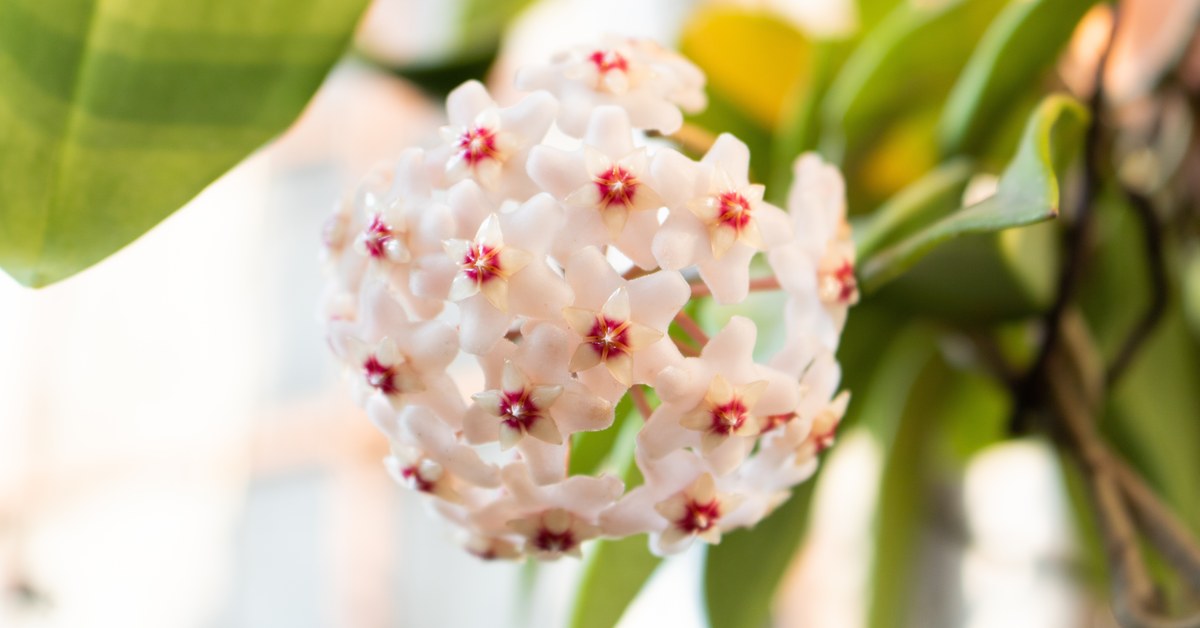
Hoyas, often called wax plants, carry waxy, star-shaped flowers in clusters, usually in summer. Iowa State Extension notes that fragrance varies by species: the wax plant (Hoya carnosa) is fragrant, especially in the evening, while the sweetheart hoya (H. kerrii) makes plenty of nectar and is not very fragrant.
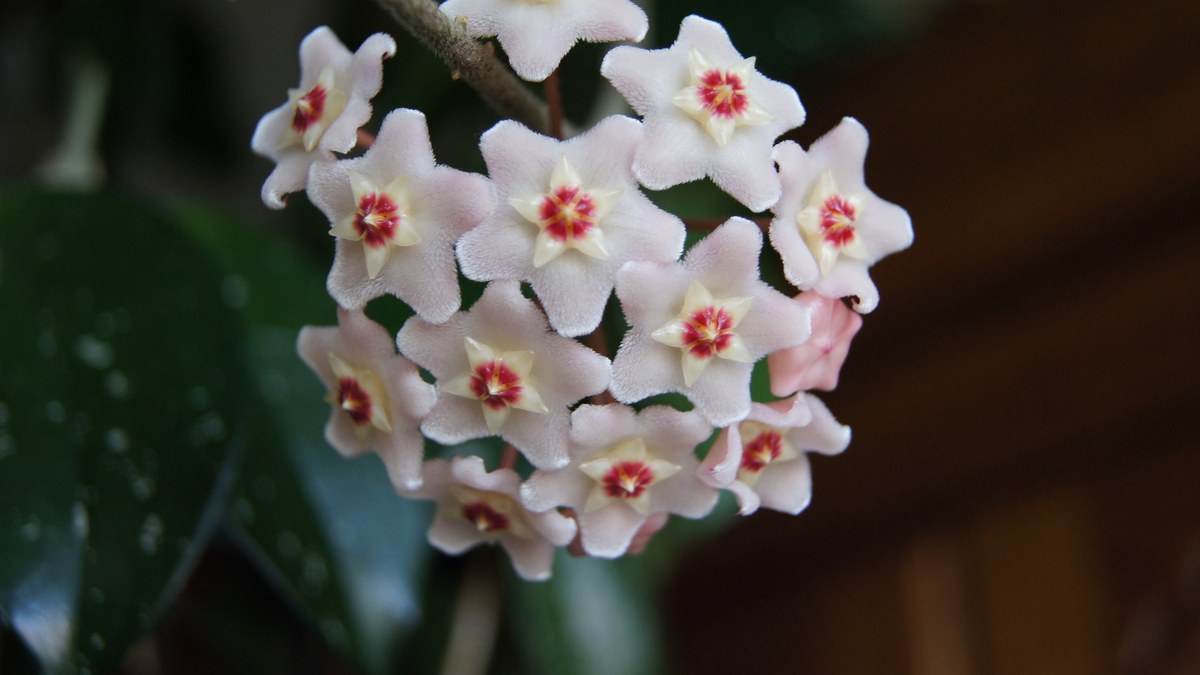
Light
Hoyas want bright, indirect light, and one of the brightest windows in the home is often best, especially for flowering. Too little light gives thin, stretched growth and little or no bloom. Too much can scorch leaves or turn them red.
Watering
Water thoroughly, then let the mix dry almost completely before watering again. Water less in winter or in low light. Overwatering in a poorly draining mix is the fastest route to root decline.
Temperature and humidity
- The ideal indoor range is 65 to 80°F, and hoyas do not tolerate temperatures below 55°F.
- A slightly cooler night can support flowering.
- Average indoor humidity is tolerated; 40 to 60 percent is given as ideal.
Pot and feeding
Use a chunky, fast-draining mix, for example potting soil with orchid bark and perlite or pumice. Hoyas often flower better when slightly potbound, so avoid oversized pots. Feed lightly in spring and summer at half or quarter strength, and do not fertilize in winter.
Flowering
- Flowers form on persistent spurs (peduncles), and many species rebloom from the same spur. Do not cut spent flowers off, because that can remove future flower sites.
- Young plants can take several years to mature and flower.
- Bud blast can happen if watering, temperature or light changes suddenly after buds form.
Common problems
Mealybugs, scale and spider mites are the usual pests, and spider mites are likelier in very dry air. Yellow leaves with constantly wet soil point to overwatering. Poor flowering usually means more light, patience and steady care are needed.
The general bloom guides apply here too: how much light plants need to flower, why moving a plant causes bud drop and whether being root-bound helps blooming.
Source
Iowa State University Extension and Outreach, “All About Hoyas,” Yard and Garden. Read October 8, 2026. This page rests on that one extension source, so treat species-specific details as a starting point.
Quick answers from the guides
- How Long Do Hoya Flowers Last? What to Do When They Fade: How long do hoya flowers last? See what sources actually say, why the figures vary, and why the bare stalk left behind is where your next flowers come from.
- Do Hoyas Like to Be Root Bound? What It Does for Blooms: Do hoyas like to be root bound? Extension advice says slightly pot-bound hoyas often flower better. See what that claim rests on, and what it cannot fix.
- Hoya Carnosa Identification: Wax Plant Names on Labels: Hoya carnosa identification made clearer: what the leaves and flowers look like, which label names mean carnosa, and why the species matters for scent.
- When Do Hoya Flowers Smell? Why It Is an Evening Plant: When do hoya flowers smell? Mostly in the evening and at night. Learn the internal clock behind it and how to judge your plant’s scent at the right hour.
- Hoya Nectar Dripping: Why the Flowers Leave Sticky Drops: Hoya nectar dripping is normal flowering, not damage. Learn why the flowers make it, why it lands below the plant, and how to live with it.
- Most Fragrant Hoya: Which Hoyas Smell, and Which Do Not: Looking for the most fragrant hoya? See what extension sources say about each common species, why rankings differ, and why yours may smell of nothing.
- Hoya Bud Drop: Why Buds Form, Then Shrivel and Fall: Hoya bud drop is usually a reaction to a recent change, not a dying plant. Learn the causes, what to check first, and why the spur can still flower again.
- Hoya Maturity to Bloom: How Old a Hoya Must Be to Flower: Hoya maturity to bloom is about stage, not birthdays. Learn why the ages online disagree and how to tell if your hoya is too young or just short of light.
- Hoya Peduncle: Why You Should Never Cut the Flower Spur: A hoya peduncle looks like a dead twig but carries future flowers. Learn to recognize it, why cutting it costs blooms, and what to do if you already did.
- How to Get a Hoya to Bloom: What Actually Matters: How to get a hoya to bloom, ranked by evidence: light first, then age and the flower spurs you must not cut. Skip the myths and fix what matters.
Leave a Reply