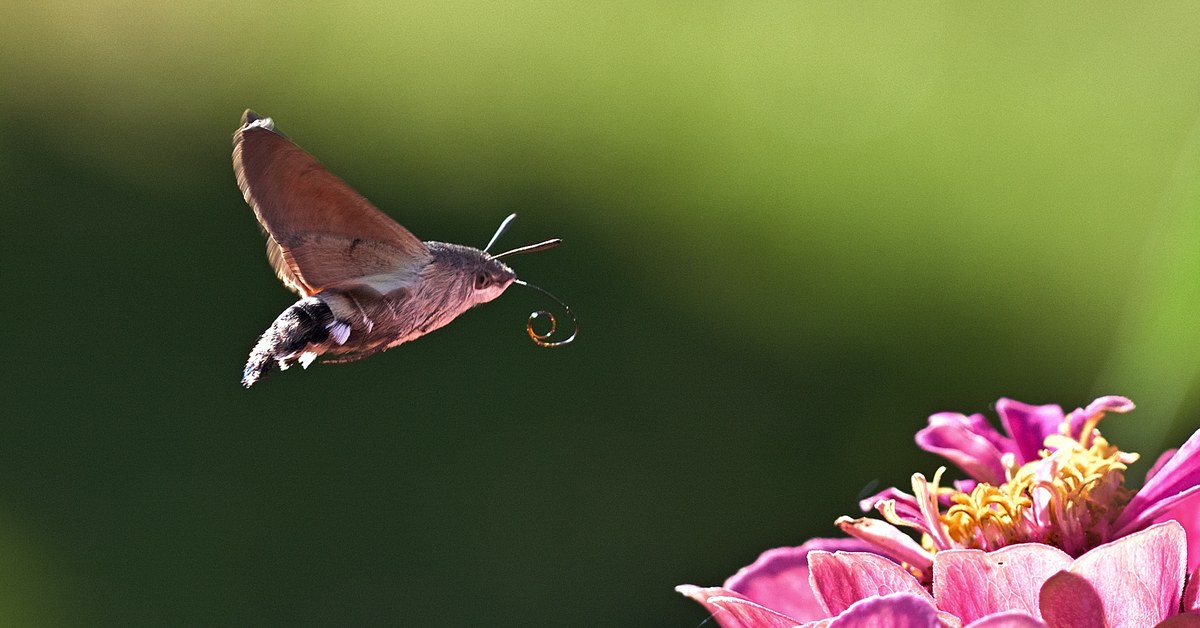
Because the plants that do it are advertising to animals that fly after dark, mostly moths, and their scent output is timed to that audience. The timing is driven by an internal clock rather than by the room going cool or dark, and it has been shown to keep running under constant darkness and constant light. This is a property of particular species, not of flowers in general. Plenty of fragrant houseplants do the opposite and peak in daylight, and the popular explanation that cool evening air makes scent linger runs against what the measurements show.
The rhythm is internal, and that has been tested
The strongest evidence for this comes from a study on a day-scented plant, which is what makes it convincing.
In “Regulation of Circadian Methyl Benzoate Emission in Diurnally and Nocturnally Emitting Plants,” published in The Plant Cell in 2001 and read 7 September 2026, Natalia Kolosova, Nina Gorenstein, Christine M. Kish and Natalia Dudareva measured methyl benzoate, one of the most abundant scent compounds of bee-pollinated snapdragon flowers. Emission was rhythmic, peaked during the day, and coincided with the foraging activity of bumblebees. When the researchers removed the environmental cues by holding plants in continuous darkness or continuous light, the rhythm kept going on its own cycle.
A rhythm that persists without a day-night cue is a clock, not a reaction. The same paper set that finding against nocturnally emitting plants, which is why its title names both.
So a night-scented plant is not waiting for the sun to go down and then responding. It is anticipating, on schedule, the way a person wakes up shortly before an alarm.
The audience is moths
Natalia Dudareva of Purdue University stated the pattern for a general readership in Scientific American on 18 April 2005, read 7 September 2026: plants “that maximize their output during the day are primarily pollinated by bees or butterflies, whereas those that release their fragrance mostly at night are pollinated by moth and bats.”
The chemistry backs the split. Jette T. Knudsen and Lars Tollsten, in “Trends in floral scent chemistry in pollination syndromes: floral scent composition in moth-pollinated taxa,” published in the Botanical Journal of the Linnean Society in 1993, examined scent composition specifically across moth-pollinated plants, and the fact that such a survey is possible is the point: moth-pollinated flowers share recognizable chemical signatures.
A recent field example is worth quoting because it shows the reasoning in action. María Cleopatra Pimienta, Diego Salazar and Suzanne Koptur published “The Nighttime Fragrance of Guettarda scabra (Rubiaceae): Flower Scent and Its Implications for Moth Pollination” in Molecules in 2023, read 7 September 2026. They observe that “fragrance release usually peaks when the flower is receptive to pollination,” which “frequently correlates with the peak activity of moths in night-blooming hawkmoth-pollinated plants.” Their measured blend, dominated by benzeneacetaldehyde and (E)-beta-ocimene, is “consistent with that of night-blooming plants pollinated by nocturnal hawkmoths,” and they conclude the scent “fits the fragrance profile of plants that commonly attract hawkmoths.”
Note the direction of the argument. The flower smells at night because that is when its pollinator is flying. The darkness does not cause the smell; the moth’s schedule did, over evolutionary time.
There is also a practical reason the signal has to be chemical rather than visual. After dark, a white flower is still visible up close but useless as a long-distance advertisement, so scent carries the work of being found at all.
The explanation you will see everywhere, and why it is backwards
The common account online is that scent compounds evaporate more slowly in cool evening air, so more of the fragrance stays around to be noticed. It is stated confidently and it does not survive contact with the measurements.
Cassie J. Majetic, Robert A. Raguso and Tia-Lynn Ashman reviewed the abiotic evidence in Plant Signaling and Behavior in 2009, read 7 September 2026, and report a positive correlation between temperature and emission rate across the species that had been studied, among them Ribes nigrum, Trifolium repens and Hesperis matronalis. Warmer conditions were associated with more emission, not less. The underlying clover work, by Henrik Byrial Jakobsen and Carl Erik Olsen in Planta in 1994, attributed the temperature difference to an effect on the secretion of the volatiles rather than to the evaporation rate.
That is close to the opposite of the folk explanation. Cooling a room does not concentrate a flower’s output, and the plants that smell of nothing all day and fill a hallway at nine in the evening are not doing it because the radiator went off.
Where the folk version has a grain of truth is in the room rather than the plant. Still air lets scent accumulate instead of dispersing, and a quiet house in the evening is a very different air-movement environment from the same house at midday with doors opening. That is a real effect on what reaches you. It is not the plant emitting more.
Which of your plants this actually applies to
This is where honesty matters more than a plant list, because the retail tier will happily tell you every fragrant plant is stronger at night.
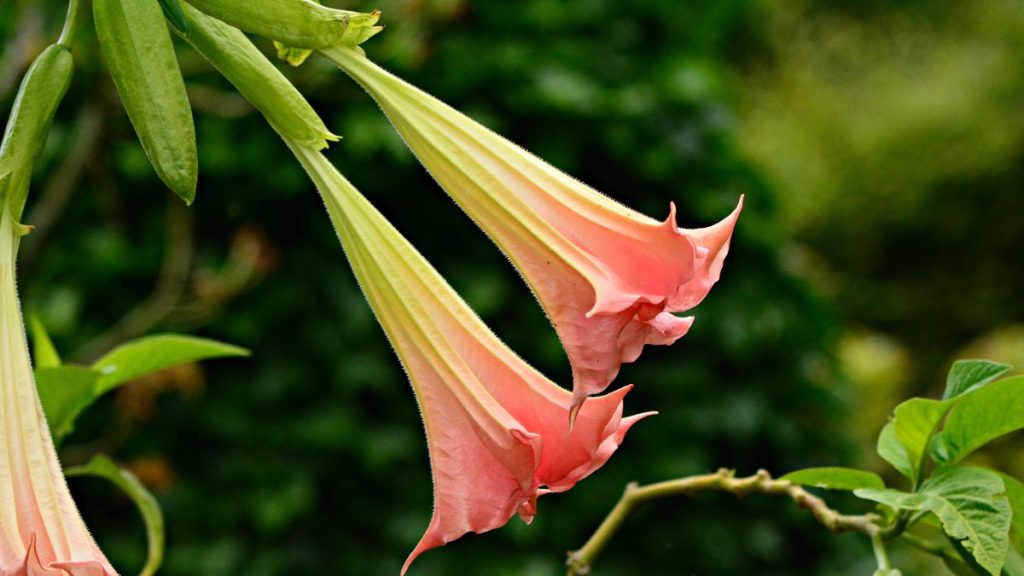
It applies to species that evolved for night-flying pollinators. Those flowers usually announce themselves: they are often pale or white, frequently tubular, and they commonly open in the evening rather than staying open around the clock.
It does not apply to most day-scented fragrant houseplants, which follow the bee and butterfly schedule described above and peak in daylight.
And for a great many popular fragrant houseplants, the emission rhythm has simply not been published. No study has measured the daily scent curve of every plant sold in a garden center. Where that is true, this site would rather say so than assign your plant a schedule it has not been shown to have.
One naming caution is worth carrying with you. Several plants sold as night blooming jasmine are not in the genus Jasminum at all, and the growing advice, the flowering season and the scent behavior of the plant you actually own may have nothing to do with the true jasmines. Check the botanical name on the label against a botanic garden plant finder such as the Chicago Botanic Garden’s or the Royal Horticultural Society’s before you follow any advice written for jasmine.
The observation to make instead of trusting a rule
You can settle this for your own plant in two evenings, and it costs nothing.
Pick one open flower. Smell it from a fixed distance at mid-morning, then again after dark, on two consecutive days, without moving the plant. Write down which was stronger. If the evening reading wins on both days, you have a night emitter, whatever the label said. If the mornings win, you have a day emitter, and waiting up for it will keep disappointing you.
Two things to avoid while you run that test. Do not move the plant to a different room to compare, because relocating a plant that is in bud is a documented way to lose the buds. And do not test on a flower that is on its last day, because a bloom’s output changes over its life, which is part of what makes keeping blooms and their scent going a subject of its own.
If the answer is that nothing is happening at any hour, the question is not a scent question yet. A plant with no flowers has nothing to emit, and that chain of causes is set out in why a fragrant houseplant refuses to flower indoors, while the question of when your species is supposed to be in bloom at all belongs to the indoor flowering year. The general mechanism behind all of it, including what these compounds are and why they exist, is explained in what makes a flower smell.
Frequently asked questions
Why do flowers smell stronger at night? Because night-scented species time their scent output to nocturnal pollinators, chiefly moths. Scientific American’s 2005 explainer by Purdue’s Natalia Dudareva states that plants releasing fragrance mostly at night are pollinated by moths and bats, and a 2001 Plant Cell study showed that this emission rhythm is circadian and continues even under constant light or constant darkness.
Is it because cool night air holds the scent better? That explanation does not match the measurements. A 2009 review in Plant Signaling and Behavior reports a positive correlation between temperature and emission rate across the species studied, so cooler generally means less emission, not more. Still evening air letting scent accumulate in a room is a separate and real effect.
Do all fragrant plants smell stronger at night? No. Many fragrant plants peak in daylight because their pollinators are bees and butterflies. For a lot of popular houseplants the daily scent curve has never been published, so the honest answer for those is that nobody has measured it.
How do I know if my plant is a night emitter? Smell one flower from the same distance in the morning and after dark, on two consecutive days, without moving the plant. Two evening wins is a reliable answer for that plant, and it beats any list.
Why do night flowers tend to be white? Pale flowers remain visible at close range in low light, but color cannot advertise at a distance after dark, so scent does the long-range work. That is why nocturnal species tend to combine pale tubular flowers with strong evening fragrance.
Sources
- Kolosova, N., Gorenstein, N., Kish, C.M., Dudareva, N. “Regulation of Circadian Methyl Benzoate Emission in Diurnally and Nocturnally Emitting Plants.” The Plant Cell, volume 13, issue 10, pages 2333-2347, 2001. Read 7 September 2026.
- Dudareva, N. “Why do flowers have scents?” Scientific American, 18 April 2005. Read 7 September 2026.
- Knudsen, J.T., Tollsten, L. “Trends in floral scent chemistry in pollination syndromes: floral scent composition in moth-pollinated taxa.” Botanical Journal of the Linnean Society, volume 113, issue 3, pages 263-284, 1993. Read 7 September 2026.
- Pimienta, M.C., Salazar, D., Koptur, S. “The Nighttime Fragrance of Guettarda scabra (Rubiaceae): Flower Scent and Its Implications for Moth Pollination.” Molecules, 2023. Read 7 September 2026.
- Majetic, C.J., Raguso, R.A., Ashman, T.-L. “Sources of floral scent variation: can environment define floral scent phenotype?” Plant Signaling and Behavior, volume 4, 2009. Read 7 September 2026.
- Jakobsen, H.B., Olsen, C.E. “Influence of climatic factors on emission of flower volatiles in situ.” Planta, volume 192, issue 3, 1994. Read 7 September 2026.
Leave a Reply