Tag: floral scent

  • Does Fertilizer Affect Flower Fragrance? The Honest Answer

    Does Fertilizer Affect Flower Fragrance? The Honest Answer

    Much less than most gardening advice suggests. In the controlled studies that have tested it, changing a plant’s nutrient supply barely changed how strongly each flower smelled, while it clearly changed how many flowers the plant produced. So fertilizer can change how fragrant a room is, but mainly by changing the number of flowers, not the scent of each one. Water stress is different: drought has been shown to shift both the amount and the blend of scent in some species.

    That distinction, scent per flower against scent per plant, is the whole answer, and it is the one most pages on this question skip.

    What the popular answer gets wrong

    Search this question and you will find confident claims that a phosphorus-rich or bloom-formula fertilizer strengthens fragrance. None of the pages making that claim cites a study of scent. It is a line borrowed from the older belief that phosphorus makes plants flower, which is itself shakier than the product labels imply; what the research actually shows on that is set out in does phosphorus make plants bloom.

    The research on nutrients and floral scent is small. Only a handful of studies have measured scent directly under different nutrient levels. What they found is more interesting than the popular answer, and more useful.

    The study that separated scent from everything else

    The cleanest test is Friberg, Waters and Thompson’s “Nutrient availability affects floral scent much less than other floral and vegetative traits in Lithophragma bolanderi,” published in Annals of Botany in 2017 (volume 120, pages 471 to 478) and read September 11, 2026.

    The design matters. The researchers took clonal pairs, genetically identical plants, and grew one of each pair under high nutrients and the other under low nutrients, with light, temperature and humidity held steady. That removes the plant’s genetics as an explanation and leaves only the feeding.

    The result is in the title. Low-nutrient plants “produced fewer and lighter leaves, fewer scapes and fewer flowers than high-nutrient plants.” But “floral scent strength (the per-flower emission rate) and composition were unaffected by nutrient treatment.” Starved or well fed, each flower smelled the same, in both amount and blend.

    The authors’ explanation is that scent is a trait the plant holds steady because it matters to its specific pollinators, in their words “more canalized than other traits.” A flower that changed its signal whenever the soil changed would confuse the insects it depends on.
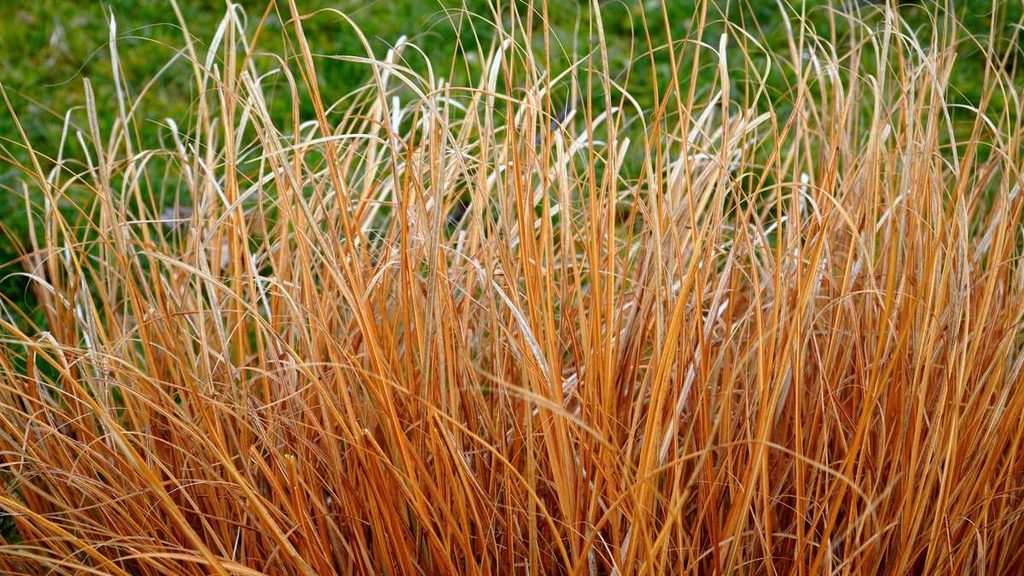
    A plant dried by water stress, the one soil factor with clearer documented effects on floral scent than feeding
    Drought has been shown to shift both the amount and the blend of floral scent, though it risks bud loss too.

    Nitrogen: one compound out of ten

    Cassie Majetic and colleagues asked the question in a plant much closer to a gardener’s experience. Their “Petunia floral trait plasticity in response to soil nitrogen content and subsequent impacts on insect visitation,” published in Flora in 2017 (volume 232, pages 183 to 193) and read September 11, 2026, grew Petunia hybrida under different soil nitrogen levels. They had predicted that scent, color and flower size would all increase with nitrogen.

    Scent largely did not follow. Of the ten scent compounds they measured, added nitrogen raised the emission of only one, eugenol. The rest were unaffected. Floral size and display did respond, and that affected which insects visited.

    So even in a heavily bred ornamental, feeding changed what the plant looked like far more than how it smelled. Excess nitrogen has its own documented cost to flowering itself, explained in too much nitrogen, no flowers.

    Not every species behaves the same way

    It would overstate the evidence to say nutrients never touch scent. A 2021 study by Luizzi and colleagues in Functional Ecology, titled “Phenotypic plasticity in floral scent in response to nutrient, but not water, availability in the perennial plant Arabis alpina,” read September 11, 2026, reports exactly what its title says: in that species, floral scent did shift with nutrient availability.

    So the honest summary across the studies is this. In some species scent is almost fixed against nutrient changes; in others it moves. In none of them is there evidence that a gardener can reliably feed a flower into smelling stronger, and none of the species tested so far is jasmine, gardenia, hoya or citrus.

    Water stress does change scent, but it is not a lever

    Water is the one soil factor with clearer effects on scent, and the direction is not what people expect.

    Diane Campbell, Paula Sosenski and Robert Raguso, in “Phenotypic plasticity of floral volatiles in response to increasing drought stress,” published in Annals of Botany (online 2018, issue date 2019) and read September 11, 2026, dried out the soil of Ipomopsis plants progressively. Floral volatile emissions “increased overall and changed in composition” as the soil dried, shifting toward terpenes. The changes were not linear, which led the authors to caution that “extreme droughts may have impacts that are not predictable from milder droughts.” Burkle and Runyon, in “Drought and leaf herbivory influence floral volatiles and pollinator attraction,” published in Global Change Biology in 2016 and read September 11, 2026, likewise report drought altering floral scent in the species they studied.

    That does not make drought a technique. A plant under water stress is also a plant at risk of dropping its buds, which costs far more scent than any shift in blend could add. The finding is useful mainly as an explanation: if a plant that dried out badly smelled odd for a while, stress is a plausible reason.

    Soil pH and water quality: no evidence either way

    Some advice links soil acidity or tap water to fragrance. For scent specifically, the sources checked for this article turned up no study measuring floral emission against soil pH or water quality in any houseplant. Acidity does affect how well some plants take up nutrients, and that can affect flowering and leaf health, but a direct effect on fragrance has not been shown in anything found here. If a page gives you a pH that makes flowers smell stronger, it should be able to name the study behind it.

    How fertilizer affects flower fragrance: per flower against per plant

    What changedEffect on each flower’s scent (per the studies)Effect on the plant’s total scent
    Low nutrientsNone measured in LithophragmaLower, because fewer flowers
    Added nitrogenOne of ten compounds rose in petuniaDepends on flowering, not scent
    Nutrient changes in Arabis alpinaScent shiftedVaries
    DroughtEmission rose and blend changed in IpomopsisOffset by the risk of losing buds
    Soil pH or water qualityNo study foundUnknown

    The first row is the one to hold onto. A hungry plant may genuinely smell weaker from across the room, not because its flowers are weaker but because it has fewer of them. Feeding helps scent, when it helps at all, by helping flowering.

    What this means for a fragrant houseplant

    If your plant smells faint and is flowering well, fertilizer is unlikely to be the reason, and changing it is unlikely to be the fix. Look first at when you are smelling it, how old the flowers are, how warm the room is and whether your nose has adjusted to it. The mechanics of scent release are covered in what makes a flower smell.

    If your plant smells faint because it is barely flowering, then nutrition is one of several things that can be involved, alongside light, season and the species’ own flowering needs. Those are the subject of how to get indoor plants to bloom. This site does not give feeding schedules or ratios, because no source found supports a formula for scent, and a number without a source is worse than no number.

    Frequently asked questions

    Does fertilizer affect flower fragrance? Mostly not per flower. A 2017 Annals of Botany study found per-flower scent strength and composition were unaffected by nutrient level in Lithophragma bolanderi, while low-nutrient plants made fewer flowers. Fertilizer affects total fragrance mainly through flower number.

    Does a bloom-booster or high-phosphorus fertilizer make flowers smell stronger? No study found for this article supports that claim for fragrance. The pages that make it do not cite scent research.

    Can too much nitrogen reduce fragrance? Not directly in the petunia study, where extra nitrogen changed only one of ten scent compounds. Excess nitrogen can reduce flowering, and fewer flowers means less scent overall.

    Does watering affect how a flower smells? It can. Drought increased floral emissions and changed their composition in Ipomopsis, per a study in Annals of Botany. Drought also risks bud loss, so it is not a way to improve scent.

    Sources

    • Friberg, M., Waters, M.T., Thompson, J.N. “Nutrient availability affects floral scent much less than other floral and vegetative traits in Lithophragma bolanderi.” Annals of Botany, volume 120, issue 3, pages 471-478, 2017. Read September 11, 2026.
    • Majetic, C.J., Fetters, A.M., Beck, O.M., Stachnik, E.F., Beam, K.M. “Petunia floral trait plasticity in response to soil nitrogen content and subsequent impacts on insect visitation.” Flora, volume 232, pages 183-193, 2017. Read September 11, 2026.
    • Luizzi and colleagues. “Phenotypic plasticity in floral scent in response to nutrient, but not water, availability in the perennial plant Arabis alpina.” Functional Ecology, 2021. Read September 11, 2026.
    • Campbell, D.R., Sosenski, P., Raguso, R.A. “Phenotypic plasticity of floral volatiles in response to increasing drought stress.” Annals of Botany, 2019. Read September 11, 2026.
    • Burkle and Runyon. “Drought and leaf herbivory influence floral volatiles and pollinator attraction.” Global Change Biology, 2016. Read September 11, 2026.
  • Plant Not Fragrant Anymore? Why the Shop Scent Disappears

    Plant Not Fragrant Anymore? Why the Shop Scent Disappears

    If your plant is not fragrant anymore after coming home from the shop, the likeliest explanation is a stack of ordinary effects rather than anything done to the plant: far less light than it had before, flowers that were already at their peak when you bought them, smelling it at a different hour, and a nose that has stopped treating the scent as new. Each one is documented. Together they can take a plant from filling the aisle to smelling of almost nothing within a week.

    First, a quick check on which of three problems you have. If the flowers that were open in the shop have faded but new ones still smell, that is flower age. If visitors can smell the plant and you cannot, that is your nose adapting. If new flowers open at home and still smell faint, the conditions are the likelier cause. All three are covered below, in the order worth checking them.

    Why the shop is the best place a plant will ever smell

    A garden center or florist is close to ideal conditions for a scent. Four things are working together there that will not all be true in your home.

    The light was much stronger. Plants for sale are usually grown in greenhouses or outdoors, and many are sold from bright benches. Illinois Extension’s houseplant lighting guide, read September 11, 2026, puts outdoor sunlight at 10,000 to 12,000 foot-candles and notes that “indoors, the amount of light that enters the room is only a small amount.” The same guide classes high light for houseplants at about 300 foot-candles, found directly in front of an east or west window or up to five feet from a south one. By those figures, even a good indoor spot gives a plant a small fraction of what it had outside.

    The flowers were at their peak. Plants are sold in flower, and the flowers that sell a plant are the open, fragrant ones. Scent emission rises after a flower opens, peaks, and falls as the flower ages; in snapdragon the main scent compound peaked between days 5 and 8 after opening, according to a 2000 study by Natalia Dudareva and colleagues in The Plant Cell, read September 11, 2026. If you bought the plant in its best days, its best days were already being used up.

    There were many plants together. A bench of twenty jasmines is twenty sources. The scent you walked into was the combined output of all of them, in a space that may have been warm and still. One plant on a windowsill in a ventilated room is a different situation entirely.

    The scent was new to you. Your nose responds most strongly to a smell it has not met recently. In a shop, you encountered the scent fresh. At home it becomes part of the background, and your sense of smell turns it down. More on that below.

    None of these requires anyone to have done anything to the plant.

    A person carrying a newly bought plant into their home, the moment its shop conditions end
    The flowers already open when you bought it were likely already near their peak — not a promise about what’s ahead.

    Cause 1: The light dropped, and light is tied to scent

    Light affects scent in two ways, one direct and one through flowering.

    The direct way is chemical. In studies of the lily cultivar ‘Siberia’, light signaling has been shown to regulate how the flower makes and releases its scent compounds. Liu and colleagues, in “Light Regulation of LoCOP1 and Its Role in Floral Scent Biosynthesis in Lilium ‘Siberia’,” published in Plants in 2023 and read September 11, 2026, identified a light-regulated protein that acts as a brake on floral scent production. The point for a houseplant owner is not the protein. It is that a flower’s scent output is wired to the light it receives, so the same flower in dimmer conditions has no reason to behave as it did in bright ones.

    The indirect way is through the flowers themselves. A plant in low light may keep opening the buds it formed in the greenhouse and then fail to set new ones. The scent fades because the flowers run out. How much light it takes to keep a plant flowering, and why “bright indirect” often is not enough, is covered in how much light plants need to flower indoors.

    Cause 2: The flowers you bought are aging

    This is the most common reason and the least alarming. The flowers open on the day you bought the plant were at or near their peak. A few days later they are past it, and a flower’s scent does not just fade but can change in character as different compounds in the blend decline at different rates.

    The test is simple. Smell a flower that opened after you brought the plant home, on its second or third day. If that flower smells, the plant is fine and the older flowers have simply finished. If there are no new flowers, look at what happened to the buds. Buds that yellowed and dropped point to a separate problem; the move itself is a documented trigger, explained in why moving a plant causes bud drop, and the wider set of causes is in flower buds falling off before opening.

    Cause 3: You are smelling it at the wrong hour

    Many fragrant plants release their scent on a daily rhythm, and the rhythm is set by the plant, not by when you are home. In the snapdragon study, emission was rhythmic with its maximum during the day, matching the bumblebees that pollinate it. Many of the most fragrant houseplants are the opposite: moth-pollinated species whose scent builds in the evening.

    A shop visit usually happens in the daytime, in a building full of plants, some of which will be in their scent window whatever the hour. At home you have one plant, and if you check it in the morning when it is an evening emitter, it can seem to have lost its scent entirely. Checking again at dusk takes nothing and rules this out. The daily rhythm is part of what makes a flower smell.

    Cause 4: Your nose has adapted

    Pamela Dalton of the Monell Chemical Senses Center describes the process in “Psychophysical and Behavioral Characteristics of Olfactory Adaptation,” published in Chemical Senses in 2000 and read September 11, 2026: repeated or continued exposure to an odor reduces sensitivity to that specific odor, and sensitivity recovers over time once the exposure stops. It happens both in the nose and further along, in the brain.

    The home setting makes this stronger. In a study by Dalton and Wysocki, published in Perception and Psychophysics in 1996 and read September 11, 2026, people who lived with an odor at home for two weeks showed reduced sensitivity to that odor specifically, and their raised detection thresholds took up to two weeks to return after the exposure ended.

    If a visitor walks in and comments on the scent, the plant is working and your nose has adjusted. Step outside for a while and come back in before judging.

    Plant not fragrant anymore? What to check, in order

    CheckWhat it tells youWhere it points
    Does a flower that opened at home smell?The plant can still produce scentOlder flowers simply aged
    Does a visitor notice the scent?Scent is present in the roomYour nose has adapted
    Does it smell at dusk but not in the morning?Emission follows a daily rhythmWrong hour, not lost scent
    Are there new buds, or did they drop?Whether the plant is still floweringLight, or bud drop from the move
    Do new flowers smell faint even at their peak hour?Conditions are limiting the flowersLight and temperature at home

    Most plants are sorted by the first three rows.

    If the plant never flowers again

    Sometimes the scent fades because the plant finished its shop-grown flowers and has not started again. That is a flowering problem, not a scent problem, and it has its own set of causes: light, the season, a missing cool rest in some species, or simply the plant’s maturity. The common patterns are set out in a plant that bloomed once and never again.

    What this article cannot tell you

    Plants are bred for many traits, and scent is not always one of them. Some cultivars carry less fragrance than others of the same species, and the tag on a plant does not always say which you have. No source found for this article can tell you from a description whether your particular plant was a strongly scented selection to begin with.

    It is also worth being honest about the question behind this search. People sometimes suspect that plants for sale have been treated in some way to smell stronger. No source checked for this article documents such a practice, and nothing needs to be assumed: the effects above are enough to explain a plant that smelled wonderful in the shop and faint at home.

    When it is not the plant

    If other smells, such as coffee, food or soap, have also started to seem faint, the change may not be about the plant at all. The National Institute on Deafness and Other Communication Disorders, in its smell disorders page updated July 31, 2023 and read September 11, 2026, says that most people who develop a smell disorder have had a recent illness or injury, and advises: “If you are experiencing a smell disorder, talk with your doctor.” It notes that smell disorders are treated by an otolaryngologist, an ear, nose and throat specialist.

    Frequently asked questions

    Why is my plant not fragrant anymore after I brought it home? The most common reasons are lower light than the plant had before sale, flowers that were already at their peak when bought, checking it at a different time of day from its scent rhythm, and your nose adapting to a smell you now live with. Illinois Extension puts outdoor sunlight at 10,000 to 12,000 foot-candles, far above what reaches most indoor spots.

    Did the shop spray something on the plant to make it smell? No source checked for this article documents that practice. The documented effects of light, flower age, time of day and olfactory adaptation are enough to explain the change.

    How can I tell if it is the plant or my nose? Ask someone who does not live with the plant to smell it, or leave the room for a while and come back. Research by Dalton and Wysocki found that living with an odor at home for two weeks reduced sensitivity to that specific odor.

    Will the plant smell like it did in the shop again? New flowers can, if the plant keeps flowering and you check them near their peak and at the right hour. Whether it keeps flowering depends largely on light and on the species’ own flowering needs.

    Sources

    • Illinois Extension. “Lighting,” Houseplants. University of Illinois. Read September 11, 2026.
    • Liu, Y., Wang, Q., Abbas, F., Zhou, Y., He, J., Fan, Y., Yu, R. “Light Regulation of LoCOP1 and Its Role in Floral Scent Biosynthesis in Lilium ‘Siberia’.” Plants, 2023. Read September 11, 2026.
    • Dudareva, N. and colleagues. “Developmental Regulation of Methyl Benzoate Biosynthesis and Emission in Snapdragon Flowers.” The Plant Cell, volume 12, pages 949-961, 2000. Read September 11, 2026.
    • Dalton, P. “Psychophysical and Behavioral Characteristics of Olfactory Adaptation.” Chemical Senses, volume 25, issue 4, pages 487-492, 2000. Read September 11, 2026.
    • Dalton, P., Wysocki, C.J. “The nature and duration of adaptation following long-term odor exposure.” Perception and Psychophysics, volume 58, pages 781-792, 1996. Read September 11, 2026.
    • National Institute on Deafness and Other Communication Disorders. “Smell Disorders.” Updated July 31, 2023. Read September 11, 2026.
  • Do Flowers Lose Their Scent as They Age? What Studies Show

    Do Flowers Lose Their Scent as They Age? What Studies Show

    Yes. In the flowers that have been measured, scent emission starts low when the flower opens, climbs to a peak over the next few days, and then falls as the flower ages. In snapdragon, the main scent compound peaked between days 5 and 8 after opening and declined after that. Pollination makes the fall steeper and faster. So a flower that was overwhelming on its best day and faint three days later is doing what flowers do. It is not a sign that something has gone wrong with the plant.

    Before reading on, check which of three problems you actually have. If one flower has faded while newer ones still smell, this page is yours. If the whole plant went quiet after you brought it home, that is usually about the change of conditions. If other people notice the scent and you do not, that is your nose adapting. People confuse the three constantly, and each has a different explanation.

    The scent curve has a rising side as well as a falling one

    Most people only notice the decline, but the start of the curve matters as much. A flower does not open at full volume.

    The clearest measurements come from a study of snapdragon led by Natalia Dudareva, “Developmental Regulation of Methyl Benzoate Biosynthesis and Emission in Snapdragon Flowers,” published in The Plant Cell in 2000 (volume 12, pages 949 to 961) and read September 11, 2026. Methyl benzoate is the most abundant scent compound in that flower. The authors report that its emission “began at anthesis but at a very low level,” reached a peak between days 5 and 8, and declined thereafter. The enzyme that makes the compound followed a similar course, rising over the first five days after the flower opened and falling after that.

    Two points follow from that. The first day a flower is open is not its best day. And the decline is not just the scent evaporating away. The flower’s own machinery for making the compound is switched down as the flower ages. In the authors’ words, emission and the enzyme that makes it are “developmentally and differentially regulated” across the flower’s life span.

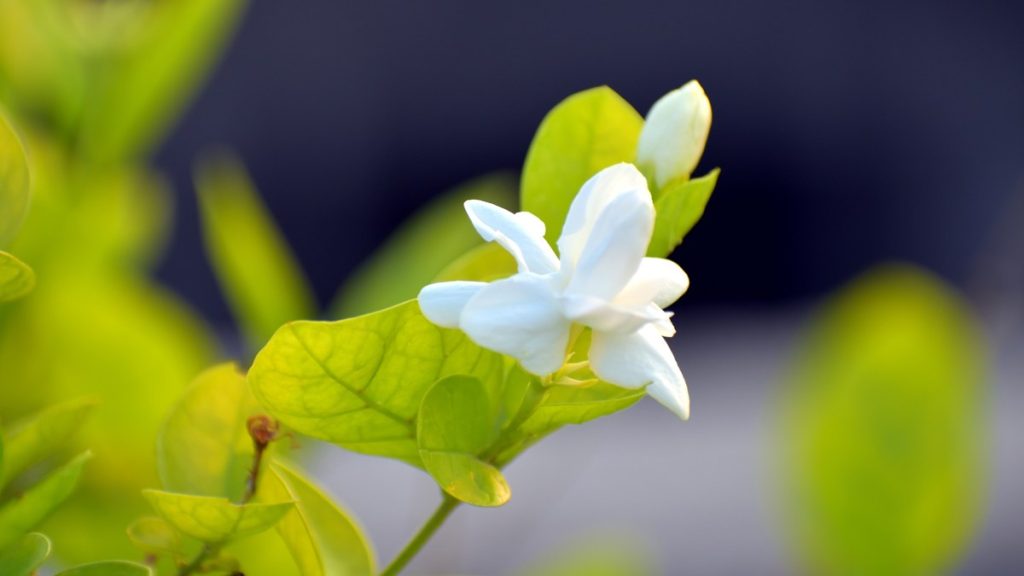
    An open Jasminum sambac flower beside an unopened bud, the species studied for how its scent blend shifts across bloom stages
    In Arabian jasmine, different scent compounds peak at different stages, so an older flower can smell different, not just fainter.

    Different compounds peak at different times

    A flower’s scent is a blend, and the parts of the blend do not rise and fall together. That is why an aging flower can smell different, not just weaker.

    Yu and colleagues tracked this in Arabian jasmine, Jasminum sambac, in “Volatiles Emitted at Different Flowering Stages of Jasminum sambac and Expression of Genes Related to α-Farnesene Biosynthesis,” published in Molecules in 2017 and read September 11, 2026. They followed the flower through five stages from bud to senescence. The predominant compound, α-farnesene, was minimal in the bud, rose sharply, and peaked at the opening stage, then declined through full opening to senescence. Linalool, another major component, peaked earlier, at the second stage, and had roughly halved by the third and fourth.

    Put simply: the jasmine flower you smell on its first evening and the one you smell two days later are not giving off the same mixture. The loudest note in the blend changes. If an older flower strikes you as flatter or greener as well as fainter, that fits what was measured. More on the species itself is in the jasmine guide.

    Gardenia points the same way. Ghosh, Bapat and Mitra, in “Understanding the physiology of floral maturation in Gardenia jasminoides through metabolomic, histochemical and ultrastructural analyses,” published in Annals of Botany in 2026 and read September 11, 2026, found that the flowers emitted the most scent at anthesis, the stage when the flower is fully open, and that this was the most metabolically active stage. As the flowers senesced, they turned slightly yellow and gave off a lighter aroma. Anyone who has watched a gardenia flower go from white to cream has seen that curve happen.

    Why flowers lose their scent as they age

    Two separate things bring the scent down, and only one of them is likely to be happening on a windowsill.

    Pollination: a switch the plant throws on purpose

    Florence Negre and colleagues, in “Regulation of Methylbenzoate Emission after Pollination in Snapdragon and Petunia Flowers,” published in The Plant Cell in 2003 (volume 15, pages 2992 to 3006) and read September 11, 2026, measured what happens to scent after a flower is pollinated. In both species the emission of methyl benzoate dropped by 70 to 75 percent. The drop did not begin at the moment of pollination. It began only after the pollen tubes had reached the ovary, which the authors put at 35 to 40 hours in snapdragon and about 32 hours in petunia. In petunia, the gene that makes the compound is suppressed by ethylene, the plant hormone involved in ripening and aging.

    The logic from the plant’s side is simple. A pollinated flower has no further use for advertising, and scent is costly to make. Once the job is done, it stops.

    Aging: the decline that happens anyway

    The snapdragon curve above describes a flower getting older. It is the developmental decline, programmed into the flower’s life, and it will happen whether or not any pollinator ever arrives.

    This is where houseplants differ from the flowers in most studies. A jasmine or gardenia in a living room is rarely visited by the moths or bees it evolved to attract. So the pollination switch, the steep and sudden drop, is mostly not what you are seeing indoors. The fade you notice on a houseplant is far more likely to be the slower developmental one. No study found for this article measured an unpollinated houseplant flower through its whole life indoors, so this is a reasoned reading of the evidence rather than a measured result, and it is presented as that.

    The bloom-day curve at a glance

    Stage of the flowerWhat the studies measuredWhat you are likely to notice
    Bud and just openingEmission low; in snapdragon it “began at anthesis but at a very low level”Less scent than you expected from a new flower
    Opening to fully openEmission rising; jasmine’s main compound peaked at the opening stageThe scent builds over a day or more
    PeakSnapdragon peaked between days 5 and 8; gardenia peaked at anthesisThe flower’s best period
    AgingEmission and the enzymes behind it decline; the blend shiftsFainter, and sometimes a different character
    After pollinationA 70 to 75 percent drop in snapdragon and petunia, beginning after pollen reaches the ovaryRarely applies indoors

    Treat the table as a description of the species that have been measured. The day counts belong to snapdragon, not to your plant.

    A plant’s scent is many flower curves added together

    This is the part that most answers to this question leave out, and it explains a lot of disappointment.

    You rarely smell one flower. You smell a plant, and the plant’s scent is the sum of every open flower on it, each at its own point on its own curve. That has two practical consequences.

    A plant that opens all its flowers within a day or two behaves like one big flower. Its scent rises together, peaks together and falls together, and the fall can feel sudden, as though the plant switched off. A plant that opens flowers one after another, a few at a time, keeps new flowers climbing while old ones fade. Its scent is steadier and lasts longer, even though no single flower lasts any longer at all.

    So when a plant goes quiet, it is worth counting what is actually open and how old each flower is before concluding anything. A plant with five spent flowers and no new buds has simply come to the end of its run. A plant with fresh flowers that still smell of nothing has a different problem, and it is one of the other two explanations at the top of this page. How long a flowering display lasts, and what affects it, is covered in making blooms last longer.

    Things that look like aging but are not

    Three other effects can make a flower seem to have faded when it has not.

    The time of day. Scent emission follows a daily rhythm in many species. In the Dudareva snapdragon study, emission was “rhythmic,” with its maximum during the day, matching the activity of the bumblebees that pollinate it. Night-scented plants run the other way. Smelling a flower at the wrong hour can make a flower at its peak seem spent. The rhythm itself is explained in what makes a flower smell.

    Temperature. A cooler room reduces how much scent a flower gives off. The flower has not aged; it is simply releasing less at that moment.

    Your own nose. If you have been living with the scent for days, your sense of smell turns it down. Visitors notice it; you do not. That is a separate mechanism with its own answer.

    What no one can promise

    There is no treatment that restores an aged flower’s scent. The decline is built into the flower’s development, and the studies above show the flower reducing its own production, not running short of something you could add. Anything sold as reviving the scent of an old flower is making a claim no source found for this article supports.

    The day counts in this article also come from a small number of well-studied species. Snapdragon and petunia are laboratory favorites precisely because their scent is easy to measure. For hoya and citrus, the sources checked for this article turned up no published emission curve across the life of a single flower. The general shape, low at opening, a peak, then a decline, is consistent across every species that has been measured. The timing is not, and anyone quoting you a day count for your particular plant should be able to name the study.

    Frequently asked questions

    Do flowers lose their scent as they age? Yes. In the species that have been studied, emission starts low at opening, peaks, and then declines as the flower ages. In snapdragon, the main scent compound peaked between days 5 and 8 after opening, according to a 2000 study in The Plant Cell.

    Is a flower most fragrant on the day it opens? Usually not. In snapdragon, emission began at a very low level when the flower opened and took several days to peak. In Arabian jasmine, the main compound peaked at the opening stage, so the best period can be early, but it is rarely the first hour.

    Why does an old flower smell different, not just weaker? Because the compounds in a scent blend peak at different times. In Jasminum sambac, linalool peaked at an earlier stage than α-farnesene, so the mixture changes as the flower ages.

    Does pollination make a flower stop smelling? In snapdragon and petunia it cuts emission of methyl benzoate by 70 to 75 percent, beginning after the pollen tubes reach the ovary. Indoor flowers are rarely pollinated, so the fade on a houseplant is more likely to be ordinary aging.

    Sources

    • Dudareva, N., Murfitt, L.M., Mann, C.J., Gorenstein, N., Kolosova, N., Kish, C.M., Bonham, C., Wood, K. “Developmental Regulation of Methyl Benzoate Biosynthesis and Emission in Snapdragon Flowers.” The Plant Cell, volume 12, pages 949-961, 2000. Read September 11, 2026.
    • Negre, F., Kish, C.M., Boatright, J., Underwood, B., Shibuya, K., Wagner, C., Clark, D.G., Dudareva, N. “Regulation of Methylbenzoate Emission after Pollination in Snapdragon and Petunia Flowers.” The Plant Cell, volume 15, pages 2992-3006, 2003. Read September 11, 2026.
    • Yu and colleagues. “Volatiles Emitted at Different Flowering Stages of Jasminum sambac and Expression of Genes Related to α-Farnesene Biosynthesis.” Molecules, 2017. Read September 11, 2026.
    • Ghosh, R., Bapat, S.A., Mitra, A. “Understanding the physiology of floral maturation in Gardenia jasminoides through metabolomic, histochemical and ultrastructural analyses.” Annals of Botany, 2026. Read September 11, 2026.
  • Temperature and Flower Fragrance: Why a Cool Room Mutes It

    Temperature and Flower Fragrance: Why a Cool Room Mutes It

    A cool room turns a flower’s scent down rather than preserving it. Across the species that have been measured, scent emission rises with temperature, and the effect is on how much the flower releases, not just on how fast it evaporates. Cooling also changes the character of the scent: narcissus flowers held at a constant 5 degrees Celsius emitted six compounds where the same flowers under a natural cool-warm cycle emitted thirteen. But warmer is not simply better, because high temperatures suppress the plant’s production of scent compounds even while release goes up.

    Temperature acts on two separate things

    A flower has to make the compound and then get it out into the air. Those are different processes, and temperature does not do the same thing to both. Most articles treat scent as one quantity, which is why their advice contradicts itself.

    The clearest single demonstration is a controlled temperature series. Masanori Sagae, Naomi Oyama-Okubo, Toshio Ando, Eduardo Marchesi and Masayoshi Nakayama, in “Effect of Temperature on the Floral Scent Emission and Endogenous Volatile Profile of Petunia axillaris,” published in Bioscience, Biotechnology, and Biochemistry in 2008 and read 7 September 2026, grew plants at a range of constant ambient temperatures. The total amount of scent compounds held inside the flower tissue fell as temperature rose. The amount actually emitted peaked in the middle of the range rather than at the top of it.

    Read as one sentence: heat helps the scent get out and hurts the plant’s ability to keep making it. Everything below is a consequence of that split.

    What a cool room does

    Emission goes down. Cassie J. Majetic, Robert A. Raguso and Tia-Lynn Ashman, reviewing the abiotic evidence in Plant Signaling and Behavior in 2009 and read 7 September 2026, report a positive correlation between temperature and emission rate across the species that had been studied, including Ribes nigrum, Trifolium repens and Hesperis matronalis.

    The underlying clover work is Henrik Byrial Jakobsen and Carl Erik Olsen’s “Influence of climatic factors on emission of flower volatiles in situ,” in Planta in 1994. Their finding matters for how you think about this: the temperature difference was attributed to an effect on the secretion of the volatiles rather than to the rate at which they evaporated. Cool air does not merely slow the delivery of a scent that is still being made in full. It reduces what the flower puts out.

    Cooling does something less obvious as well. Marta I. Terry, Victoria Ruiz-Hernández, Diego J. Águila, Julia Weiss and Marcos Egea-Cortines, in “The Effect of Post-harvest Conditions in Narcissus sp. Cut Flowers Scent Profile,” published in Frontiers in Plant Science in 2021 and read 7 September 2026, compared flowers under a 15 to 5 degree Celsius day-night cycle against flowers held at constant temperatures. Under the cycling regime the flowers emitted thirteen compounds. At a constant 5 degrees the number fell to six, and the authors describe “a decrease of scent complexity that was more dramatic at 5°C.”

    Six compounds instead of thirteen is not a quieter version of the same smell. It is a simpler one. That is a better description of what people mean when they say a plant in a cold hallway smells thin.

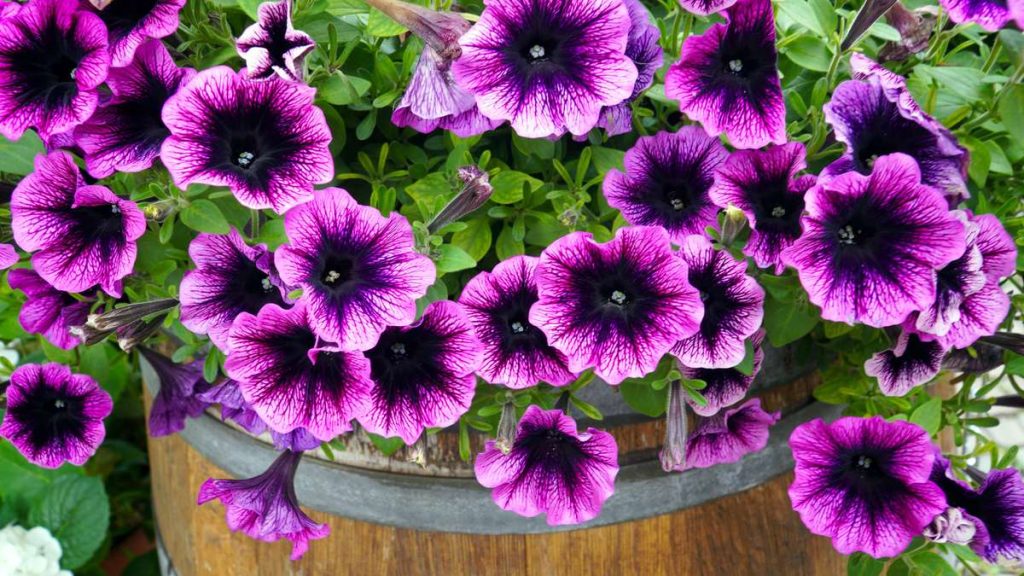
    Petunia flowers, the species most directly studied for how temperature affects floral scent production and release
    Petunia axillaris research found emission peaked at a moderate temperature, not the warmest one tested.

    What a warm room does, which is not the opposite

    If cooling mutes, the tempting conclusion is to warm the room. The evidence does not support that as a strategy.

    Alon Cna’ani and colleagues published “Petunia × hybrida floral scent production is negatively affected by high-temperature growth conditions” in Plant, Cell and Environment in 2015, read 7 September 2026. The title is the finding: plants grown warm produced less scent, with the phenylpropanoid-derived compounds that carry much of petunia’s fragrance reduced under elevated temperature. The Sagae work above points the same way from a different angle, with the internal reserve of scent compounds declining as ambient temperature climbed.

    Warmth also moves the timing. In the narcissus study, raising the regime from 15 to 5 degrees up to 20 to 10 degrees caused the loss of one compound, the appearance of another, and a shift in the daily maximum: in the authors’ words, “the peak shifted toward night.” A warmer room can relocate a plant’s best hour rather than improving it.

    DirectionEffect on releaseEffect on productionNet for the person in the room
    CoolerFallsReserve holds or buildsMuted, and simpler in character
    ModerateHighest measured emission in the petunia seriesAdequateUsually the best of both
    WarmerRises initiallySuppressedCan smell strong briefly and thin over time

    That table describes the species that have been measured. It is not a setting for your plant, and the next section explains why nobody can give you one.

    The trade-off nobody states

    Here is the conflict a fragrant-plant owner actually faces, and it does not appear on any of the pages competing for this question.

    Some of these plants need to be cool in order to make flowers at all. Marjan Kluepfel and Robert F. Polomski, in Clemson Cooperative Extension’s gardenia factsheet, last updated 9 August 2024 and read 7 September 2026, state that “night temperatures between 50 and 55 °F are necessary for the formation of flower buds.” Necessary is their word. Cool nights are a requirement in that species, not a preference, and the same logic applies to other plants that need a chill before they will flower, which is covered separately in the cool rest.

    Now set that beside the emission evidence. The conditions that let a plant set buds are not necessarily the conditions under which those flowers, once open, release the most scent. A cold room can be exactly right in autumn and exactly wrong on the evening the flowers open.

    This site is not going to resolve that for you with a number, because for gardenia, jasmine, hoya and citrus no published scent-versus-temperature curve turned up in the sources checked for this article. What can be said honestly is that the two requirements are separate, they act at different times of year, and treating one temperature as correct all year is the mistake underneath a lot of disappointment. Where your species sits in the indoor flowering year decides which of the two you should currently be optimizing for.

    What not to do about it

    Do not move the plant to a warmer room to get more scent out of it. Relocating a plant that has buds on it is one of the better documented ways to lose those buds, and a temperature change at bud stage is its own failure with its own causes, set out in temperature swings, drafts and heat vents at bud stage. That page is about buds coming off. This one is about how loud an open flower is. Confusing them costs the flowers.

    Do not chase a number. No source found for this article gives an optimal scent temperature for any houseplant genus, and the species that have been measured disagree with one another about where the emission peak sits.

    Do not assume the plant has stopped. A muted plant in a cold week is usually a plant emitting less, not a plant that has lost its fragrance. The distinction, and what is actually being released, is covered in what makes a flower smell.

    The useful thing you can do instead

    Go to the plant at the warmest part of its day rather than warming the room.

    In most homes the air near a plant is warmest in the afternoon, and if the species is a day emitter that is also when its clock is running highest. Two effects line up at the same hour, at no cost and with no risk to the buds. In a cool room, that is the difference between deciding the plant has failed and finding out it has not.

    Then check it a second time at another hour before you conclude anything, because a single reading in a cold hallway at eight in the morning is the least informative measurement available.

    Frequently asked questions

    Does temperature affect flower fragrance? Yes, in both directions. A 2009 review in Plant Signaling and Behavior reports emission rate correlating positively with temperature across the species studied, while a 2015 study in Plant, Cell and Environment found that high growth temperatures reduced scent production in Petunia hybrida. Temperature affects release and production separately.

    Why does my fragrant plant smell of nothing in a cool room? Because emission falls with temperature, and because cooling reduces the number of compounds released. Narcissus flowers held at a constant 5 degrees Celsius emitted six compounds where flowers under a cycling 15 to 5 degree regime emitted thirteen, so a cold room delivers a thinner scent as well as a quieter one.

    Will heating the room make my plant smell stronger? Briefly, perhaps, and not sustainably. Emission in the Petunia axillaris series peaked at a mid-range temperature rather than the highest one, and the plant’s internal reserve of scent compounds fell as temperature rose. Growing plants warm has been shown to reduce scent production.

    My gardenia needs cool nights. Does that mean I am stuck with less scent? Not stuck, but you are managing two different requirements at two different times. Clemson Cooperative Extension states that night temperatures between 50 and 55 degrees Fahrenheit are necessary for gardenia flower bud formation. That requirement applies while the plant is setting buds. How warm the room is when the flowers are open is a separate question, and no published curve exists for this species.

    Should I move the plant somewhere warmer when it flowers? Not while it is in bud. Moving a plant and changing its temperature at bud stage is a documented cause of bud loss. Visiting the plant at the warmest hour of its day achieves the same thing for your nose without putting the flowers at risk.

    Sources

    • Sagae, M., Oyama-Okubo, N., Ando, T., Marchesi, E., Nakayama, M. “Effect of Temperature on the Floral Scent Emission and Endogenous Volatile Profile of Petunia axillaris.” Bioscience, Biotechnology, and Biochemistry, volume 72, issue 1, pages 110-115, 2008. Read 7 September 2026.
    • Majetic, C.J., Raguso, R.A., Ashman, T.-L. “Sources of floral scent variation: can environment define floral scent phenotype?” Plant Signaling and Behavior, volume 4, 2009. Read 7 September 2026.
    • Jakobsen, H.B., Olsen, C.E. “Influence of climatic factors on emission of flower volatiles in situ.” Planta, volume 192, issue 3, 1994. Read 7 September 2026.
    • Terry, M.I., Ruiz-Hernández, V., Águila, D.J., Weiss, J., Egea-Cortines, M. “The Effect of Post-harvest Conditions in Narcissus sp. Cut Flowers Scent Profile.” Frontiers in Plant Science, volume 11, 2021. Read 7 September 2026.
    • Cna’ani, A., Mühlemann, J.K., Ravid, J., Masci, T., Klempien, A., Nguyen, T.T.H., Dudareva, N., Pichersky, E., Vainstein, A. “Petunia × hybrida floral scent production is negatively affected by high-temperature growth conditions.” Plant, Cell and Environment, volume 38, issue 7, pages 1333-1346, 2015. Read 7 September 2026.
    • Kluepfel, M., Polomski, R.F. Gardenia factsheet, Clemson Cooperative Extension Home and Garden Information Center, updated 9 August 2024. Read 7 September 2026.
  • Why Does My Plant Smell Stronger Some Days Than Others?

    Why Does My Plant Smell Stronger Some Days Than Others?

    Because floral scent emission is not a constant. On any given day what reaches you is set by four moving parts: where that flower is in its short life, what hour you walked past and what the plant’s internal clock was doing, what temperature and light the room supplied, and how adapted your own nose already is to the room. Published measurements show emission rising with temperature and with light, changing across the life of a bloom, and running on a circadian cycle whose peak hour can itself shift. Nothing about your care changed. The system was never steady.

    Start by ruling out the cheapest explanation

    Before looking at the plant, check the observer.

    People stop registering a smell they have been sitting in, and the person who has just come in from outside is smelling the room as it actually is. If everyone else notices the plant and you do not, that mismatch is common, it is not a fault in the plant, and it is not evidence that anything changed today. It is its own subject and it has its own page on this site.

    The test is to leave the room for twenty minutes, go outside if you can, and come back. If the scent returns on your return, the plant never went anywhere.

    The four causes, ranked by how well they are documented

    CauseWhat it looks likeHow well documented
    The flower’s own age and pollination stateA steady decline over a few days, on the same blooms, regardless of hourStrong. Described by named researchers and studied directly
    The clock and the hour you checkedBig swings within a single day, repeating at similar timesStrong. Shown to be circadian, persisting without day-night cues
    Room temperature and lightCorrelates with weather, heating, or a bright versus overcast dayModerate. A consistent direction across species, but few species studied
    How many flowers are openTracks with the visible bloom countObvious, and worth stating because people forget to count

    Everything below expands one row of that table.

    Multiple flowers open together on the same stem — scent output is the sum of however many are open that day
    The most overlooked cause of a weaker-smelling day is simply fewer blooms open than the day before.

    The bloom has an age, and it is short

    A flower is not a fixed source. Natalia Dudareva of Purdue University, writing in Scientific American on 18 April 2005 and read 7 September 2026, notes that newly opened flowers produce fewer odors because they are not yet ready for pollination, and that flowers become less attractive once sufficient pollination has occurred.

    The detailed study of that shutdown is “Regulation of Methylbenzoate Emission after Pollination in Snapdragon and Petunia Flowers,” by Florence Negre and colleagues in The Plant Cell in 2003, which examined how emission is regulated in the period after pollination.

    The practical version: a bloom has a window, the window opens after the flower does, and it closes on its own schedule. A plant that seemed extraordinary on Tuesday and ordinary on Friday may be the same plant with three-day-older flowers. Whether anything can be done to hold that window open is the subject of making blooms and their scent last.

    The hour matters more than the day, and the hour itself can move

    Emission is rhythmic. Natalia Kolosova, Nina Gorenstein, Christine M. Kish and Natalia Dudareva showed in The Plant Cell in 2001 that snapdragon emission of methyl benzoate peaks during the day, coinciding with bumblebee foraging, and that the rhythm keeps running under continuous darkness or continuous light, which makes it circadian rather than a response to the room.

    Here is the part almost nothing written for houseplant owners mentions. The peak hour is not fixed either. Marta I. Terry, Victoria Ruiz-Hernández, Diego J. Águila, Julia Weiss and Marcos Egea-Cortines, in “The Effect of Post-harvest Conditions in Narcissus sp. Cut Flowers Scent Profile,” published in Frontiers in Plant Science in 2021 and read 7 September 2026, ran narcissus under a 15 to 5 degree Celsius day-night regime and under a warmer 20 to 10 degree regime. Under the cooler regime the maximum scent release fell in the light phase. Under the warmer one, in the authors’ words, “the peak shifted toward night.”

    So a change in your heating can move the hour at which a plant is at its strongest, without changing anything about how much it is capable of emitting. If your habit is to check the plant at the same time every evening, a shifted peak looks exactly like a plant that has lost its scent.

    The room supplies the conditions, and they are not stable indoors

    Cassie J. Majetic, Robert A. Raguso and Tia-Lynn Ashman reviewed what has actually been measured about environmental influence on floral scent in Plant Signaling and Behavior in 2009, read 7 September 2026. Across the species studied, including Ribes nigrum, Trifolium repens and Hesperis matronalis, temperature correlated positively with emission rate. Increased irradiance was associated with elevated emission rates in clover. Moisture appeared in the picture too, with one study finding that increased humidity decreased emission.

    A living room delivers all three of those variables differently on a bright warm afternoon and on a dark cold one, and the plant does not have to change at all for the output to change with them.

    The Terry study adds a second point that matters specifically to indoor growers. Constant temperature reduced scent complexity in narcissus, and the reduction was more dramatic at a constant 5 degrees Celsius, where the number of compounds emitted fell from thirteen to six. Most heated indoor rooms are far flatter thermally than the outdoors the plant evolved in. The steadiness we provide for the plant’s comfort is not necessarily the condition that produces the best scent.

    One more variable belongs here even though it has not been studied on houseplants, and it is worth naming as reasoning rather than evidence. Still air lets scent accumulate in a room; moving air disperses it. A closed house on a quiet evening and the same house with a door propped open are different rooms for the purpose of this question, whatever the flower is emitting.

    Count the flowers

    The most overlooked cause is the simplest. A plant’s scent output is the sum of its open blooms, and on a plant like a jasmine in full flush the bloom count changes noticeably from day to day as new flowers open and old ones finish. On a plant like a gardenia that opens a few large flowers at a time, one bloom finishing is a large proportion of the total.

    Before concluding that the plant changed, count what is open and compare it with what was open on the good day.

    What is probably not the cause

    Something you did that morning. Nothing about a single watering or a single feed plausibly changes the same day’s emission, and whether feeding changes fragrance at all over a season is a separate question this site treats on its own.

    The plant being unhappy. Scent output falling is a normal part of a bloom’s life, not a symptom. If the plant is also dropping buds or failing to flower, that is a different problem with its own causes, and it has nothing to do with the daily variation described here.

    Seasonal drift being mistaken for daily drift. A plant coming to the end of its flowering period is a slower version of the same effect, and where your species sits in the indoor flowering year is worth checking before you diagnose a day.

    The honest limit of all of this

    The environmental research is thin, and the researchers say so themselves. Majetic, Raguso and Ashman write that the available studies “are somewhat limited in scope: they focus on a few variables known to affect volatilization rates, collect most of their data in growth chambers, report overall changes to emission rate (just one aspect of floral scent profile), and generally use only 1 to 2 plant lines.”

    That means nobody can tell you how strongly your species will smell at a given room temperature. What the literature supports is direction and mechanism, and the mechanism behind all of it is set out in what makes a flower smell.

    The two-week log that answers it for your plant

    Take one line a day in a notebook or on your phone. Date, time of day, roughly what the room temperature is if you have a thermometer, how many flowers are open, and a score from zero to five for scent at a fixed distance.

    Two weeks of that will separate the four causes better than any article can, because it holds your species, your room and your nose constant while the conditions move. If the score tracks the flower count, you have your answer. If it tracks the hour, the clock has it. If it tracks the weather, the room has it. And if it tracks nothing at all, the observer is worth checking first.

    Frequently asked questions

    Why does my plant smell stronger on some days than others? Because emission changes with the age of each bloom, with the hour of day, and with the temperature and light the room supplies. A 2009 review in Plant Signaling and Behavior found emission rate correlating positively with temperature and with irradiance across the species studied, and a 2001 Plant Cell study showed the daily rhythm is circadian.

    Could the scent be gone for good? Usually not, if the plant is still flowering. A bloom’s output declines as it ages and after pollination, so a plant can look identical while its flowers are three days further along. Check how many flowers are newly open rather than how many are present.

    Does a warmer room always mean more scent? More, up to a point, but not indefinitely, and warmth changes more than volume. In narcissus, a warmer day-night regime shifted the hour of peak emission toward night and altered which compounds were released, so warming a room can move the scent rather than simply increase it.

    Why do visitors notice the plant when I do not? People stop registering a smell they are continuously exposed to. Leaving the room for twenty minutes and returning is the quickest way to check whether the plant changed or you did.

    Does feeding a plant make it smell stronger that day? There is no basis for expecting a same-day effect from a feed, and whether fertilizer affects fragrance at all is a separate question that deserves its own answer rather than a guess in passing.

    Sources

    • Dudareva, N. “Why do flowers have scents?” Scientific American, 18 April 2005. Read 7 September 2026.
    • Kolosova, N., Gorenstein, N., Kish, C.M., Dudareva, N. “Regulation of Circadian Methyl Benzoate Emission in Diurnally and Nocturnally Emitting Plants.” The Plant Cell, volume 13, issue 10, pages 2333-2347, 2001. Read 7 September 2026.
    • Negre, F., Kish, C.M., Boatright, J., Underwood, B., Shibuya, K., Wagner, C., Clark, D.G., Dudareva, N. “Regulation of Methylbenzoate Emission after Pollination in Snapdragon and Petunia Flowers.” The Plant Cell, volume 15, issue 12, pages 2992-3006, 2003. Read 7 September 2026.
    • Terry, M.I., Ruiz-Hernández, V., Águila, D.J., Weiss, J., Egea-Cortines, M. “The Effect of Post-harvest Conditions in Narcissus sp. Cut Flowers Scent Profile.” Frontiers in Plant Science, volume 11, 2021. Read 7 September 2026.
    • Majetic, C.J., Raguso, R.A., Ashman, T.-L. “Sources of floral scent variation: can environment define floral scent phenotype?” Plant Signaling and Behavior, volume 4, 2009. Read 7 September 2026.
  • Why Do Flowers Smell Stronger at Night? The Real Reason

    Why Do Flowers Smell Stronger at Night? The Real Reason

    Because the plants that do it are advertising to animals that fly after dark, mostly moths, and their scent output is timed to that audience. The timing is driven by an internal clock rather than by the room going cool or dark, and it has been shown to keep running under constant darkness and constant light. This is a property of particular species, not of flowers in general. Plenty of fragrant houseplants do the opposite and peak in daylight, and the popular explanation that cool evening air makes scent linger runs against what the measurements show.

    The rhythm is internal, and that has been tested

    The strongest evidence for this comes from a study on a day-scented plant, which is what makes it convincing.

    In “Regulation of Circadian Methyl Benzoate Emission in Diurnally and Nocturnally Emitting Plants,” published in The Plant Cell in 2001 and read 7 September 2026, Natalia Kolosova, Nina Gorenstein, Christine M. Kish and Natalia Dudareva measured methyl benzoate, one of the most abundant scent compounds of bee-pollinated snapdragon flowers. Emission was rhythmic, peaked during the day, and coincided with the foraging activity of bumblebees. When the researchers removed the environmental cues by holding plants in continuous darkness or continuous light, the rhythm kept going on its own cycle.

    A rhythm that persists without a day-night cue is a clock, not a reaction. The same paper set that finding against nocturnally emitting plants, which is why its title names both.

    So a night-scented plant is not waiting for the sun to go down and then responding. It is anticipating, on schedule, the way a person wakes up shortly before an alarm.

    The audience is moths

    Natalia Dudareva of Purdue University stated the pattern for a general readership in Scientific American on 18 April 2005, read 7 September 2026: plants “that maximize their output during the day are primarily pollinated by bees or butterflies, whereas those that release their fragrance mostly at night are pollinated by moth and bats.”

    The chemistry backs the split. Jette T. Knudsen and Lars Tollsten, in “Trends in floral scent chemistry in pollination syndromes: floral scent composition in moth-pollinated taxa,” published in the Botanical Journal of the Linnean Society in 1993, examined scent composition specifically across moth-pollinated plants, and the fact that such a survey is possible is the point: moth-pollinated flowers share recognizable chemical signatures.

    A recent field example is worth quoting because it shows the reasoning in action. María Cleopatra Pimienta, Diego Salazar and Suzanne Koptur published “The Nighttime Fragrance of Guettarda scabra (Rubiaceae): Flower Scent and Its Implications for Moth Pollination” in Molecules in 2023, read 7 September 2026. They observe that “fragrance release usually peaks when the flower is receptive to pollination,” which “frequently correlates with the peak activity of moths in night-blooming hawkmoth-pollinated plants.” Their measured blend, dominated by benzeneacetaldehyde and (E)-beta-ocimene, is “consistent with that of night-blooming plants pollinated by nocturnal hawkmoths,” and they conclude the scent “fits the fragrance profile of plants that commonly attract hawkmoths.”

    Note the direction of the argument. The flower smells at night because that is when its pollinator is flying. The darkness does not cause the smell; the moth’s schedule did, over evolutionary time.

    There is also a practical reason the signal has to be chemical rather than visual. After dark, a white flower is still visible up close but useless as a long-distance advertisement, so scent carries the work of being found at all.

    The explanation you will see everywhere, and why it is backwards

    The common account online is that scent compounds evaporate more slowly in cool evening air, so more of the fragrance stays around to be noticed. It is stated confidently and it does not survive contact with the measurements.

    Cassie J. Majetic, Robert A. Raguso and Tia-Lynn Ashman reviewed the abiotic evidence in Plant Signaling and Behavior in 2009, read 7 September 2026, and report a positive correlation between temperature and emission rate across the species that had been studied, among them Ribes nigrum, Trifolium repens and Hesperis matronalis. Warmer conditions were associated with more emission, not less. The underlying clover work, by Henrik Byrial Jakobsen and Carl Erik Olsen in Planta in 1994, attributed the temperature difference to an effect on the secretion of the volatiles rather than to the evaporation rate.

    That is close to the opposite of the folk explanation. Cooling a room does not concentrate a flower’s output, and the plants that smell of nothing all day and fill a hallway at nine in the evening are not doing it because the radiator went off.

    Where the folk version has a grain of truth is in the room rather than the plant. Still air lets scent accumulate instead of dispersing, and a quiet house in the evening is a very different air-movement environment from the same house at midday with doors opening. That is a real effect on what reaches you. It is not the plant emitting more.

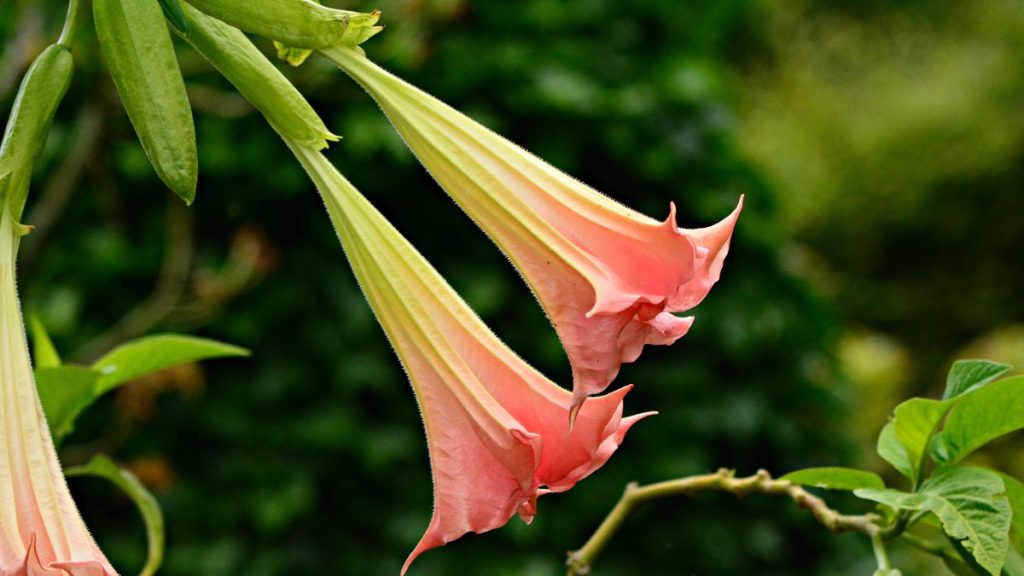
    A pale, pendant trumpet-shaped flower, the shape common to species that advertise to night-flying pollinators
    Nocturnal species tend to combine pale, tubular flowers with strong evening fragrance to work at a distance in low light.

    Which of your plants this actually applies to

    This is where honesty matters more than a plant list, because the retail tier will happily tell you every fragrant plant is stronger at night.

    It applies to species that evolved for night-flying pollinators. Those flowers usually announce themselves: they are often pale or white, frequently tubular, and they commonly open in the evening rather than staying open around the clock.

    It does not apply to most day-scented fragrant houseplants, which follow the bee and butterfly schedule described above and peak in daylight.

    And for a great many popular fragrant houseplants, the emission rhythm has simply not been published. No study has measured the daily scent curve of every plant sold in a garden center. Where that is true, this site would rather say so than assign your plant a schedule it has not been shown to have.

    One naming caution is worth carrying with you. Several plants sold as night blooming jasmine are not in the genus Jasminum at all, and the growing advice, the flowering season and the scent behavior of the plant you actually own may have nothing to do with the true jasmines. Check the botanical name on the label against a botanic garden plant finder such as the Chicago Botanic Garden’s or the Royal Horticultural Society’s before you follow any advice written for jasmine.

    The observation to make instead of trusting a rule

    You can settle this for your own plant in two evenings, and it costs nothing.

    Pick one open flower. Smell it from a fixed distance at mid-morning, then again after dark, on two consecutive days, without moving the plant. Write down which was stronger. If the evening reading wins on both days, you have a night emitter, whatever the label said. If the mornings win, you have a day emitter, and waiting up for it will keep disappointing you.

    Two things to avoid while you run that test. Do not move the plant to a different room to compare, because relocating a plant that is in bud is a documented way to lose the buds. And do not test on a flower that is on its last day, because a bloom’s output changes over its life, which is part of what makes keeping blooms and their scent going a subject of its own.

    If the answer is that nothing is happening at any hour, the question is not a scent question yet. A plant with no flowers has nothing to emit, and that chain of causes is set out in why a fragrant houseplant refuses to flower indoors, while the question of when your species is supposed to be in bloom at all belongs to the indoor flowering year. The general mechanism behind all of it, including what these compounds are and why they exist, is explained in what makes a flower smell.

    Frequently asked questions

    Why do flowers smell stronger at night? Because night-scented species time their scent output to nocturnal pollinators, chiefly moths. Scientific American’s 2005 explainer by Purdue’s Natalia Dudareva states that plants releasing fragrance mostly at night are pollinated by moths and bats, and a 2001 Plant Cell study showed that this emission rhythm is circadian and continues even under constant light or constant darkness.

    Is it because cool night air holds the scent better? That explanation does not match the measurements. A 2009 review in Plant Signaling and Behavior reports a positive correlation between temperature and emission rate across the species studied, so cooler generally means less emission, not more. Still evening air letting scent accumulate in a room is a separate and real effect.

    Do all fragrant plants smell stronger at night? No. Many fragrant plants peak in daylight because their pollinators are bees and butterflies. For a lot of popular houseplants the daily scent curve has never been published, so the honest answer for those is that nobody has measured it.

    How do I know if my plant is a night emitter? Smell one flower from the same distance in the morning and after dark, on two consecutive days, without moving the plant. Two evening wins is a reliable answer for that plant, and it beats any list.

    Why do night flowers tend to be white? Pale flowers remain visible at close range in low light, but color cannot advertise at a distance after dark, so scent does the long-range work. That is why nocturnal species tend to combine pale tubular flowers with strong evening fragrance.

    Sources

    • Kolosova, N., Gorenstein, N., Kish, C.M., Dudareva, N. “Regulation of Circadian Methyl Benzoate Emission in Diurnally and Nocturnally Emitting Plants.” The Plant Cell, volume 13, issue 10, pages 2333-2347, 2001. Read 7 September 2026.
    • Dudareva, N. “Why do flowers have scents?” Scientific American, 18 April 2005. Read 7 September 2026.
    • Knudsen, J.T., Tollsten, L. “Trends in floral scent chemistry in pollination syndromes: floral scent composition in moth-pollinated taxa.” Botanical Journal of the Linnean Society, volume 113, issue 3, pages 263-284, 1993. Read 7 September 2026.
    • Pimienta, M.C., Salazar, D., Koptur, S. “The Nighttime Fragrance of Guettarda scabra (Rubiaceae): Flower Scent and Its Implications for Moth Pollination.” Molecules, 2023. Read 7 September 2026.
    • Majetic, C.J., Raguso, R.A., Ashman, T.-L. “Sources of floral scent variation: can environment define floral scent phenotype?” Plant Signaling and Behavior, volume 4, 2009. Read 7 September 2026.
    • Jakobsen, H.B., Olsen, C.E. “Influence of climatic factors on emission of flower volatiles in situ.” Planta, volume 192, issue 3, 1994. Read 7 September 2026.