
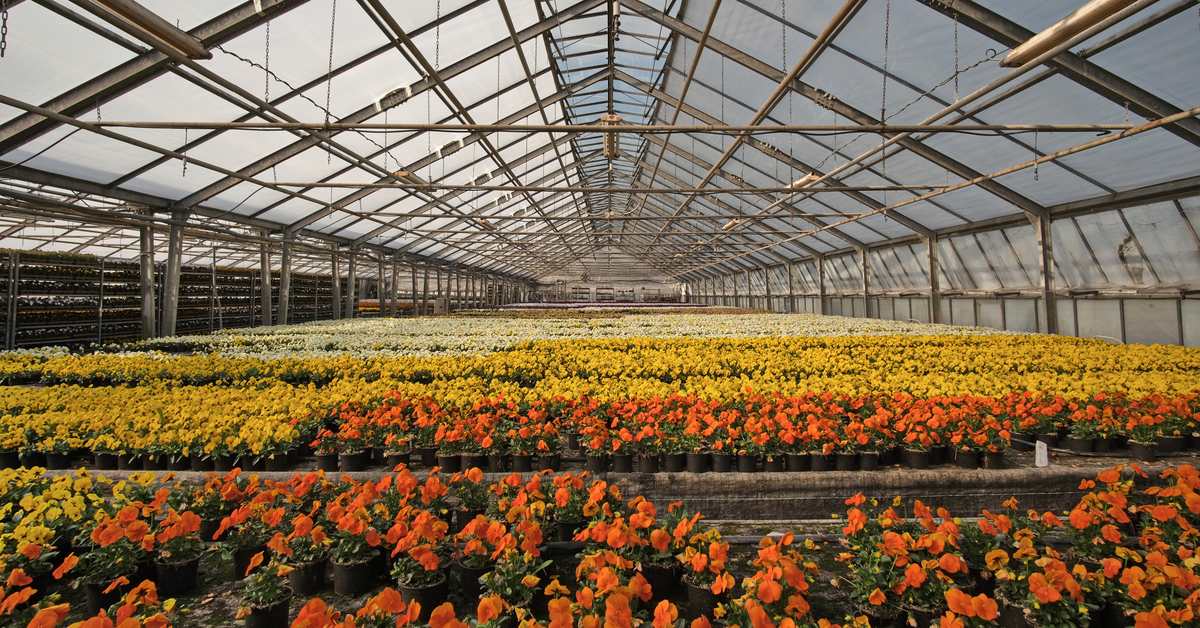
If your plant bloomed once and never again, the most likely explanation is not something you did. The plant was not grown in a living room. It was produced in a greenhouse where day length, night temperature, light quantity and often plant hormones were controlled on a schedule, then sold at the peak of a cycle that a home cannot reproduce and that the plant may not repeat for a year. Some of those levers you can copy. Some you cannot. And a few of these plants are, honestly, a single-season purchase.
The plant arrived at the end of somebody else’s production schedule
A flowering plant on a shelf is the last step of a manufacturing process. The review of flowering mechanisms and production scheduling by Proietti, Scariot, De Pascale and Paradiso, published in the journal Plants in 2022 and read 3 September 2026, puts the commercial logic plainly: “diverse techniques to modulate the duration of the growing cycle, by hastening or slowing down plant growth and development, have been developed to match plant flowering to the market demand.”
Read that sentence again with your own plant in mind. The bloom you bought was an output with a delivery date. Nothing about it was a description of what the plant does when left alone in a room, and nothing about it was a promise the plant made to you.
The four levers a grower controls
These are the controls that decide whether a plant initiates flowers at all. A home has partial access to two of them.
| Lever | What production does | Source, read 3 September 2026 |
|---|---|---|
| Day length | Blackout and night lighting set the dark period to the hour. In short-day plants, “when the required long-night phase is interrupted by a short exposure to light (night break), the flowering process can be inhibited” | Proietti et al., Plants, 2022 |
| Cold | A controlled low-temperature period, since “certain species need to experience a period of low temperature to overcome a block to flowering; this occurs through a process known as vernalization” | Proietti et al., Plants, 2022 |
| Light quantity | Greenhouses “typically receive 30-50% less light than open fields,” and growers still target crop-specific daily light integrals, for example 20 to 25 mol per square meter per day for petunia | Stallknecht, Virginia Cooperative Extension SPES-720NP, 13 August 2025 |
| Chemistry | Growth regulators, including gibberellic acid, which “can be used to substitute for all or part of the chilling requirement of some woody and herbaceous ornamentals typically forced in the greenhouse” | Latimer, Whipker and Stallknecht, Virginia Cooperative Extension HORT-43P, 10 January 2025 |
The light row deserves one honest note. Stallknecht reports Virginia’s average outdoor daily light integral falling from roughly 40 to 45 mol per square meter per day in July to 15 to 20 in December, measured in open spaces free of obstructions. No institutional figure for a typical living-room windowsill turned up in the sources checked for this article, so no comparison number is printed here. What the published figures do establish is that a shaded greenhouse is already a large step down from open sky, and an interior window is a further step down again. That gap is the subject of how much light a plant needs to set buds.
Growth regulators, named accurately and left where they belong
This is the part retail articles skip, and it is worth stating precisely rather than dramatically.
Virginia Cooperative Extension’s publication on plant growth regulators for floricultural crops, by Joyce Latimer, Brian Whipker and Eric Stallknecht, dated 10 January 2025 and read 3 September 2026, lists the active ingredients used in the trade, among them daminozide, chlormequat chloride, paclobutrazol, uniconazole, ethephon and gibberellic acid. Most of these are used to control height and habit, not to create flowers. Some do touch flowering: the same publication notes that late applications of growth retardants “may delay flower opening on bedding plants,” and that gibberellic acid can stand in for part of a chilling requirement.
Ethylene is the clearest case of chemistry used to make flowers happen on a date. Proietti and colleagues describe it as “the only natural plant growth hormone, which exists in gaseous form and is effective in inducing flower development.” The practice is old: K. Zimmer’s paper on control of flowering in bromeliads, in Acta Horticulturae volume 14, 1969, records gaseous forcing of pineapple and of Aechmea and Billbergia.
None of that is a home instruction, and it is not offered as one. It is the reason a compact, evenly budded, perfectly timed plant is normal in a shop and abnormal on a windowsill.
What genuinely triggers a rebloom, and what is folklore
Sorted by what a named source actually supports for the plants a fragrance-focused reader is likely to own.
Real: an uninterrupted dark period, for species that need one. Purdue Consumer Horticulture’s reflowering guidance by Rosie Lerner instructs putting a poinsettia “in complete darkness for 15 hours each day, for instance, between 5 p.m. and 8 a.m.” beginning around October, and warns that “any interruption of the dark period, including merely opening the closet door, can result in delayed flowering.” Poinsettia is not a fragrant plant, but it is the cleanest published home protocol of the technique, and it shows the precision involved. Which fragrant genera actually respond to day length is a separate and much thinner evidence base, covered in photoperiod and houseplant flowering.
Real: a cool period or a nightly temperature drop, for species that need one. Clemson Cooperative Extension’s gardenia factsheet, by Marjan Kluepfel and Robert Polomski, last updated 9 August 2024 and read 3 September 2026, states that “night temperatures between 50 and 55 °F are necessary for the formation of flower buds” in Gardenia jasminoides. Necessary is a strong word and it is theirs. Which plants need a seasonal chill and which need a nightly drop is sorted in the cool rest.
Real: light quantity, and maturity. A plant funding a flower needs more light than a plant merely staying alive, and many woody and climbing plants cannot flower until they are old enough. Neither is fixable by attention.
Folklore: bloom booster fertilizer as the trigger. Nothing in a bottle supplies a night temperature or an hour of direct sun. The phosphorus claim on the label is examined against extension sources in the phosphorus myth.
Folklore: that the plant is punishing you. Bud initiation for most of these species happened weeks or months before you noticed anything, under conditions set by somebody else.
The plants that are effectively an annual purchase indoors
This is the section the retail tier cannot write, so here it is with the sources attached.
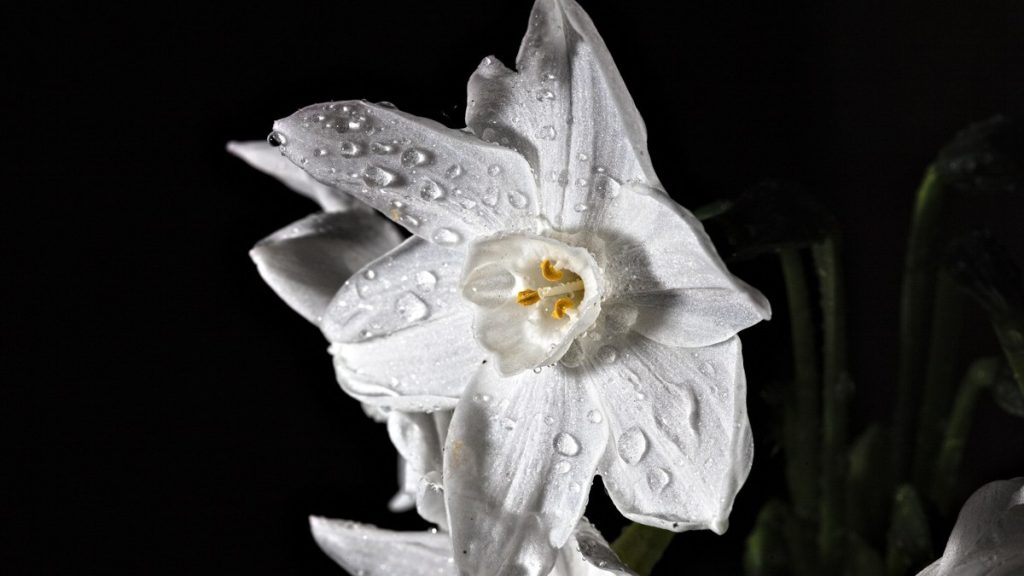
Paperwhite narcissus (Narcissus papyraceus and related tazetta-type cultivars). Iowa State University Extension and Outreach’s yard and garden answer, dated 6 December 2024 and read 3 September 2026, is unambiguous: “Paperwhite narcissus bulbs should be discarded after flowering. Paperwhites cannot be successfully forced again and are not winter hardy outdoors.” One scented season is the product.
Forced hyacinth (Hyacinthus orientalis). Clemson’s forcing bulbs factsheet, by Robert Polomski, Al Pertuit and Barbara Smith, last updated 20 January 2016 and read 3 September 2026, states that “other bulbs such as tulips, paperwhites, and hyacinths are best discarded after forcing.” The same factsheet gives the production requirement they were grown under: cooling “between 35 and 50 ºF,” with “the optimum cooling period” being “from 12 to 16 weeks.” A hallway does not do that, and the bulb has already spent what it had.
Not annual, but frequently behaving that way: Gardenia jasminoides and Jasminum polyanthum. Neither is a one-time bloomer. Clemson notes that “gardenias require considerable maintenance,” and its 50 to 55 °F night figure is the requirement most homes miss. For Jasminum polyanthum, the widely repeated cool-rest advice comes almost entirely from retail and consumer sources whose figures disagree with one another, so no number for it is printed here. Whether your particular room can meet either requirement is the question asked directly in the fragrant plants that will not flower in an average room.
What this explanation does not cover
If your plant is a bromeliad, the answer is different in kind: each rosette flowers once, and what follows is offsets rather than a second bloom from the same crown. Bromeliads are foliage-and-flower houseplants rather than fragrance plants, and a general houseplant authority or your state extension service is the right place for that lifecycle.
It also does not cover a plant that formed buds and then lost them. That is a separate failure with its own causes, and the full sorting of why a fragrant plant will not flower indoors is laid out in order in why a fragrant houseplant refuses to flower indoors.
The honest summary: you inherited the end of a production schedule. Knowing that is worth more than another season of blaming yourself, because it tells you which of the four levers your room can actually pull.
Frequently asked questions
Did I kill the flowers by doing something wrong? Usually not. Flower buds are initiated well before they are visible, under conditions set during production. If the plant is alive and growing, the far more likely explanation is that your room does not supply the day length, night temperature or light quantity that triggered the bloom you bought.
Do commercial growers really use chemicals to make plants flower? Some do, for some crops. Virginia Cooperative Extension’s 2025 publication on plant growth regulators lists gibberellic acid among the products used in floriculture and notes it can substitute for part of a chilling requirement. Ethylene is described in the 2022 Plants review as effective in inducing flower development, and gaseous forcing of bromeliads and pineapple is documented back to Acta Horticulturae in 1969. Most growth regulators, though, control height rather than flowers.
Can I copy what the greenhouse did? Partly. A dark period and a cooler night are within reach of a home that has a spare unheated room or a closet, and Purdue’s poinsettia protocol shows how exact the dark period has to be. Light quantity is harder, and greenhouse chemistry is not a home practice.
Which fragrant plants are worth treating as a one-season buy? Forced paperwhites and forced hyacinths, on the extension sources quoted above. Both were grown through a controlled cold period and are described by Iowa State and Clemson respectively as best discarded after flowering.
My gardenia has not flowered in two years. Is it finished? Not necessarily finished, but check the requirement before the care. Clemson states night temperatures of 50 to 55 °F are necessary for gardenia flower bud formation. A room that never reaches that is the constraint, and no amount of feeding or repositioning substitutes for it.
Sources
- Proietti, S., Scariot, V., De Pascale, S., Paradiso, R. “Flowering Mechanisms and Environmental Stimuli for Flower Transition: Bases for Production Scheduling in Greenhouse Floriculture.” Plants, 2022. Read 3 September 2026.
- Latimer, J., Whipker, B., Stallknecht, E. “Selecting and Using Plant Growth Regulators on Floricultural Crops.” Virginia Cooperative Extension HORT-43P, 10 January 2025. Read 3 September 2026.
- Stallknecht, E. “Calculating and Using Daily Light Integral (DLI).” Virginia Cooperative Extension SPES-720NP, 13 August 2025. Read 3 September 2026.
- Lerner, R. “Reflowering Poinsettias.” Purdue Consumer Horticulture, Indiana Yard and Garden. Read 3 September 2026.
- Kluepfel, M., Polomski, R. Gardenia factsheet, Clemson Cooperative Extension Home and Garden Information Center, updated 9 August 2024. Read 3 September 2026.
- Polomski, R., Pertuit, A., Smith, B. “Forcing Bulbs Indoors,” Clemson Cooperative Extension Home and Garden Information Center, updated 20 January 2016. Read 3 September 2026.
- Iowa State University Extension and Outreach, Yard and Garden question on saving forced paperwhite narcissus bulbs, 6 December 2024. Read 3 September 2026.
- Zimmer, K. “Control of Flowering in Bromeliads.” Acta Horticulturae 14, 1969. Read 3 September 2026.
Leave a Reply