If your plant is not fragrant anymore after coming home from the shop, the likeliest explanation is a stack of ordinary effects rather than anything done to the plant: far less light than it had before, flowers that were already at their peak when you bought them, smelling it at a different hour, and a nose that has stopped treating the scent as new. Each one is documented. Together they can take a plant from filling the aisle to smelling of almost nothing within a week.
First, a quick check on which of three problems you have. If the flowers that were open in the shop have faded but new ones still smell, that is flower age. If visitors can smell the plant and you cannot, that is your nose adapting. If new flowers open at home and still smell faint, the conditions are the likelier cause. All three are covered below, in the order worth checking them.
Why the shop is the best place a plant will ever smell
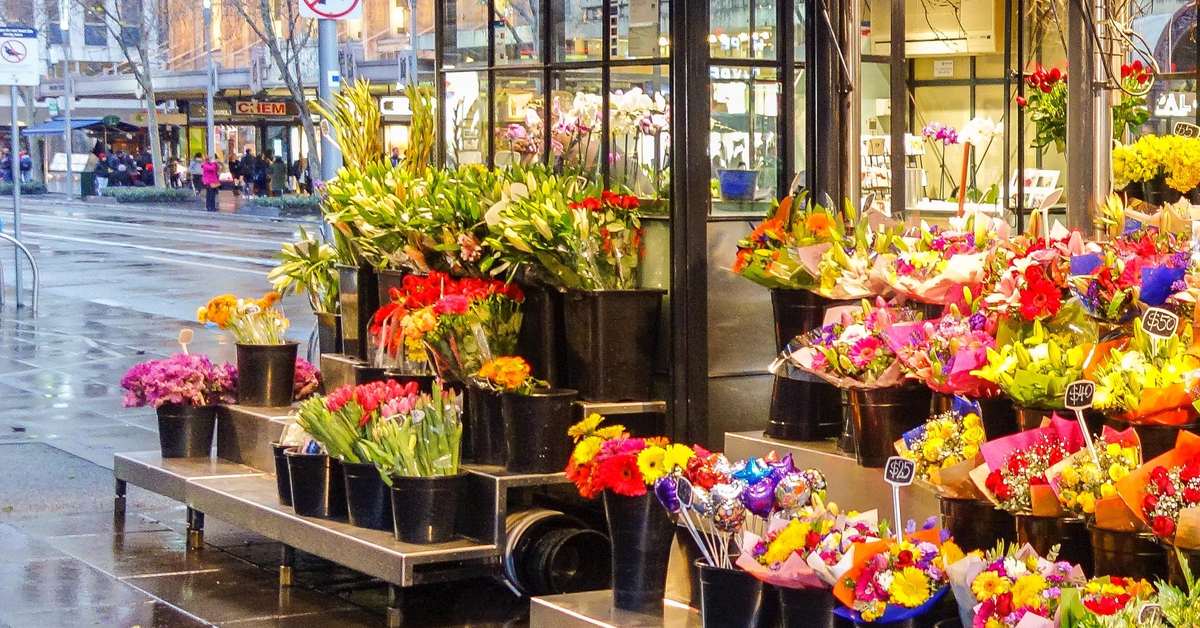
A garden center or florist is close to ideal conditions for a scent. Four things are working together there that will not all be true in your home.
The light was much stronger. Plants for sale are usually grown in greenhouses or outdoors, and many are sold from bright benches. Illinois Extension’s houseplant lighting guide, read September 11, 2026, puts outdoor sunlight at 10,000 to 12,000 foot-candles and notes that “indoors, the amount of light that enters the room is only a small amount.” The same guide classes high light for houseplants at about 300 foot-candles, found directly in front of an east or west window or up to five feet from a south one. By those figures, even a good indoor spot gives a plant a small fraction of what it had outside.
The flowers were at their peak. Plants are sold in flower, and the flowers that sell a plant are the open, fragrant ones. Scent emission rises after a flower opens, peaks, and falls as the flower ages; in snapdragon the main scent compound peaked between days 5 and 8 after opening, according to a 2000 study by Natalia Dudareva and colleagues in The Plant Cell, read September 11, 2026. If you bought the plant in its best days, its best days were already being used up.
There were many plants together. A bench of twenty jasmines is twenty sources. The scent you walked into was the combined output of all of them, in a space that may have been warm and still. One plant on a windowsill in a ventilated room is a different situation entirely.
The scent was new to you. Your nose responds most strongly to a smell it has not met recently. In a shop, you encountered the scent fresh. At home it becomes part of the background, and your sense of smell turns it down. More on that below.
None of these requires anyone to have done anything to the plant.
Cause 1: The light dropped, and light is tied to scent
Light affects scent in two ways, one direct and one through flowering.
The direct way is chemical. In studies of the lily cultivar ‘Siberia’, light signaling has been shown to regulate how the flower makes and releases its scent compounds. Liu and colleagues, in “Light Regulation of LoCOP1 and Its Role in Floral Scent Biosynthesis in Lilium ‘Siberia’,” published in Plants in 2023 and read September 11, 2026, identified a light-regulated protein that acts as a brake on floral scent production. The point for a houseplant owner is not the protein. It is that a flower’s scent output is wired to the light it receives, so the same flower in dimmer conditions has no reason to behave as it did in bright ones.
The indirect way is through the flowers themselves. A plant in low light may keep opening the buds it formed in the greenhouse and then fail to set new ones. The scent fades because the flowers run out. How much light it takes to keep a plant flowering, and why “bright indirect” often is not enough, is covered in how much light plants need to flower indoors.
Cause 2: The flowers you bought are aging
This is the most common reason and the least alarming. The flowers open on the day you bought the plant were at or near their peak. A few days later they are past it, and a flower’s scent does not just fade but can change in character as different compounds in the blend decline at different rates.
The test is simple. Smell a flower that opened after you brought the plant home, on its second or third day. If that flower smells, the plant is fine and the older flowers have simply finished. If there are no new flowers, look at what happened to the buds. Buds that yellowed and dropped point to a separate problem; the move itself is a documented trigger, explained in why moving a plant causes bud drop, and the wider set of causes is in flower buds falling off before opening.
Cause 3: You are smelling it at the wrong hour
Many fragrant plants release their scent on a daily rhythm, and the rhythm is set by the plant, not by when you are home. In the snapdragon study, emission was rhythmic with its maximum during the day, matching the bumblebees that pollinate it. Many of the most fragrant houseplants are the opposite: moth-pollinated species whose scent builds in the evening.
A shop visit usually happens in the daytime, in a building full of plants, some of which will be in their scent window whatever the hour. At home you have one plant, and if you check it in the morning when it is an evening emitter, it can seem to have lost its scent entirely. Checking again at dusk takes nothing and rules this out. The daily rhythm is part of what makes a flower smell.
Cause 4: Your nose has adapted
Pamela Dalton of the Monell Chemical Senses Center describes the process in “Psychophysical and Behavioral Characteristics of Olfactory Adaptation,” published in Chemical Senses in 2000 and read September 11, 2026: repeated or continued exposure to an odor reduces sensitivity to that specific odor, and sensitivity recovers over time once the exposure stops. It happens both in the nose and further along, in the brain.
The home setting makes this stronger. In a study by Dalton and Wysocki, published in Perception and Psychophysics in 1996 and read September 11, 2026, people who lived with an odor at home for two weeks showed reduced sensitivity to that odor specifically, and their raised detection thresholds took up to two weeks to return after the exposure ended.
If a visitor walks in and comments on the scent, the plant is working and your nose has adjusted. Step outside for a while and come back in before judging.
Plant not fragrant anymore? What to check, in order
| Check | What it tells you | Where it points |
|---|---|---|
| Does a flower that opened at home smell? | The plant can still produce scent | Older flowers simply aged |
| Does a visitor notice the scent? | Scent is present in the room | Your nose has adapted |
| Does it smell at dusk but not in the morning? | Emission follows a daily rhythm | Wrong hour, not lost scent |
| Are there new buds, or did they drop? | Whether the plant is still flowering | Light, or bud drop from the move |
| Do new flowers smell faint even at their peak hour? | Conditions are limiting the flowers | Light and temperature at home |
Most plants are sorted by the first three rows.
If the plant never flowers again
Sometimes the scent fades because the plant finished its shop-grown flowers and has not started again. That is a flowering problem, not a scent problem, and it has its own set of causes: light, the season, a missing cool rest in some species, or simply the plant’s maturity. The common patterns are set out in a plant that bloomed once and never again.
What this article cannot tell you
Plants are bred for many traits, and scent is not always one of them. Some cultivars carry less fragrance than others of the same species, and the tag on a plant does not always say which you have. No source found for this article can tell you from a description whether your particular plant was a strongly scented selection to begin with.
It is also worth being honest about the question behind this search. People sometimes suspect that plants for sale have been treated in some way to smell stronger. No source checked for this article documents such a practice, and nothing needs to be assumed: the effects above are enough to explain a plant that smelled wonderful in the shop and faint at home.
When it is not the plant
If other smells, such as coffee, food or soap, have also started to seem faint, the change may not be about the plant at all. The National Institute on Deafness and Other Communication Disorders, in its smell disorders page updated July 31, 2023 and read September 11, 2026, says that most people who develop a smell disorder have had a recent illness or injury, and advises: “If you are experiencing a smell disorder, talk with your doctor.” It notes that smell disorders are treated by an otolaryngologist, an ear, nose and throat specialist.
Frequently asked questions
Why is my plant not fragrant anymore after I brought it home? The most common reasons are lower light than the plant had before sale, flowers that were already at their peak when bought, checking it at a different time of day from its scent rhythm, and your nose adapting to a smell you now live with. Illinois Extension puts outdoor sunlight at 10,000 to 12,000 foot-candles, far above what reaches most indoor spots.
Did the shop spray something on the plant to make it smell? No source checked for this article documents that practice. The documented effects of light, flower age, time of day and olfactory adaptation are enough to explain the change.
How can I tell if it is the plant or my nose? Ask someone who does not live with the plant to smell it, or leave the room for a while and come back. Research by Dalton and Wysocki found that living with an odor at home for two weeks reduced sensitivity to that specific odor.
Will the plant smell like it did in the shop again? New flowers can, if the plant keeps flowering and you check them near their peak and at the right hour. Whether it keeps flowering depends largely on light and on the species’ own flowering needs.
Sources
- Illinois Extension. “Lighting,” Houseplants. University of Illinois. Read September 11, 2026.
- Liu, Y., Wang, Q., Abbas, F., Zhou, Y., He, J., Fan, Y., Yu, R. “Light Regulation of LoCOP1 and Its Role in Floral Scent Biosynthesis in Lilium ‘Siberia’.” Plants, 2023. Read September 11, 2026.
- Dudareva, N. and colleagues. “Developmental Regulation of Methyl Benzoate Biosynthesis and Emission in Snapdragon Flowers.” The Plant Cell, volume 12, pages 949-961, 2000. Read September 11, 2026.
- Dalton, P. “Psychophysical and Behavioral Characteristics of Olfactory Adaptation.” Chemical Senses, volume 25, issue 4, pages 487-492, 2000. Read September 11, 2026.
- Dalton, P., Wysocki, C.J. “The nature and duration of adaptation following long-term odor exposure.” Perception and Psychophysics, volume 58, pages 781-792, 1996. Read September 11, 2026.
- National Institute on Deafness and Other Communication Disorders. “Smell Disorders.” Updated July 31, 2023. Read September 11, 2026.
Leave a Reply